

REVIEW · SELF-GUIDED TOURS
Civil War Battlefields Self-Guided Audio Driving Tour Bundle
Five battlefields in one plan.
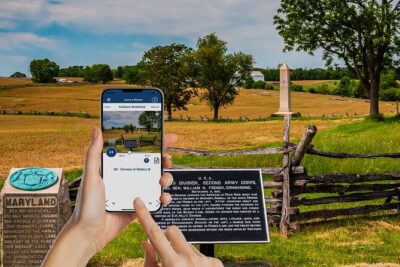
This bundle strings together major stops from Gettysburg to Antietam, then down to Vicksburg and Shiloh, with a bonus Yorktown day. What makes it work is the location-triggered audio that plays as you drive, plus offline maps so the route still makes sense even when your signal fades.
I love how hands-free it feels once you park and start listening, and I love the value per group: $39.99 per booking for up to four people. You’re paying for one set of audio, not four separate tickets, which matters on road trips.
The main drawback to consider is setup. If you do not start the tour from the correct first story point in the app, the directions and audio can get out of sync, so give yourself a few extra minutes to get rolling.
Key highlights worth planning around

- Offline audio and maps: download first, then keep going with no cellular required.
- Gettysburg’s top viewpoints: Oak Ridge Observation Tower, Longstreet Observation Tower, plus the big cemetery finale.
- Little Round Top keeps going even when closed: you cannot access it, but the audio still uses pictures and narration to explain what you miss.
- Antietam’s scale is brutal and specific: the Union attack at Burnside Bridge is framed with numbers, not vague statements.
- Vicksburg mixes siege history with state memorials: you get memorials tied to individual states, including details like Old Abe the war eagle.
- Yorktown adds a Revolution layer: you end at a Revolutionary War story set, then still visit a Civil War burial ground.
Other days out with someone who knows
How this bundle works: phone audio, your car, and a simple rhythm

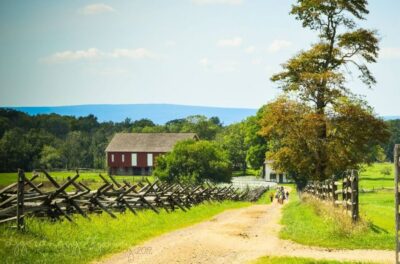
This is a private, self-guided bundle built around five separate driving days. You are not meeting a person at the start, you’re starting the first story at the designated spot and letting the audio cues guide you to the next stop.
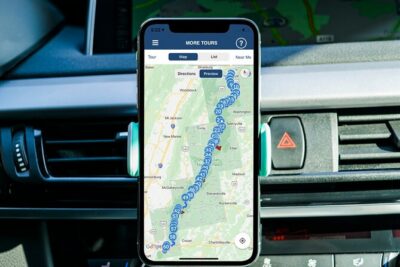
The practical win is the way the audio plays. Stories are hands-free once you start, and they’re tied to your location, so you do not have to keep tapping through menus every time you park. You can start and pause when you want, which helps if you are juggling photo stops, restroom breaks, or a quick coffee run.
You also get offline support. The app requires a download while you are on a solid connection, then it should work without signal after that. My advice: do the download early, ideally before you reach the parks, and test playback once you get in the car.
For best sound, you can connect your phone to your car stereo with Bluetooth, USB, or AUX. If you prefer walking segments, headphones are handy, especially when you briefly leave the car for monuments and trails.
Day 1 Gettysburg: Heritage Center to Lincoln, with towers and painful specifics
Day 1 is the Gettysburg driving day, about 19 miles with 60+ audio stories. Plan on roughly 1 to 2 hours for the full loop, plus any extra time you choose to linger at viewpoints.
Start at the Gettysburg Heritage Center, the place to ground yourself before you start chasing battle-sightlines. The tour description is direct: a short museum stop helps make the later Auto Tour stops click, even if you only skim before moving on.
Then you roll onto Gettysburg Auto Tour Stop 1, where the audio frames dawn breaking at McPherson’s Ridge. The key here is that you are not just reading names, you are imagining regiments being ordered into position over the ridge.
From there, the Railroad Cut stop keeps the story anchored in tactics and early-day skirmishing. You’re also hearing backstories of key players, which helps when the battlefield starts to feel like a maze of turns and memorials.
Next comes the Eternal Light Peace Memorial. I like this one because it shifts the mood. You see how the landscape later became a message about reunification, made with Maine granite and Alabama limestone.
At Oak Ridge Observation Tower, the audio brings you back to the same general area but now from the later-day feel of “afternoon on the field.” You get panoramic views, and the tower makes it easier to understand why certain positions mattered.
You then pass the 11th Pennsylvania Volunteer Infantry Regiment Monument and hear about Battlefield Sallie, the dog mascot that accompanied the 11th Pennsylvania. It is a small detail, but it humanizes the rhythm of war, including the role of drummers and military music.
As evening descends, the tour builds toward uncertainty after heavy losses. This is one of the tour’s strengths: it does not treat the battle like a clean movie timeline. You get the sense that plans are changing in real time.
The North Carolina Memorial and nearby Virginia monument continue that “moving along the timeline” approach as you set up for day two. When the audio later reaches Gettysburg Auto Tour Stop 5, it announces the second day beginning and asks the big question you should hold onto while driving: whose strategy finally lands?
At Longstreet Observation Tower, you get another vantage point for day two, and it helps you connect the names to what you can actually see from the road.
There’s an optional detour to the Eisenhower National Historic Site, which overlooks the battlefield. It is not required, but if you like wide angles, this can be a good pause.
Back on the main route, Warfield Ridge Observation Tower sets up Confederate troops assembling to attack a strategic Union outpost, with Union marksmen positioned to defend. The tour basically turns the terrain into a chessboard, and it helps if you drive slow enough to process it.
Then the audio heads to Little Round Top. You cannot access it because of construction, but you can still listen and view pictures. I appreciate this design choice. Instead of wasting your time on a blocked site, the audio keeps you connected to the story and explains the hill’s strategic importance and the brave actions tied to it.
Moving along, the tour describes Confederate sharpshooters positioning among volcanic rocks at Devil’s Den, picking off soldier after soldier from cover. This is one of those stops where the audio makes the “why this spot” question impossible to ignore.
After that comes Gettysburg Auto Tour Stop 9 near the Wheat Fields, including the tale of Union soldier J.J. Purman. If you like stories that put a name to an event, this is a worthwhile moment to park and listen carefully.
You pass the Peach Orchard, then Abraham Trostle Farm, where the Trostle family fled so fast that dinner was still on the table. That one detail hits harder than a long explanation because it turns “battlefield” into a home interrupted.
At Plum Run, the tour catches up with soldiers who escaped the skirmish at the Peach Orchard. Then George Weikert Farm brings you to a darker transformation: a farm used as a hospital.
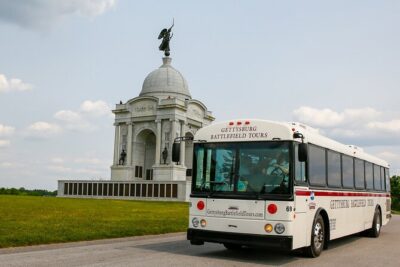
The State of Pennsylvania Monument ties the story to geography and identity, commemorating nearly 35,000 Pennsylvanians and emphasizing that for these soldiers the stakes were their state, not an abstract idea.
Next, Spangler’s Spring leads you deeper into wooded areas, then onward to Culp’s Hill Tower. The audio highlights another clash and the Union’s ability to defend the hill until evening.
East Cemetery Hill closes out day two on a tense note. The tour describes a nighttime Confederate raid attempt, where the Union came closest to losing. Even if you know the broad outcome, the audio’s framing keeps you aware that the battle’s end was not guaranteed at that moment.
Day three arrives at Pickett’s Charge. The audio has you stand at the top of the hill, looking down toward the final battlefield, including the high water mark concept marking the farthest the Confederacy advanced up the hill.
Finally, you reach the National Cemetery, honoring the fallen Union soldiers. The tour ends with the context around Lincoln’s Gettysburg Address, explaining why he kept it short and aimed attention back to the soldiers.
Day 2 Antietam: cornfields, Bloody Lane vibes, and the bridge where numbers hurt

Day 2 shifts to Antietam, about 9 miles with 38+ audio stories, again roughly 1 to 2 hours for the main drive.
The tour starts at Antietam National Battlefield, along Antietam Creek, framed around the battle date of September 17, 1862. This is where the audio helps you track cause and effect before you hit the key tactical locations.
At Mansfield Monument, the audio focuses on Major General Joseph Mansfield. You hear how he left his battalion to scout the cornfield and returned mortally wounded, a moment that instantly changes the emotional temperature for the troops.
Then comes West Woods Trail. Even with the Union having an upper hand, the audio describes 5,000 Union soldiers charging into the forest, only to be met by Confederate cannons. It is a blunt reminder that “advantage” does not stop bullets.
At Mumma Farm and Cemetery, the story turns into a tragedy of use and loss. Confederate troops retreat and light the place on fire so the Union cannot use it for cover, leaving the Mumma family to return to ashes.
Next is the Irish Brigade Monument, highlighting Irish Americans at Bloody Lane and the cost they paid. If you’re the type who wants to understand who these soldiers were, this is one of the day’s best stops.
At Piper Farm, Confederate generals use the farm as headquarters, planning attacks and defensive lines. This helps you see why farm names repeat around Antietam, because so much command and decision-making happened from “ordinary” structures.
Then you hit the big set piece: Burnside Bridge. The audio frames it as 13,000 Union soldiers trying to take the bridge against about 500 Confederates holding it. The result described is piling bodies on the bridge, which is hard to listen to, and hard to forget once you see the geography.
There is also a stop that includes a fun fact about Burnside Bridge, including the idea that sideburns are named after General Burnside. It’s the tour’s quick breather between heavier moments, and it can keep you from getting emotionally overloaded.
The day continues to the Monument to William McKinley, tied to a story about heroism after the struggle on the bridge. Then Final Attack Trail aims you toward the area where Union forces assemble for their last push and shows how the fight looks in the moment and what remains after the dust clears.
Optional side stops include Hawkins’ Zouaves Monument, honoring the 9th New York Infantry and an attack that could have changed outcomes but did not quite do it. If you want extra depth, the detours help.
The route then offers Tolson’s Chapel and School, built by Black Americans one year after the war ended, followed by Good-Reilly House for a glimpse of Sharpsburg even before the battle made it famous. You can also visit Mt Calvary Cemetery, where Confederates used the church next to the cemetery for orders, then the Union used the same church as a field hospital.
The day can end at Antietam National Cemetery, which includes remains of 4,776 Union soldiers, alongside about 200 dead from later wars. That mixture gives a reminder that battlefield land stays in use long after the cannons stop.
Other routes you can run yourself
- Ghosts of Gettysburg Self-Guided Driving Audio Tour★ 4.0 · 77 reviews
- Gettysburg Battlefield Self Guided Audio Driving Tour★ 4.5 · 16 reviews
- Gettysburg’s Seminary Ridge: Self-Guided Walking Audio Tour★ 4.0 · 12 reviews
- Gettysburg: Devil’s Den Self-Guided Walking Tour★ 4.0 · 12 reviews
- Gettysburg Downtown Self-Guided Walking Audio Tour★ 4.0 · 10 reviews
Day 3 Vicksburg: state memorials, the river angle, and a siege story you can feel

Day 3 goes to Vicksburg National Military Park, about 15 miles with 44+ audio stories. Plan about 1 to 2 hours for the core drive.
You start at Vicksburg National Military Park, with the story framed as a key to winning the entire Civil War, with Lincoln and Jefferson Davis both treating it as a must-win location. The audio makes the siege feel like a system, not just a day of fighting.
At Memorial Arch, the tour brings in the backstory of a 1917 veterans reunion where former soldiers sat side by side at a bittersweet event, and then they built an arch to mark the moment.
The memorials then become a guide to who was there. You pass the Minnesota Memorial, where the base statue of peace holds a sword and shield laid down by both armies. You also see the Michigan Memorial, including the “Spirit of Michigan” and the detail that Captain Samuel DeGolyer was mortally wounded nearby on May 28.
The Illinois Memorial offers a temple-like approach, honoring Illinois soldiers and listing names inside. Then Logan’s Approach gets special attention: Union engineers dig a trench toward a Confederate fort, then use a mine with 2,200 pounds of gunpowder. It is the kind of tactical detail that makes you picture the work behind the violence.
You continue to Wisconsin Memorial, including Old Abe the war eagle, described as a real bird and a veteran that carried into 42 battles. Next is the West Virginia Monument, honoring Major Azra Goodspeed, including the fact that some Ohio and Pennsylvania men fought under West Virginia’s flag.
The African American Monument explains the story and also the unfairness. The audio notes that units were segregated and Black soldiers were paid less with worse equipment, even while fighting alongside white comrades.
Then you hit the Major General Ulysses S. Grant Memorial, and the 106th Illinois Volunteer Infantry Regiment Monument. The tour continues at the U.S. Navy Monument, emphasizing how gunboats brought Grant’s men down the Mississippi and helped the army cross at Bruinsburg.
The day ends with several “view and reflect” moments. Fort Hill provides a clear lookout point, with the audio noting that no land battle took place there because of how secure it was.
Then you pass the Missouri State Memorial, acknowledging Missouri as a divided state, and the Mississippi Monument with a figure modeled as Greek or Roman style protection, representing peace and reconciliation. You also see the Alabama Monument, where a woman figure leads men forward representing Alabama itself.
The story keeps turning at Fort Garrott, including how Union snipers hid behind trees, and the detail of Colonel Isham W. Garrott being killed instantly by a bullet on the day he moved, unaware it would come with promotion.
Finally, you can end at Kentucky Monument, which depicts Abraham Lincoln and Jefferson Davis, both born in Kentucky. It is a strange, thoughtful pairing, and it lands well at the end of a day spent walking a river siege.
Day 4 Shiloh: visitor center context, last line desperation, and a church that remembers

Day 4 is Shiloh, about 6 miles with 34+ audio stories, again about 1 to 2 hours.
Start at the Shiloh Battlefield Visitor Center, where the tour frames what happened on these fields and points you toward landmarks that show the fighting’s ferocity. This helps because Shiloh can feel bigger and less “linear” than you expect.
At the Iowa State Monument, the audio points out the eagle atop the granite tower, plus the bronze Fame figure holding a quill to carve an elegy on the battlefield for posterity. If you are into symbolism, this one is worth walking up for a closer look.
Next, the tour takes you to Grant’s Last Line, describing a dusk moment when Grant’s army used heavy siege guns and a mass of troops to try to hold back the Confederate surge. It is built to make you picture the physical effort, not just the name of a general.
You then pass toward the Michigan State Memorial – Shiloh, with a practical navigation hint: ignore a nearby intersection road and continue straight along Confederate Road until you see the monument on your left.
There’s also the Daughters of the Confederacy Monument, with a plaque depicting General Albert Sidney Johnston.
Then comes the highlight for many people who like atmosphere: Shiloh Church. You park and see both a modern church and an authentic replica of the original one-room log cabin where Sherman and his men camped. Even if the replica is not the same building, the tour uses it to bring you close to how people lived there while history happened around them.
Day 5 Yorktown: Revolution stories, French artillery, then a Civil War cemetery

Day 5 moves to Yorktown, a change of era that still fits the “battlefield stops you can drive” idea. This day is about 10 miles with 20+ audio stories, about 1 to 2 hours.
Start outside the Yorktown Battlefield Visitor Center, at 1000 Colonial National Historical Parkway. The tour then sends you to Moore House, where Cornwallis and Washington send representatives and the British offer total surrender to the French and American coalition.
Next is Washington’s Headquarters at Yorktown, where plans were drawn for the final battle. If you want a break from Civil War framing, this day gives you something different to compare, and it stays tied to concrete places.
You then get French military influence through the French Artillery Park, followed by the Grand French Battery with the largest concentration of French artillery during the battle. These stops help you understand that Yorktown was not just strategy, it was also weight and timing.
The day includes Yorktown National Cemetery, with an important twist. The audio points out that this is not a Revolutionary War cemetery, it is a Civil War burial ground. That is a nice reminder of how American battlefields and their afterlives overlap.
Finally, you end at Yorktown Victory Monument, conceived soon after Cornwallis’s surrender. It is a fitting capstone, especially if you like endings that match the moment.
Price and value: when $39.99 per group makes sense

At $39.99 per group (up to four people), this bundle is built for families or small friend groups with one car. The math improves fast when you realize you are buying one audio experience per booking, not per person.
There are two explicit admission fees you should plan for: Antietam National Battlefield ($20 per booking) and Vicksburg National Military Park ($20 per booking) are not included. So if you do both days in full, you may add about $40 in park entry fees on top of the $39.99. Even then, that is often cheaper than a guided tour per person, and you get the freedom to pause whenever you want.
Two things to keep in mind: first, some sites list admission not included for museum stops like the Gettysburg Heritage Center. Second, the tour works best when you give yourself time to park and listen without rushing. If you try to treat it like a speed run, you will miss the point of the audio.
Who this bundle suits best, and who might feel frustrated

This works best if you want to drive your own pace and you like history told through specific places, not just general themes. It’s a good match for road trippers who want structure, and for families who want to keep kids engaged without constant steering.
It might feel frustrating if you dislike tech setup or you tend to jump into places without following the first-start point in the app. The tour is designed to guide you from where you begin, so shortcuts like starting at a later stop can cause audio issues.
Also, remember that one major site in Gettysburg, Little Round Top, is currently inaccessible due to construction, though the audio still explains what happened there with pictures and narration. If you love checking every viewpoint in person, you might need to adjust expectations on that day.
Final call: should you book this self-guided bundle?
I’d book it if you want a structured way to see five battlefield days without paying for a full group guide, and if you’re comfortable using a phone app for audio. The best part is the mix of specific stop stories with practical freedom, plus offline audio so the route stays dependable.
Skip this bundle only if you know you will not handle setup, or if you expect on-site staff to meet you and troubleshoot in real time. In that case, a traditional guided tour might feel calmer.
FAQ
Is this a guided tour with someone meeting me?
No. It is self-guided, and no one meets you at the start. You start the first story in the app at the starting point, and audio plays based on your location.
How long does each day take?
Each day’s drive is listed as about 1 to 2 hours. The distances are roughly: Gettysburg over 19 miles, Antietam over 9 miles, Vicksburg over 15 miles, Shiloh over 6 miles, and Yorktown over 10 miles.
Does the audio work without cell service?
Yes. The app uses offline access after you download the tour while you have strong wifi or cellular. After downloading, it should work offline.
Can I pause the tour or start later?
Yes. You can start anytime, pause anywhere, and continue at your own pace. Go at your own pace for snack and photo breaks.
Are admission fees included?
Not entirely. Vicksburg National Military Park and Antietam National Battlefield have admission fees of $20 per booking, and those are listed as not included. Some other stops note admission tickets are not included as well.
What languages are offered?
The tour is offered in English.
Do I need my phone to play the audio?
Yes. You download Action’s Tour Guide App and enter the password sent by email and text. Then you start the tour in the app onsite.
Is it a group purchase or per person?
It is priced per group up to 4 people. The value note says purchase one tour for everyone in the car.
What hours is the activity available?
The opening hours listed are Monday through Sunday, 9:00 AM to 5:00 PM.
More Tours in Gettysburg
- 2-Hour Gettysburg Battlefield Guided History Bus Tour with a National Park Guide
★ 4.5 · 2,201 reviews




More Tour Reviews in Gettysburg
- 2-Hour Gettysburg Battlefield Guided History Bus Tour with a National Park Guide
★ 4.5 · 2,201 reviews
More to book around Gettysburg
- 1 Hour Gettysburg Haunted Farm Tour
★ 5.0 · 4 reviews - Wonder Women of Gettysburg Hidden Valor By Junket
★ 4.5 · 7 reviews - Mystery!: A Gettysburg Evening Walking Tour
★ 5.0 · 6 reviews - Secrets of Gettysburg Untold Stories: Beyond the Battlefield Tour
★ 5.0 · 4 reviews - Haunted Smart Phone App Location Aware Walking Tour in Gettysburg
★ 4.5 · 8 reviews - Civil War Battlefields Self-Guided Audio Driving Tour Bundle
★ 4.0 · 5 reviews
Self-Guided Tours, compared.
 ★ 4.5Gettysburg Battlefield Self-Guided Driving Audio TourFrom $16910 reviews
 ★ 4.0Ultimate Gettysburg Battlefield Self-Guided Audio Bundle TourFrom $29108 reviews
 ★ 4.5Shenandoah National Park Self-Guided Driving Audio TourFrom $15101 reviews
 ★ 4.0Ghosts of Gettysburg Self-Guided Driving Audio TourFrom $1477 reviews
 ★ 4.5Visit Mount Vernon by Bike: Self-guided Ride with Optional Boat Cruise ReturnFrom $7465 reviews
 ★ 4.5Best of DC: Hop-on Hop-off, Night Tour, and Arlington Audio GuideFrom $7564 reviews
 ★ 4.0Antietam National Battlefield Self-Guided Driving TourFrom $1439 reviews
 ★ 3.5Baltimore Walking & Driving Self-Guided Audio TourFrom $1630 reviews
Browse the lists this tour appears in