

REVIEW · GETTYSBURG BATTLEFIELD TOURS
Gettysburg Battlefield Self-Guided Driving Audio Tour
A drive that turns monuments into a story. This self-guided audio option lets you explore Gettysburg’s key battlefield sites in comfort, while location-triggered narration keeps you oriented and moving through the fight. You can pause for photos, walk out to read memorials, then start listening again when you’re ready.
One catch: the experience depends on your phone keeping good GPS position. To avoid frustration, start the tour at the recommended spot, follow the route, and keep an eye on the speed limit, because the narration can get out of sync if you drift.
Key Points Worth Noting Before You Go
- Pay per car, not per person: $16.99 covers up to 4 people, which is great value if you’re traveling as a small group.
- 60+ audio stories across a route that’s about 19 miles, so you’ll get plenty of listening without feeling glued to a bus.
- Offline maps and hands-free playback: no signal needed once you download, and the stories play on their own based on location.
- Offline-ready setup is important: you must download the tour on strong Wi-Fi or cellular before you rely on it outdoors.
- Hands-free through your car stereo: use Bluetooth, USB, or AUX so you can hear clearly while driving.
- Optional detour included in the route plan: you can swing by the Eisenhower National Historic Site if you want an extra viewpoint stop.
Other ways onto the battlefield

Entering Gettysburg at the Heritage Center, Then Letting the Car Do the Work
Gettysburg can feel like a lot at first. This format helps because it puts the battle in “route order,” so you’re not bouncing around trying to connect one monument to another. You start at the Gettysburg Heritage Center parking area (Parking Lot 297 on Steinwehr Ave), where the tour begins and the audio gets you moving along the Auto Tour route.
If you’re coming from the National Park Visitor Center instead, the tour works that way too. Either starting point is designed to get you into the main loop quickly, and you do not need to coordinate with a guide. That matters because the battlefield is best enjoyed slowly, at your pace.
The Heritage Center visit itself is short but meaningful. Plan about 10 minutes there, and note that admission is not included in the tour price. Even if you skip deeper museum time, stepping inside first helps the rest of the drive make more sense.
Price and Value, Especially for Families and Small Groups
At $16.99 per group (up to 4), the math is pretty friendly. If you’re traveling with kids, grandparents, friends, or another couple in one vehicle, this is cheaper than paying per person for a guided tour. It also becomes good value because you’re buying access to the audio content, not just one timed ride.
The “you can use it as often as you’d like” angle is the other big value driver. The tour comes with new, lifetime access with no expiry, so you can come back later and revisit stops you rushed past. Gettysburg rewards repeat visits, and this format makes that easy without paying again.
Do keep one cost in mind: while most stops are free, the Heritage Center museum admission is not included. So budget that separately if you plan to do it.
The Route Length and How Many Hours You Should Plan
The full drive is about 19 miles, and it includes 60+ audio stories. The audio can be completed in roughly 1 to 2 hours if you stick to the script and don’t spend time walking around. But this tour is intentionally flexible, so a more realistic outing for most people is closer to 2 to 4 hours.
Here’s why: Gettysburg is covered in monuments and small interpretive areas, and the whole point is that you can park, step out, read, and then rejoin the audio. Reviews also point out that taking time to stop and listen to the full stories makes the experience better. If you’re the type who likes to look up details while standing near a statue, give yourself extra time.
Other days out with someone who knows
- Gettysburg: Private Tour with Licensed Battlefield Guide★ 5.0 · 362 reviews
- Ultimate Gettysburg Battlefield Self-Guided Audio Bundle Tour★ 4.0 · 108 reviews
- Ghosts of Gettysburg Self-Guided Driving Audio Tour★ 4.0 · 77 reviews
- Gettysburg: The Civilian Experience Guided Walking Tour★ 4.8 · 65 reviews
- Gettysburg: Family-Friendly Guided Ghost Tour★ 4.8 · 53 reviews
App Setup That Actually Matters: Download First, Then Use GPS

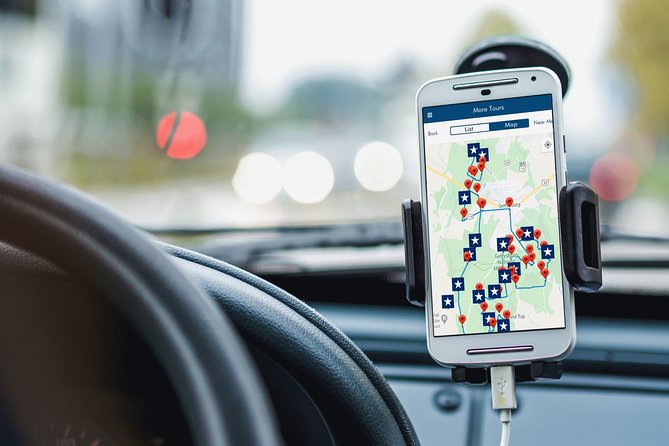
This is a self-guided tour through the Action’s Tour Guide App. After booking, you get an email and text with setup instructions and a password, and you’ll need to download the tour package using strong Wi-Fi or cellular. After that download finishes, it works offline, and the maps help even when you have no signal.
When you’re ready, you open the app at the site, launch the tour for your planned starting direction, and begin at the story’s starting point. The audio is designed to trigger automatically as you move, so you do not need to press play constantly.
For sound, you can connect your phone to your car stereo using Bluetooth, USB, or AUX. If you’re walking at stops, you might prefer headphones for clearer listening. CarPlay audio support is mentioned as compatible, and navigation features are described as coming soon, so don’t count on everything to show up inside the car screen yet.
Stop-by-Stop: Day 1 from First Light to Evening Plans
Gettysburg Heritage Center
Start here for the museum context and to get your bearings. The tour begins at the Heritage Center or the National Park Visitor Center, but the Heritage Center start is the most straightforward because you can park and begin right away. It’s a short visit at first, about 10 minutes, and admission is not included.
McPherson’s Ridge: Union and Confederate First Clashes
Your first moving story is set with dawn breaking on the first day of battle. At McPherson’s Ridge, the audio frames how Union and Confederate armies faced off, and it places the narration in “what you can see” terms as regiments take position. This is one of those stops where you can listen while the road brings you into the right mental picture fast.
The Railroad Cut: Strategy and an Early Skirmish
Next is the Railway Cut area, where the tour explains different battle strategies and highlights that this was the site of a major skirmish during the first day. If you like understanding why commanders chose certain ground, this is the stop that starts giving you that angle.
Eternal Light Peace Memorial: A Reunification Symbol
As you drive, you pass the Eternal Light Peace Memorial. The audio connects design details to meaning, including Maine granite forming the base and Alabama limestone forming the pillar. It’s a quiet break in the battle story, and it’s also a useful reminder that Gettysburg is about more than a day of fighting.
Oak Ridge Observation Tower: Panoramic Views
At the Oak Ridge Observation Tower, you’re set up to think in wider terms. The audio takes you back to the first day, but by the time you reach the tower it’s framed as the afternoon view. You also get panoramic sightlines over the fields, which makes the battlefield’s geometry feel real instead of abstract.
11th Pennsylvania Volunteer Infantry Monument and Battlefield Sallie
This stop is a favorite because it’s human and specific. The 11th Pennsylvania Infantry Monument includes a dog sculpted on the base, described as Battlefield Sallie, the unit’s mascot. The narration also connects military music and drummers to how regiments moved and communicated, so you hear about war in more than just tactics.
Evening on Day 1: What Happens After the Fighting
As evening descends, the audio shifts to what commanders did after the day’s damage. You’ll hear about plans and strategies as soldiers bunker down, which is a good change of pace from constant “moving and fighting.” If you’re driving while hungry, this is also a decent moment to plan a snack, stretch legs, then keep going.
North Carolina Memorial and Virginia Monument
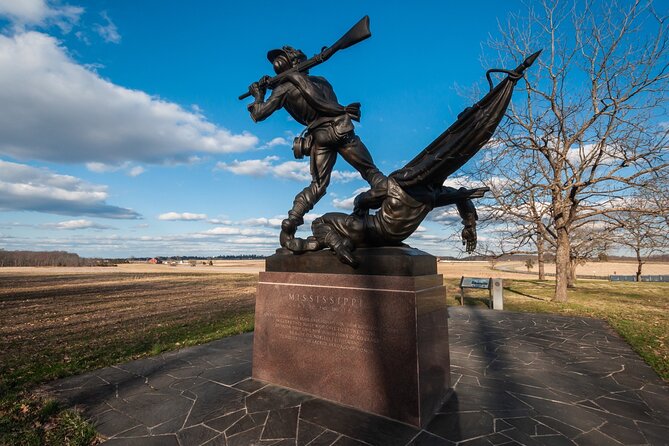
The tour continues past the North Carolina Memorial and the Virginia Monument. Even if you don’t spend long at each marker, the narration helps you connect the memorials to the larger story, instead of seeing them as random roadside art.
Day 2 Highlights: Little Round Top, Devil’s Den, Farms, and Medicine
Entering the Second Day: Auto Tour Stop 5
At the point where the second day begins, the audio explains troop organization and mobility. This section helps you understand the battle not as a single dramatic moment, but as a sequence of pressure points where each side tries to gain advantage.
Longstreet Observation Tower: Second Day Vantage
The Longstreet Observation Tower gives you a higher view for the second-day battlefield. If you find yourself missing context while driving, use the tower like a “reset button” for your mental map.
Eisenhower National Historic Site: Optional Detour
You get an optional detour off the main auto route to the Eisenhower National Historic Site, which overlooks the battlefield. The audio frames Eisenhower as someone who often stayed there, so it’s a useful add-on if you like seeing the same ground through a different historical lens.
Warfield Ridge: A Defensive Setup
Warfield Ridge is about a stage set for an attack, including trained Union marksmen positions defending key outposts. The story here is built around cause and effect, so you can listen and then look for why this ground mattered.
Little Round Top and the Valley of Death
Little Round Top is critical in the second-day fight, and the audio emphasizes that Union soldiers held a strategic hill at a tight moment. The tour then guides you around the hill and crosses into the Valley of Death name, which is a blunt reminder that this place was earned with extreme cost.
Devil’s Den: Sharpshooters Among Volcanic Rocks
Right after Little Round Top, the narration places Confederate sharpshooters among volcanic rocks. From the safety of Devil’s Den, they pick off Union soldiers. This stop works well if you like “micro stories,” because the audio helps you imagine how cover could change survival odds.
Wheat Fields and JJ Purman
As you pass the Wheat Fields, the audio frames another major skirmish site on Day 2. There’s also a specific story about a Union soldier named JJ Purman, which adds personal detail to the larger movement.
Peach Orchard: More Successes and Failures
The Peach Orchard continues the second-day battle thread. The narration helps you notice which strategies worked and which didn’t as you drive through the area. If you tend to remember places by what happened there, this section is designed for that.
Abraham Trostle Farm: Dinner Still on the Table
The Trostle farm story is vivid and memorable. When fighting broke out, the Trostle family fled so abruptly that dinner was still on the table. It’s a quick emotional moment, and it gives you a sense of how quickly normal life got interrupted.
Plum Run: Soldiers Who Escaped the Skirmish
Next comes Plum Run, catching up with the soldiers who escaped the skirmish at the Peach Orchard. This is a good narrative transition because it moves from what happened to the land into what happened to people trying to survive the chaos.
George Weikert Farm: A Battlefield Hospital
At the George Weikert Farm, the narration explains that the Weikert family returned to a grislier scene because the farm became a battlefield hospital. You’ll also hear about military doctors and the effects of war. This is heavy content, but it’s important because it adds what often gets left out when people focus only on battlefield actions.
State of Pennsylvania Monument: 35,000 Reasons
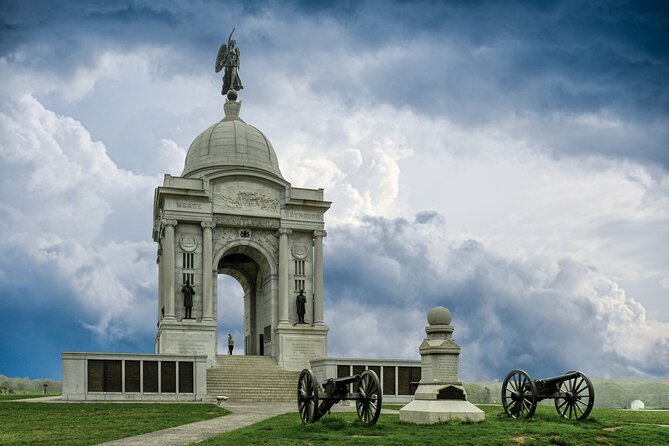
The Pennsylvania Memorial section centers on nearly 35,000 Pennsylvanian soldiers who fought here. The audio frames the intensity for these men as connected to their state, not an abstract cause. Even if you only spend a few minutes listening, the meaning sticks because it’s grounded in numbers and identity.
Day 2 to Day 3: Culp’s Hill Night Moves and the High Water Mark

Spangler’s Spring to Culp’s Hill Tower
As the drive reaches deeper into the woods, you’ll find Spangler’s Spring, described as a small but mighty site. Then the route continues to Culp’s Hill Tower, where Union and Confederate troops clashed again for control of this strategic outpost. The audio notes that Union defended until evening finally came.
East Cemetery Hill: A Night Raid at the Edge of Disaster
East Cemetery Hill is one of the most dramatic-feeling stops because the narration explains that night did not mean an end to fighting. A Confederate failure to fully capture Culp’s Hill leads to a nighttime raid, and this is framed as the moment the Union came closest to losing. The narration says the Union prevailed through perseverance, skill, and luck.
Gettysburg National Military Park: The Turning Point
You then arrive at Gettysburg National Military Park, where the tour ties Gettysburg to a Civil War turning point. The audio describes it as concluding General Robert E. Lee’s second invasion of the North and notes the battle is often described as the High Water Mark of the Rebellion. It also connects Gettysburg to Abraham Lincoln’s Gettysburg Address as inspiration from this experience.
Pickett’s Charge: High Water Mark on Day 3
On the third day, the narration sets up the final epic clash. At the point tied to Pickett’s Charge, you’ll stand where the audio frames the charge and looks down at the empty expanse of the final battlefield. The tour highlights the high water mark as the farthest advance toward Union defenses.
National Cemetery: Final Honor and Lincoln’s Address
The final stop is the National Cemetery, where the narration focuses on honoring Union soldiers who defended country and morals. The tour also brings in Lincoln’s Gettysburg Address story. It notes that many expected a long speech, but Lincoln kept it shorter because he didn’t want to steal attention from the Union soldiers who sacrificed their lives here. The audio ends here, but the mood lingers.
What I Like Most About This Format, Based on Real-World Use
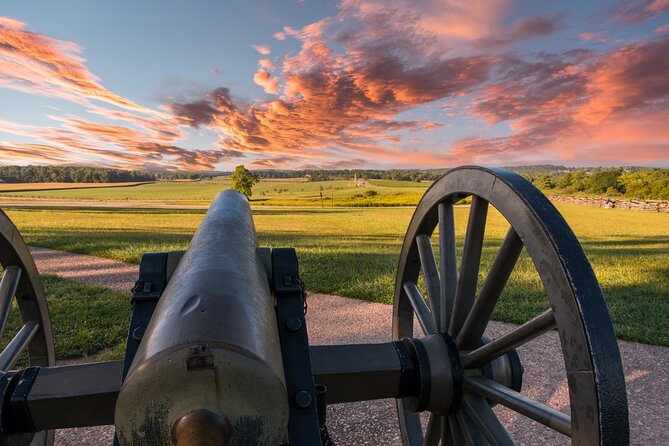
The most praised strength is the narration itself and the hands-free ease. Many people love that it’s easy to follow once you start correctly, and that you can stop, look, and restart on your own schedule. That’s the big difference between this and a bus tour, which can rush your best moments.
Another standout is the flexibility built into the audio. There’s mention of side stories, and those small “what you’re seeing, why it matters” moments make monuments feel less random. There’s also a learn more button on many stops, which helps you get extra context without breaking your flow.
The practical usability is a big deal too. Reviews highlight that people were able to download easily and used chapter markers along the way to know which story to listen to. If you’re new to self-guided audio, that kind of structure helps you avoid that awkward, lost-in-a-parking-lot feeling.
The Main Things to Watch So Your Audio Stays in Sync
This kind of tour is straightforward, but GPS timing is real life. Here’s how you avoid the common headaches:
- Start at the correct starting point in the app. If you miss the sync moment, you may need to restart.
- Follow the suggested route and speed limit. Keeping to the route improves vehicle location accuracy.
- Don’t panic if the start takes a couple tries. If audio feels off early, restart and get back into alignment rather than forcing it.
- If you lose audio in a specific area, it often means GPS drift rather than a total failure, so correcting your position usually fixes it.
Who This Tour Suits Best (And Who Might Want Something Else)
I think this tour is perfect for you if you want a strong Gettysburg experience without booking a group time slot. It works well for families, couples, and friends traveling in one vehicle because the price covers up to four people.
It also fits if you like an audio guide style that gives you structure but not schedule pressure. You can spend extra time at observation towers, read monuments at your own pace, and skip stops you don’t care about.
You might prefer a different format if you know you struggle with apps, setup, or GPS triggers. A small number of users reported audio sync problems, and the tour is dependent on location cues, so having patience for tech startup helps.
Should You Book This Gettysburg Self-Guided Driving Audio Tour?
Yes, if you want value and freedom without sacrificing depth. The combination of lifetime access, offline maps, and 60+ stories for a per-car price is a smart way to see Gettysburg without feeling rushed. Plan for 2 to 4 hours if you want to actually enjoy the monuments, not just race past them.
Book it if you’re traveling with up to four people in one vehicle and you’re comfortable using your phone in the car. Skip it only if you know you do not want any app setup or you want a fully guided, guaranteed synchronized narration experience no matter what. If you’re in the sweet spot, this tour is an excellent way to turn a long drive into a guided walk through history you can control.
If you tell me your travel month and how many people are in your car, I can suggest the best pacing plan for stops like Oak Ridge, Little Round Top, and the National Cemetery.
More Tour Reviews in Gettysburg
- 2-Hour Gettysburg Battlefield Guided History Bus Tour with a National Park Guide
★ 4.5 · 2,201 reviews





Gettysburg, Other Ways In
- 2-Hour Gettysburg Battlefield Guided History Bus Tour with a National Park Guide
★ 4.5 · 2,201 reviews
More to book around Gettysburg
- 1 Hour Gettysburg Haunted Farm Tour
★ 5.0 · 4 reviews - Wonder Women of Gettysburg Hidden Valor By Junket
★ 4.5 · 7 reviews - Mystery!: A Gettysburg Evening Walking Tour
★ 5.0 · 6 reviews - Secrets of Gettysburg Untold Stories: Beyond the Battlefield Tour
★ 5.0 · 4 reviews - Haunted Smart Phone App Location Aware Walking Tour in Gettysburg
★ 4.5 · 8 reviews - Civil War Battlefields Self-Guided Audio Driving Tour Bundle
★ 4.0 · 5 reviews
Gettysburg Battlefield Tours, compared.
 ★ 4.52-Hour Gettysburg Battlefield Guided History Bus Tour with a National Park GuideFrom $432,201 reviews
 ★ 4.5Civil War Ghosts: Echoes of the Fallen Gettysburg Ghost TourFrom $32913 reviews
 ★ 4.8Gettysburg: Horse-Drawn Carriage Battlefield TourFrom $74896 reviews
 ★ 4.5Gettysburg: Ghost Hunt Tour with Ghost Hunting EquipmentFrom $28589 reviews
★ 4.3Civil War Ghosts: Echoes of the Fallen Gettysburg Ghost TourFrom $24480 reviews
★ 4.5Gettysburg: Ghost Hunt Tour with Ghost Hunting EquipmentFrom $28589 reviews
★ 4.3Civil War Ghosts: Echoes of the Fallen Gettysburg Ghost TourFrom $24480 reviews
 ★ 4.9Gettysburg: Licensed Guided Battlefield Horseback TourFrom $144419 reviews
 ★ 4.5Ghost Tour: History and Haunts – Family Friendly – Best in GettysburgFrom $23378 reviews
 ★ 5.0Gettysburg: Private Tour with Licensed Battlefield GuideFrom $95362 reviews
Browse the lists this tour appears in