

REVIEW · GETTYSBURG BATTLEFIELD TOURS
Gettysburg Battlefield Self Guided Audio Driving Tour
Gettysburg hits hard, especially when you can choose your own pace. This self-guided audio driving tour strings together the battlefield’s most important viewpoints with GPS-activated narration that plays as you drive, so you’re not stuck reading while you’re steering. I like how the directions are straightforward and how the stories keep you moving from place to place without feeling rushed, for just $11.19 per group. One real consideration: if the app signs in or loads poorly on your phone, you might waste time, so it helps to download ahead and test before you pull out.
You start and end at Soldiers’ National Cemetery, so the route loops neatly and you can finish with the Lincoln Address setting. The tour is built for a car, with a private-feel setup up to 15 people per group. I also appreciate the audio includes music, and it can carry you through the drive between stops so the day stays light on “dead time.”
Just know you will do some short walks, including a moderately challenging trail on Big Round Top. If your legs prefer flat ground, plan footwear that can handle uneven paths and boulders.
Key Things I’d Watch For

- GPS that actually cues the next stop so you keep flow without constant screen checking
- Offline map included, helpful in a place where signal can be spotty
- Auto-play narration that starts as you drive, so you can keep both hands on the wheel
- A lot of famous ground in one loop, from Pickett’s Charge viewpoints to Culp’s Hill
- Two admission stops not included, so you may want to budget those entrance fees
- A few short hikes, including Big Round Top, so pack comfortable shoes
Other ways onto the battlefield
Start Smart at Soldiers’ National Cemetery, Then Let the App Take Over

Your tour begins and ends at Soldiers’ National Cemetery, 1648 Taneytown Rd, Gettysburg, PA 17325. This matters because you’re not piecing together a route from scratch, and you’re also landing in a spot that’s already meaningful before you even start the driving.
Here’s the practical rhythm to aim for: download the tour using strong Wi-Fi, then follow the emailed redeem code in the Shaka Guide app. Once you start the tour from the correct point, the audio and directions are set to work automatically, using GPS. That “hands-free” element is the whole point. You can start, pause, and resume without restarting the entire day, which is perfect when you want a longer look from an observation tower or you find a parking spot slower than expected.
Also, because the offline map is included, you should not rely on constant data. I still recommend keeping some battery margin, since your phone is doing the navigation job the entire loop.
Visitor Center First: Cyclorama and Morgan Freeman’s Film Fuel the Whole Day
Stop 1 is Gettysburg National Military Park Museum & Visitor Center, and it’s the best place to begin because it gives you a mental map before you hit the terrain. Plan about an hour here, and treat it like your pregame briefing.
What you’ll find:
- Museum exhibits with artifacts, plus interactive and multimedia displays that frame the Civil War and why Gettysburg mattered.
- The Cyclorama, a large 360-degree painting centered on Pickett’s Charge. Even if you’re not a “museum person,” this is the kind of visual that makes the later field positions click.
- A film narrated by Morgan Freeman, A New Birth of Freedom, giving you context for the battle’s meaning.
- Ranger-led programs and educational options, plus a bookstore and refreshment area if you need a meal break.
Important note: admission for this stop is not included. If you’re trying to keep costs predictable, check the entrance fee for the museum side before you arrive. Still, this is the one stop that can reduce confusion later, especially around the timing of July 1 versus July 2 versus July 3.
McPherson Ridge to Oak Ridge: The Opening Clash and Early Day Views
Stops 2 through 6 are focused on the first day’s fighting and how the landscape shaped that opening clash.
Stop 2 is McPherson Farm, right along McPherson Ridge, where the July 1 action begins. It’s a short stop, about 10 minutes, but it’s packed with key details: you’re looking at the fields and woodlots where Union and Confederate forces first engaged. The McPherson Barn is a standout here, used as a field hospital. Expect wayside exhibits and monuments that connect specific units and leaders, including General John Reynolds.
A useful way to work this stop: don’t just take photos. Pick one ridgeline or boundary of the open fields, then imagine troops moving across it. The ridge gives you panoramic context, which pays off at the next viewpoints.
Stop 3 is the Abner Doubleday Monument. It’s quick, about 10 minutes, and it includes a bronze relief portrait on a granite base. Doubleday is often pulled into baseball myths, but the monument here points you back to his actual Civil War service, including commanding the Union’s First Corps after John Reynolds’ death. If you like history that corrects popular shortcuts, this is a satisfying breather.
Stop 4 is the Eternal Light Peace Memorial. It was erected in 1938 for the battle’s 75th anniversary and features a perpetually burning gas flame meant to symbolize peace. This stop is short, about 10 minutes, but the viewpoint is strong. You can look toward the northern sector, with a focus on Oak Hill and the fields of the first day. There’s also a quiet mix of monuments and markers from both sides, which makes it emotionally different from the battlefield’s combat-focused markers.
Stop 5 is Oak Ridge Observation Tower, another 10-minute stop with big payoff. From here, you can trace likely movement paths between Union defense positions and where Confederate forces pressed in. Nearby monuments include the 11th Pennsylvania Infantry Monument, which features the war dog Sallie. If you’re the kind of person who enjoys the small human details inside big events, that dog statue can become your “anchor memory” for the day.
Stop 6 is the 11th Pennsylvania Volunteer Infantry Regiment Monument. It’s also about 10 minutes. You’ll see Sallie again as a bronze statue, and you’ll have battle markers that describe the regiment’s position on the first and second days. This is a good example of how the audio tour helps: even at a short stop, the narration can connect the marker text to what you’re seeing in the terrain.
Other days out with someone who knows
- Gettysburg: Private Tour with Licensed Battlefield Guide★ 5.0 · 362 reviews
- Ultimate Gettysburg Battlefield Self-Guided Audio Bundle Tour★ 4.0 · 108 reviews
- Ghosts of Gettysburg Self-Guided Driving Audio Tour★ 4.0 · 77 reviews
- Gettysburg: The Civilian Experience Guided Walking Tour★ 4.8 · 65 reviews
- Gettysburg: Family-Friendly Guided Ghost Tour★ 4.8 · 53 reviews
Lee’s Headquarters to Seminary Ridge: Command Decisions and Pickett’s Charge Set-Up

Stops 7 through 10 move you from “where fighting happened” to “how leadership and observation shaped those decisions.”
Stop 7 is Lee’s Headquarters, the preserved Mary Thompson House. It’s about an hour, and it’s more than just a viewpoint. You can explore the restored house used by Robert E. Lee during the battle, and it also served as a field hospital. Interpretive signs help connect Lee’s strategic decisions to what unfolded around Seminary Ridge. You’ll also notice nearby artillery emplacements and Confederate monuments, and there are views that show the Confederate command vantage over Seminary Ridge.
Stop 8 is Seminary Ridge Museum and Education Center, about an hour. Admission for this stop is not included, so plan for that cost if you want to go inside. This area matters because the Lutheran Theological Seminary has a cupola used as an observation point by Union General Buford. Even if you don’t climb anything, the idea that both sides were watching the same ridge from different angles gives the battle a chess-board feel.
Stop 9 is the North Carolina Monument on Seminary Ridge. This one is about 10 minutes and designed by Gutzon Borglum, depicting five Confederate soldiers advancing. It’s a straightforward memorial with a specific view toward Pickett’s Charge, so the scene reinforces the battle outcome in a very visual way.
Stop 10 is the Virginia Monument, also about 10 minutes. It features a bronze statue of Lee on Traveller, leading troops, with Confederate soldiers in relief around the base. This stop marks the starting point of the famous Pickett’s Charge. If you want the most meaningful takeaway here, treat it as a “before and after” moment: stand where the charge begins, then later connect it to where the assault fails and how the Union lines hold.
Warfield Ridge and Big Round Top: Confederate Approach and a Short Climb

Stop 11 is Warfield Ridge Observation Tower, about 30 minutes. This is your broader southern-battle map. From the tower, you can look at key spots like Little Round Top, Devil’s Den, and the Peach Orchard, and you can connect those features to the Confederate approach on July 2, 1863. Expect markers and monuments that track Confederate actions during assaults against Union positions.
Then comes Stop 12, Big Round Top Trail, about an hour. This is the tour’s “legs on the ground” moment. The trail is short but moderately challenging and runs through wooded areas. You might not get wide panoramic views at the summit because the top is wooded, but that doesn’t make it a wasted stop. The payoff is atmosphere and footing, plus the interpretive markers that explain why this ground mattered.
My practical take: if you’re wearing anything that slips on rocks, this trail can feel longer than it is. Comfortable shoes make this stop more relaxing.
Little Round Top and Devil’s Den: The Rocky Spots That Explain the Battle

Stop 13 is Little Round Top, about 30 minutes. This is one of the battlefield’s most dramatic places, with rocky outcroppings and views over areas tied to the second day, including Devil’s Den, the Wheatfield, and the Peach Orchard. Monuments here include the 20th Maine Monument, tied to Colonel Joshua Chamberlain and the regiment’s stand. You’ll also find the Warren Statue for Union General Gouverneur K. Warren, who recognized the strategic importance of Little Round Top.
Stop 14 is Devil’s Den, about 30 minutes. This place is famous for its huge boulders and rugged terrain. It’s also a key fighting area, with interpretive signs describing clashes and a look toward Little Round Top. You’ll see references to the Slaughter Pen hotspot of combat, plus monuments for Union and Confederate units. Even if you only spend half an hour, the boulders and defensive geometry give you a visceral sense of how hard it was to move in the open or take cover.
If you’re deciding how much time to spend between the two, I’d use this rule: if you want sweeping layout views, lean Little Round Top longer. If you want to feel the chaos of close terrain, lean Devil’s Den.
Cemetery Ridge to the High Water Mark: Pennsylvania Monuments, Culp’s Hill, and Copse of Trees

Stops 15 through 18 trace the fight around Cemetery Ridge, Culp’s Hill, and the culminating point of Pickett’s Charge.
Stop 15 is the State of Pennsylvania Monument area, including the Pennsylvania Monument and the First Minnesota Monument across the road. It’s about 30 minutes total. The Pennsylvania Monument is the park’s largest, with a grand dome and bronze tablets listing all Pennsylvanian soldiers. There are also statues of notable leaders like Meade and Reynolds. You can climb to the observation deck here for sweeping views of Cemetery Ridge.
Across the road, the First Minnesota Monument marks a heroic charge on July 2, 1863, often remembered for stopping Confederate momentum at great cost, including losing over 80 percent of its men.
Stop 16 is Spangler’s Spring, about 10 minutes. This is one of the tour’s gentler stops. It’s on Culp’s Hill, where soldiers reportedly shared water during lulls in the fighting. The point here is symbolic: you’re seeing a small slice of humanity inside a place defined by violence. Nearby, there are trails connected to the fighting on Culp’s Hill if you want more walking.
Stop 17 is Culp’s Hill, about 30 minutes. You get both views and defensive earthworks. The Culp’s Hill Observation Tower provides panoramas, and you’ll also see well-preserved breastworks built by Union soldiers to defend against Confederate assaults on July 2 to 3. Monuments and markers highlight Union regiments, including the Maryland Monument, described as the only monument for both Union and Confederate troops. You can also walk toward Spangler’s Spring, so this stop pairs naturally with the previous one.
Stop 18 is the Copse of Trees, about 10 minutes. This small cluster of trees is tied to the Confederate High Water Mark during Pickett’s Charge on July 3, 1863. Interpretive signs and nearby monuments explain the climax and how the assault was repulsed. If you’ve been thinking the battle was one big abstract story, this stop brings you back to one very specific, very narrow point on the map.
End Where the Nation Remembers: Soldier’s National Cemetery and the Final Loop

Stop 19 is Soldier’s National Cemetery, about an hour, and it’s also where you finish the tour. This place is sacred and calm, and it’s loaded with meaning. You’ll see over 3,500 Union soldiers buried here, plus the Lincoln Speech Memorial and the Soldiers’ National Monument.
A key reason this ending works is that you can read the battlefield differently after spending the day on ridges and slopes. When you return to Cemetery Hill, the scale and cost of the fighting becomes harder to ignore. The cemetery’s location also gives views of Cemetery Hill and nearby landmarks, so the loop closes with perspective.
Timing, Pace, and Practical Notes That Keep This Fun
This tour is designed for a full loop that adds up to about 9 hours when you respect the suggested time at each stop. That’s long enough to feel like a real battlefield day, not long enough to feel like you need a team of guides and porters.
A few practical things to keep the day smooth:
- Bring a phone charger or at least a charging plan, since the app handles GPS and audio.
- Use the offline map feature so you are not stressing about data.
- Wear shoes for rough ground at Big Round Top and rocky spots near Little Round Top and Devil’s Den.
- Expect entrance fees not included for stops like the Visitor Center museum and Seminary Ridge Museum side. Plan for that so you do not get surprised at the gate.
- Parking and meals are also not included, so build in cash or a card plan for your own breaks.
On the human side, I like how this format keeps you in control. You can spend longer where you’re moved or curious, and you can skip what feels repetitive.
Who Should Book This Audio Driving Tour?
This is a strong fit if you want:
- Private, self-paced sightseeing in your own vehicle
- A guided route without the cost of private transportation
- Clear GPS driving directions plus stories that play automatically
- A route that hits major Gettysburg themes, from Pickett’s Charge viewpoints to the cemetery’s legacy
It may not be your best choice if you absolutely hate using apps while driving or you know you often have trouble with login and setup on your phone. The tech parts are usually smooth, but the one low point in the experience is when the app will not sign in or fails to load properly. If you fall into that category, test the app setup before your trip day.
Should You Book This Tour?
Yes, if you’re the type who likes to drive, stop when it feels right, and get context while you’re looking at the terrain. The value is hard to beat because it’s $11.19 per group up to 15, meaning the cost is tied to your vehicle, not per person. The combination of auto-play audio plus turn-by-turn GPS makes the battlefield feel connected instead of scattered.
I would book it especially if you want a full Gettysburg day without waiting for a fixed schedule. Just budget for the two museum-type stops where admission is not included, and give yourself enough time to walk the short trails with comfort.
FAQ
Where does the tour start and end?
The tour starts and ends at Soldiers’ National Cemetery, 1648 Taneytown Rd, Gettysburg, PA 17325, USA.
How long should I plan for the full tour?
The duration is listed as about 8 to 9 hours.
What language is the audio narration in?
The tour is offered in English.
Do I need internet to use the tour?
No. You get an offline map, and the tour can run without continuous wifi or data.
Does the $11.19 include park or museum admission fees?
No. Entrance fees are not included. Some stops specifically note admission is not included.
Is parking or meals included in the price?
No. Parking fees and meals or refreshments are not included.
How big is the group for this tour booking?
The tour has a maximum of 15 travelers. Pricing is per group, up to 15.
More Tour Reviews in Gettysburg
- 2-Hour Gettysburg Battlefield Guided History Bus Tour with a National Park Guide
★ 4.5 · 2,201 reviews





Gettysburg, Other Ways In
- 2-Hour Gettysburg Battlefield Guided History Bus Tour with a National Park Guide
★ 4.5 · 2,201 reviews

More to book around Gettysburg
- 1 Hour Gettysburg Haunted Farm Tour
★ 5.0 · 4 reviews - Wonder Women of Gettysburg Hidden Valor By Junket
★ 4.5 · 7 reviews - Mystery!: A Gettysburg Evening Walking Tour
★ 5.0 · 6 reviews - Secrets of Gettysburg Untold Stories: Beyond the Battlefield Tour
★ 5.0 · 4 reviews - Haunted Smart Phone App Location Aware Walking Tour in Gettysburg
★ 4.5 · 8 reviews - Civil War Battlefields Self-Guided Audio Driving Tour Bundle
★ 4.0 · 5 reviews
Gettysburg Battlefield Tours, compared.
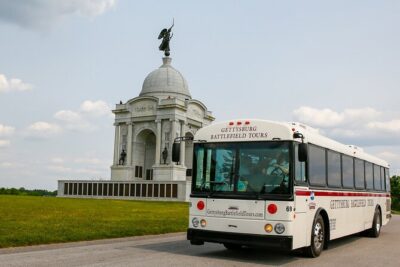 ★ 4.52-Hour Gettysburg Battlefield Guided History Bus Tour with a National Park GuideFrom $432,201 reviews
 ★ 4.5Civil War Ghosts: Echoes of the Fallen Gettysburg Ghost TourFrom $32913 reviews
 ★ 4.5Gettysburg Battlefield Self-Guided Driving Audio TourFrom $16910 reviews
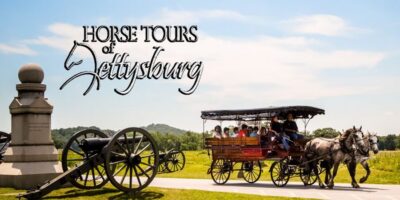 ★ 4.8Gettysburg: Horse-Drawn Carriage Battlefield TourFrom $74896 reviews
 ★ 4.5Gettysburg: Ghost Hunt Tour with Ghost Hunting EquipmentFrom $28589 reviews
★ 4.3Civil War Ghosts: Echoes of the Fallen Gettysburg Ghost TourFrom $24480 reviews
★ 4.5Gettysburg: Ghost Hunt Tour with Ghost Hunting EquipmentFrom $28589 reviews
★ 4.3Civil War Ghosts: Echoes of the Fallen Gettysburg Ghost TourFrom $24480 reviews
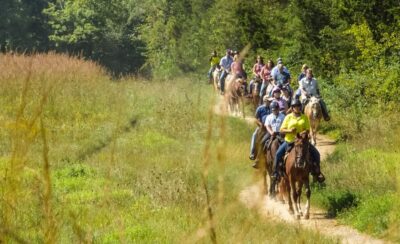 ★ 4.9Gettysburg: Licensed Guided Battlefield Horseback TourFrom $144419 reviews
 ★ 4.5Ghost Tour: History and Haunts – Family Friendly – Best in GettysburgFrom $23378 reviews
Browse the lists this tour appears in