

REVIEW · CYCLING TOURS
Washington DC: Monuments and Memorials Bike Tour
Two wheels make DC history move fast. This Washington DC monuments bike tour threads the National Mall and Potomac Tidal Basin at an easy pace, with guides like Jose keeping each stop clear and fun.
I love that you see the big memorials in a tight, efficient loop, with quick context and time to actually wander around. I also love the Cannondale comfort bikes and the flat route that fits families well. One catch, the pace is brisk, with short photo and guided moments, so if you want to linger and read every plaque, you may feel a little rushed.
Key things that make this DC bike tour worth your time
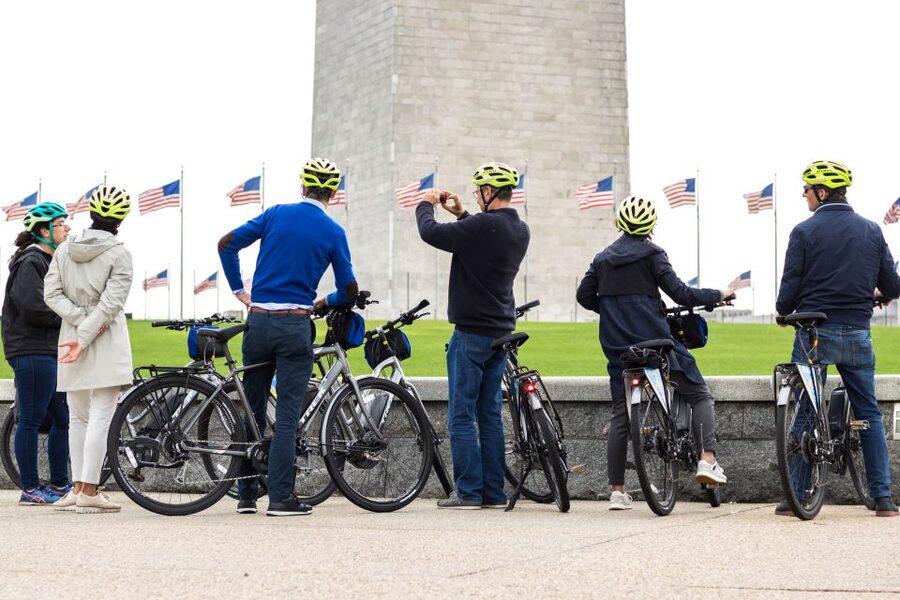
- A real National Mall-and-memorial route, not just random photo stops.
- Guided mini-stories at each memorial, plus a chance to walk around.
- Easy riding, about 4 miles of flat terrain, rated easy for most people.
- Cannondale comfort bikes with helmets included.
- Meet at the Wharf DC area, so you start near the water and easy food options.
- Guides who keep things safe and moving, with names like Bianca, Mark, Wally, and Marcus showing up in many standout experiences.
Other routes on two wheels

Starting at the Wharf DC, then rolling into the National Mall
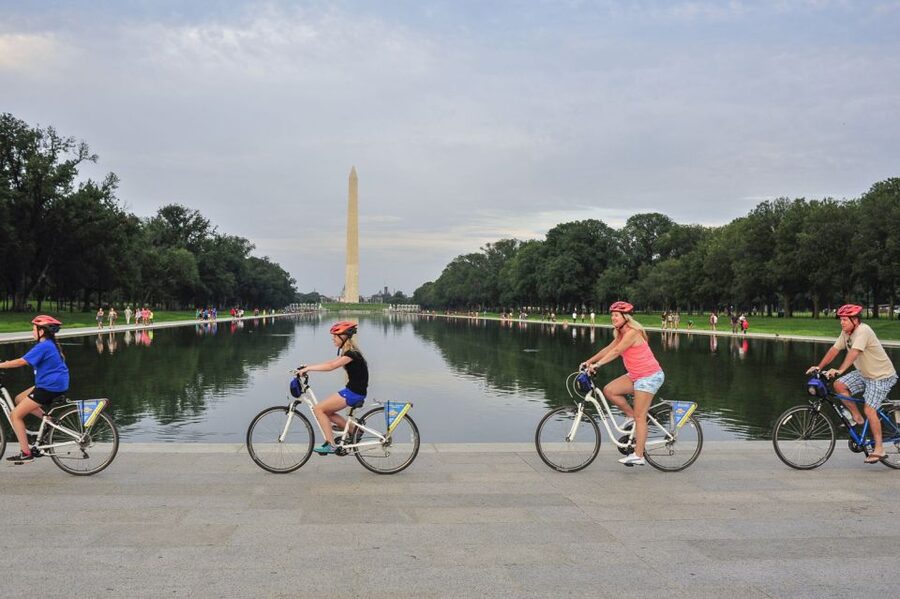
The best part about this tour is how it gives you instant orientation. You meet at 801 D St NW, right by the US Navy Memorial Plaza, and that location is handy because you are already in the action near the Wharf DC waterfront. From the start, the vibe is practical: get your bike, get your helmet, and roll.
Once you are moving, you stop treating Washington DC like a checklist and start treating it like a connected landscape of stories. The route works because the National Mall sites are close enough that biking saves you time, but not so fast that you miss what you are looking at. It is a smart way to get your bearings on the monuments while your legs still feel fresh.
Cannondale comfort bikes, helmets, and what the easy rating really means
This is an easy ride, covering about 4 miles of flat terrain over roughly 3 hours. That does not mean you ride forever without a break. It means you do not have the steep-street stress that turns a sightseeing day into a cardio test. You also have frequent stops, where you can get off the bike, take photos, and listen.
A key detail: helmets are mandatory. Good news, they are included, so you do not need to bring your own. The tour is also family-friendly, and if you are traveling with little ones, toddler trailers and tag-a-longs are available for rent. That is the difference between making kids “sit and wait” and actually keeping them part of the day.
A few practical notes to avoid frustration:
- Bring passport or ID, and wear comfortable shoes.
- No sandals or flip-flops.
- Not suitable for pregnant women, based on the tour guidance.
- If weather turns unsafe, the tour can be canceled for safety and you will receive full credit or a refund if they cannot reschedule.
Before you roll away from the start area, do a quick bike check like you would at any rental. Several riders praise the bikes as great for short tours, and a few note minor mechanical quirks on some days. That is not a reason to avoid the tour, it is just a reminder to confirm brakes and shifting before you head out.
Jefferson Memorial, then MLK Jr. and the Korean War Veterans Memorial

The tour’s early rhythm is where it earns its reputation. You start with major memorials in a logical order, so each stop builds on the next. You begin with the Thomas Jefferson Memorial, then move to the Martin Luther King Jr. Memorial, and continue to the Korean War Veterans Memorial.
At Jefferson, you get more than a photo. You get a short guided walk-up and an explanation that makes the building, symbolism, and the surrounding context make sense in minutes. This matters because the Jefferson Memorial can feel like a classic “big statue plus water” spot if you rush through. With a guide, you get the why behind what you are seeing.
The Martin Luther King Jr. Memorial is where the tour’s timing helps you. You stop, listen, and then you can step around the memorial at your own pace. Many people like this part of the day because it is moving in a quiet, personal way, not just visually impressive.
Then you hit the Korean War Veterans Memorial. The format of this memorial invites slower looking, and you get that chance because the tour is designed for short pauses plus a little wandering time. If you have kids, this is also one of the more “stand and talk” moments of the day, not just a quick photo stop.
- DC Memorials Night Tour: Glass-Roof Convertible Upgrade Option★ 4.5 · 6,933 reviews
- National Mall Monuments Night Tour with 10+ Stops, Entry Tickets★ 4.5 · 4,863 reviews
- Washington DC Monuments by Moonlight Tour by Trolley★ 4.5 · 3,956 reviews
- Hop-on Hop-off Sightseeing Tour by Open-top Bus with 18 Stops★ 3.5 · 3,848 reviews
- Washington DC in One Day: Guided Sightseeing Tour★ 4.5 · 3,360 reviews
A quick pacing tip for families
If you have kids, plan for quick attention cycles. The tour gives you short guided moments and then time to walk. I like that model because it avoids the trap of having everyone bored for 30 minutes straight waiting for adults to read every word.
Lincoln Memorial and Vietnam Veterans Memorial: the moments that hit hardest

After the early memorials, the tour heads to the Lincoln Memorial, then the Vietnam Veterans Memorial, and you are now in the part of the route that many people remember most.
At Lincoln, you get a guided explanation and time to walk around. Lincoln is one of those sites that many people know from photos, but the details only click when someone points out what to notice. This is exactly where short guided context shines, because you are not just looking up, you are learning how the memorial communicates ideas.
Then comes the Vietnam Veterans Memorial. This site can feel heavy, and the tour handles it with the right structure. You stop and listen, but you also get space to walk and absorb. That walking time is important, because this is not a place where you want to sprint past. It needs a slower pause, even if you are on a bike tour.
One reason families often love this segment is that it balances emotion with clarity. Your guide is telling the story behind what you see, and you get breaks to reset. A number of guides are praised for being helpful with photos, like Marcus, who is noted for taking time and giving enough room to explore each stop.
World War II Memorial and the Washington Monument, with photo stops that actually work

Next you roll to the World War II Memorial, then the Washington Monument. This is a good sequence because it shifts the mood from reflective to monumental, in both scale and design.
At the World War II Memorial, you get guided context close up. The memorial is large, and seeing it from the ground level matters. The bike tour format helps here because you can get oriented to the layout quickly and then look around without the fatigue that comes from walking between multiple big sites.
Then you reach the Washington Monument, where the view and the sense of scale become part of the story. Many visitors find that the monument is easier to appreciate when you are not stuck in slow-moving traffic or walking a long distance to get there. Here, you arrive fresh, stop, and take in the landmark feeling in a way that feels calm rather than rushed.
Also, a standout detail from rider comments: because this route is mostly flat and traffic can be less stressful than you might expect, riders often say you do not need an e-bike. I like that because it keeps the experience consistent. You are not forced to upgrade equipment to enjoy the day.
Smithsonian Castle stop: finishing with more to do nearby
The last named stop is the Smithsonian Castle area. Even if you are not doing a full museum visit, it is a smart wrap-up. You end the ride with one more anchor point that helps you connect the monuments day with the bigger Smithsonian world.
This finish is useful for real life. DC days rarely stay perfectly contained. After your tour, you are already positioned to keep going, whether that means grabbing a snack, walking a bit more, or planning a museum time for later.
You return to 801 D St NW to close the loop, which keeps logistics simple. No complicated transfers, no hunting for where you left the bike.
Guides are the secret ingredient, from Bianca to Wally
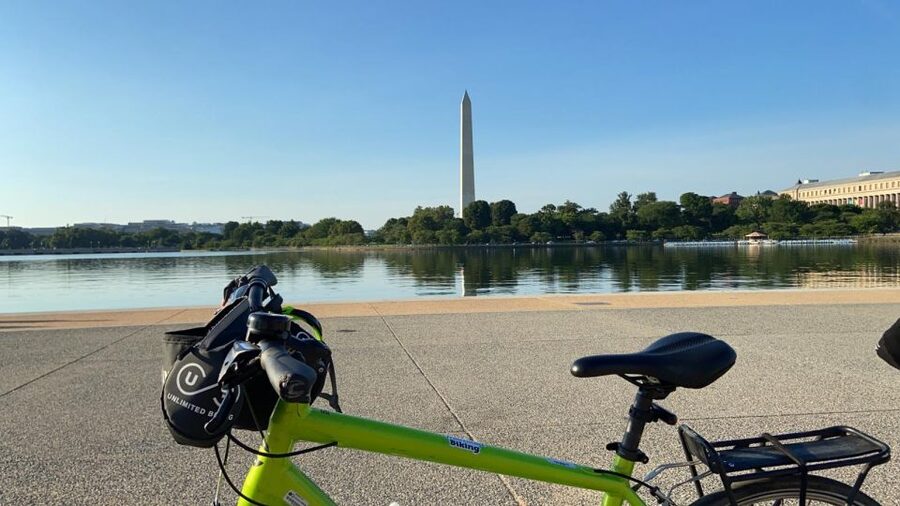
In a tour like this, the guide is not just a background voice. They shape the whole day by deciding what to emphasize, how to keep groups together, and how to turn a bunch of monuments into a coherent story.
Many standout guide names show up across experiences: Bianca is frequently praised for being fun and family-friendly. Mark gets credit for a great pace and a “perfect amount of time” feel. Wally is mentioned for excellent planning and safety focus, and one rider notes an especially memorable moment where Wally timed things around Marine One activity near the White House, then the rider got to catch Marine One just after the tour. That kind of bonus depends on the day, so do not count on it, but it says something about the guide effort.
Other praised guides include Jose, Greg, Marcus, Mackenzie, Noah, Joe, Claire, Kirby, Eric, and Paula. Common threads show up across these names:
- Clear explanations that help you notice details.
- A pace that keeps the group safe and moving.
- Help with photos, without making stops feel like a photo line.
There is also a practical leadership side. One rider noted that latecomers can slow the whole group at each stop. So do yourself a favor and arrive early. This tour runs on momentum.
Price and value: what $65 buys you in 3 hours
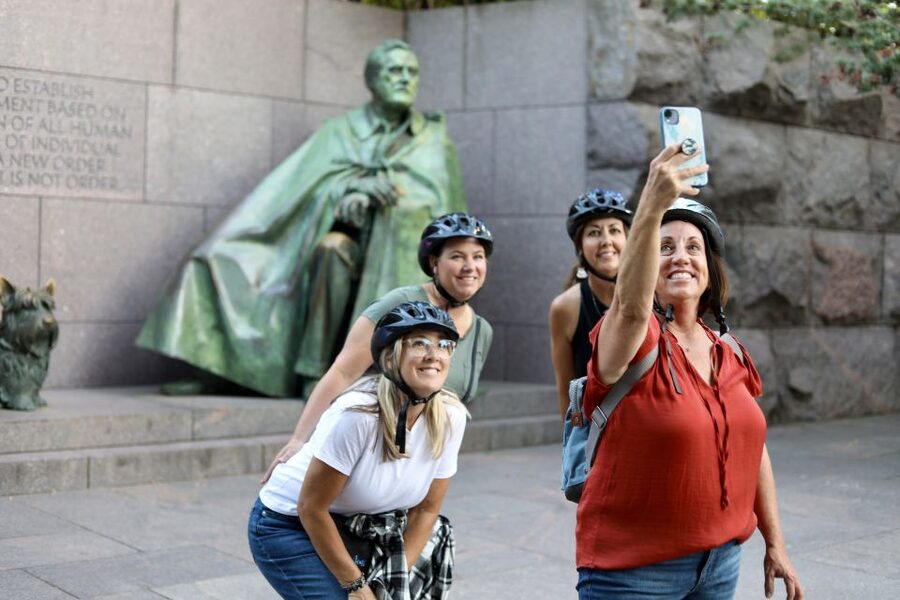
At $65 per person, this bike tour is priced like a focused, included experience: professional guide, bike rental, and helmet are all part of the package, and you are on a route built around the major monuments people come to see.
Here is how I think about value for you:
- You save energy compared to walking long distances between memorials.
- You save time compared to doing each site one by one without guidance.
- You also save effort because the route gives you a structure, you are not guessing what to see in what order.
Could you do this cheaper with a DIY bike rental and a map? Sure, you could ride around on your own. But the real value here is the guided pacing, the explanations that make the memorials make sense quickly, and the time to step off the bike and actually walk around.
This is also a strong value if you want one “best-of” day without turning your whole vacation into a logistics project. Three hours is long enough to feel like you got somewhere, short enough to keep your evening open.
Who this tour suits best, and who should skip it
This is a great fit if you:
- Want to see multiple top monuments efficiently in a single morning or afternoon block.
- Prefer an easy, flat ride with guided context instead of long walks.
- Travel with kids and want a plan that keeps them engaged, since toddler options are available for rent.
- Want a safer-feeling way to ride while focusing on the sights.
It is not the best fit if you:
- Are pregnant, since the tour guidance says it is not suitable.
- Expect a slow, reading-heavy pace. You do get time to walk around each memorial, but the structure stays tight.
Should you book the Washington DC Monuments and Memorials Bike Tour?
If your goal is a high-impact DC monuments day with minimal stress, I would book it. The route is built around the sights most people want, the ride is short and flat, and you get guided context plus time to wander instead of nonstop movement.
Book it especially if you are:
- Traveling with kids of mixed ages and need an activity that keeps everyone included.
- Short on time and want the biggest DC payoff without wearing yourself out.
- Hoping to learn while you sightsee, because the guides tend to make the stops click fast.
If you are the kind of person who wants to spend an hour at every memorial and read every line, you may want to pair this with extra time later on one or two sites. But as a first look at Washington DC’s most famous landmarks, this is a practical, genuinely fun way to do it on two wheels.
FAQ
How much does the Washington DC Monuments and Memorials Bike Tour cost?
The price is $65 per person.
How long is the tour, and how much do you ride?
The tour lasts 3 hours and covers approximately 4 miles of flat terrain. It is rated as easy.
Where do we meet the guide?
You meet at 801 D St NW, Washington DC 20004, right by the US Navy Memorial Plaza.
Is bike rental and a helmet included?
Yes. Bike rental and a helmet are included in the tour.
Is it a good option for families and kids?
Yes. The tour is described as family-friendly, rated easy, and toddler trailers and tag-a-longs are available for rent for children.
Is the tour suitable for pregnant women?
No. The tour is not suitable for pregnant women.
What happens if weather makes riding unsafe?
If weather makes riding dangerous, the tour may be canceled. If the local partner cannot reschedule, they issue full credit or a refund.
More Tours in Washington Dc




More Tour Reviews in Washington Dc
More to book around Washington Dc
- The Public Group Scooter Tour of DC’s National Mall
★ 5.0 · 3 reviews - National Mall Highlights with Cherry Blossom & Arlington Cemetery
★ 3.5 · 3 reviews - Private Washington DC Monuments Day or Night Bike Tour
★ 5.0 · 3 reviews - Private Tour with US Capitol Or Archives Or Washington Monument
★ 3.5 · 3 reviews - Washington DC Private Guided Bus Day Tour with Step Off Guide
★ 5.0 · 3 reviews - 3-Hour Small Group Memorial Tour in Washington, D.C.
★ 4.0 · 3 reviews
Cycling Tours, compared.
 ★ 4.3Monuments by Night Bike TourFrom $65254 reviews
 ★ 4.5Washington DC Capital Sites Bike TourFrom $55198 reviews
 ★ 5.0Customized Private Bike Tour of DCFrom $595114 reviews
 ★ 4.5Monumental Electric Bike TourFrom $8999 reviews
 ★ 4.5Washington DC Cherry Blossoms By Bike TourFrom $6588 reviews
 ★ 5.0Private Family-Friendly Bike Tour of DCFrom $59583 reviews
 ★ 4.3Washington DC Bike RentalFrom $2173 reviews
 ★ 4.6Bike Tour: Capitol Hill, Lincoln Memorial, National MallFrom $5569 reviews
Browse the lists this tour appears in