
REVIEW · GEORGETOWN TOURS
Historic Georgetown: History, Gossip, & Architecture Walking Tour
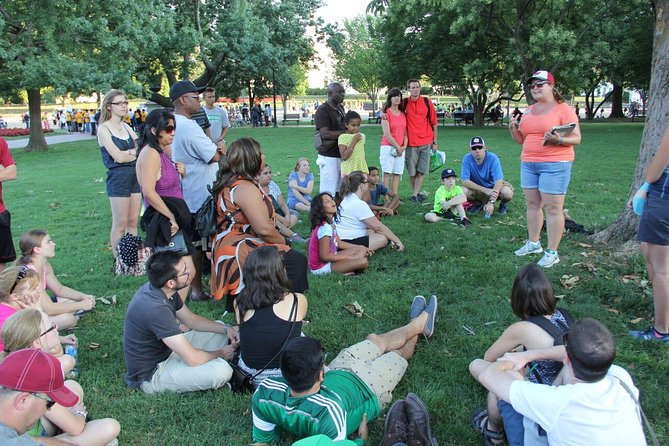
Georgetown has a way of rewarding slow walking. This 2-hour tour turns one of Washington DC’s most historic neighborhoods into a story you can actually follow on foot, with architecture, big-name family connections, and guide-led commentary. I especially like the mix of history plus gossip (the kind that makes landmarks feel human) and the stop-and-look pacing that keeps you from speeding through on your phone. The one drawback to plan for is the terrain, with hills, brick sidewalks, and cobblestones.
What makes it work is how the route is laid out, starting at the C&O Canal Lock 3 area and ending near Georgetown University. You’ll hop between sites that most people only half-notice, like the Old Stone House and the Patrick Healy building spires, then finish close to the Exorcist Steps for an easy self-guided wander. Guides like Vicky, Becca, Wayne, and Ingeborg are repeatedly highlighted for keeping the energy up, answering questions, and sharing a personal-feeling flow of facts and anecdotes.
Key things to know before you go
- Small group, max 15 people means you can hear the guide and actually ask questions.
- Start at C&O Canal Lock 3 first, then walk Georgetown downhill and uphill at a comfortable pace.
- Family names, but grounded in place: you’ll connect Lincoln and Kennedy-linked homes to what you see on the street.
- Old Stone House is a real pause: it’s managed by the National Park Service, with a garden to sit if you need a break.
- Georgetown University sightlines include the Patrick Healy building and the statue of John Carroll.
- End near Georgetown University and the Exorcist Steps, so you can keep going on your own.
More of Georgetown, brick by brick
C&O Canal Lock 3: the smart start that sets the tone
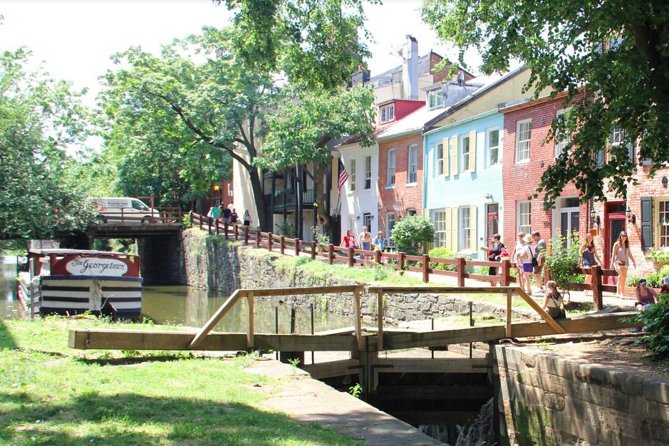
The tour begins at C&O Canal Lock 3 at 10th Street and Canal Road area (Lock 3, Washington, DC 20007). Starting with the canal is a great choice, because it gives you a basic map of how Georgetown worked before it became a browse-and-brunch kind of place.
You’re not just looking at scenery. You’ll hear how the canal functioned through the industrial section of Georgetown, including a chance to see a working lock gate. That detail matters. Without it, the canal is just a pretty backdrop. With it, you start noticing the logic of the neighborhood: where boats needed to go, how the industrial area connected to the port, and why Georgetown developed the way it did.
One practical note: since this is a walking tour with a couple of hours on your feet, I’d treat your first stop as your warm-up. Take a few minutes to orient yourself, then settle in for the storytelling that follows.
Georgetown port and cobblestone streets: where the neighborhood story actually lives
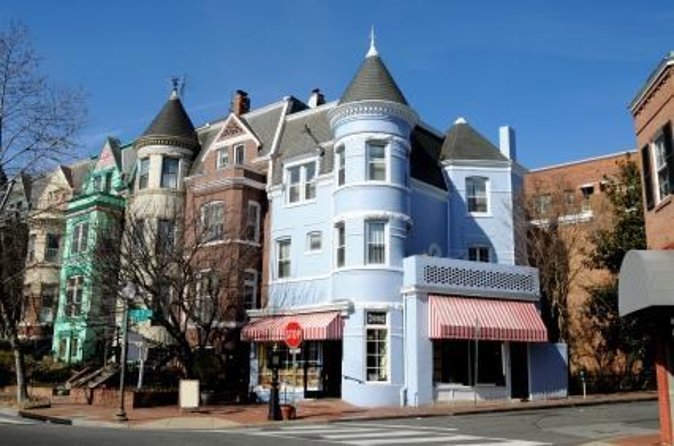
Your first major walk is through Georgetown’s port area, with its cobblestone streets, historic homes, and gardens. Today it’s known for shopping and dining, but the tour’s value is that you’ll slow down enough to see the older patterns.
This is where the guide’s commentary really earns its keep. Instead of just naming famous buildings, you connect them to the people who owned prominent homes, including families such as the Lincolns and Kennedys. Seeing those names attached to specific blocks helps the whole neighborhood feel less like a postcard and more like a timeline.
If you’re the type who tends to skim streets while taking photos, this is the stop that pulls you back into paying attention. You’ll also get a better sense of the park-like feel of the area, with old brick and greenery that changes how the whole walk looks and feels.
Heads-up: the streets here can be uneven. If you want to glide instead of shuffle, wear shoes with good grip and give yourself a little extra time on the cobbles.
The C&O Canal and the working lock: history you can picture
After Georgetown port, you move to the C&O Canal portion in the industrial section. The tour focuses on how canal boats traveled and how the lock system helped move them along.
The big payoff at this stop is the working lock gate. It’s the kind of visual explanation that sticks. When you can see a mechanism doing its job, you understand the canal’s purpose without needing a textbook.
This stop is also a good reset for your brain. You’re walking through a neighborhood with a lot of architectural charm, and then the canal brings you back to function, trade, and engineering. It’s a nice change of pace while still staying connected to the broader Georgetown story.
More walking, less waiting
- Ghosts of Georgetown & The Exorcist Steps Walking Tour★ 5.0 · 610 reviews
- Georgetown Foodie Culinary Tour & Neighborhood Walk★ 5.0 · 437 reviews
- Gastronomic Georgetown Walking Food Tour★ 4.5 · 373 reviews
- Ghosts of D.C. – Walking Tour★ 4.5 · 344 reviews
- Historic Georgetown: History, Gossip, & Architecture Walking Tour★ 5.0 · 321 reviews
Old Stone House (built 1766): a tiny building with a big afterlife
The Old Stone House is one of those stops that feels like a gift on a walking tour. Built in 1766, it’s one of the oldest buildings in the city and is run by the National Park Service, with a garden that’s made for sitting and catching your breath.
What I like most here is how the tour frames the building’s changing roles over time. You’re not just told it’s old. You learn that it was used as a car dealership as late as 1953, and then later it was taken over for historic preservation. That arc, from early Georgetown port life to mid-20th-century reuse, makes the place feel surprisingly close to your own era.
The tour also ties it to the idea of nearby port life where tobacco and tall tales were part of the atmosphere. It’s the kind of detail that turns a quiet garden corner into a scene you can picture.
Hedin House Apartments: Kennedy connections without the tourist gloss
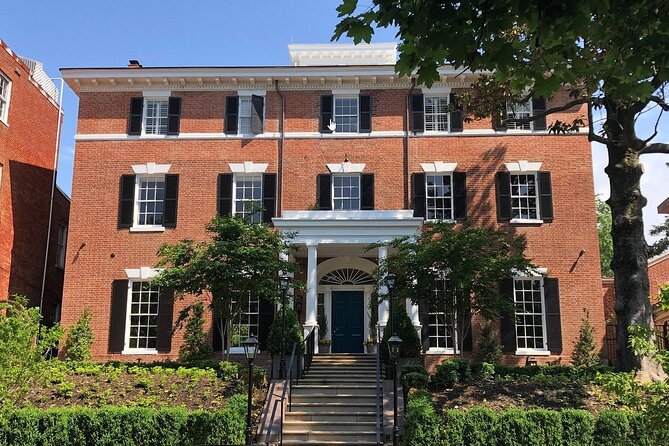
Next comes Hedin House Apartments, where you’ll see a home linked to the Kennedy family. The tour doesn’t treat it like a museum badge. It uses the setting to show how major families were connected to the neighborhood through the homes they lived in, noting that the Kennedys had ties to nearly a dozen homes in Georgetown.
For me, this is one of those stops that makes the architecture feel personal. Even if you never plan to live in Georgetown, seeing how prominent families were part of the local housing fabric gives you a clearer understanding of why the neighborhood became what it is.
Also, it helps you notice what’s distinctive about the area beyond the headline names. If you pay attention here, you’ll start seeing patterns in building scale, street layout, and the overall feel of the blocks.
Georgetown University spires and John Carroll: a campus moment that’s more than photos
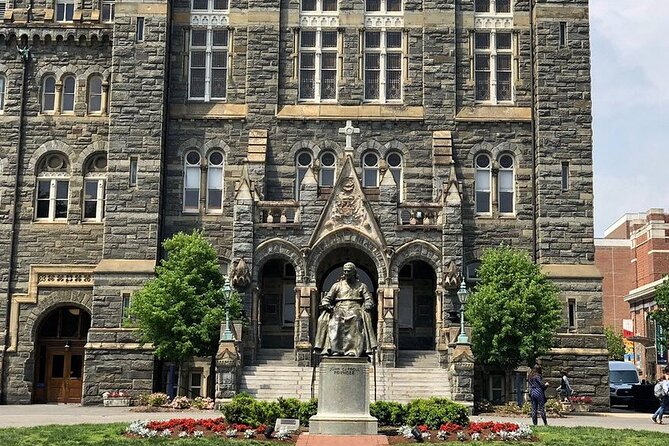
The tour then reaches Georgetown University, founded in 1789. Since it’s a Jesuit university with programs across medical, legal, and undergraduate studies, it’s a place that blends big institutional history with everyday student life.
You’ll get specific sightlines, including the towering spires of the Patrick Healy building and the statue of founder John Carroll. Those are standout visuals, and the guide’s commentary helps you see them as landmarks with meaning, not just points to snap.
Timing affects what you’ll notice. On a warm day, you might catch students lounging in the grass out front, reading, chatting, or throwing frisbees. Even if the weather is less cooperative, this stop is still useful because you’re ending up at one of the most iconic edges of the neighborhood.
Martin’s Tavern: the perfect end-of-walk mood
After the campus portion, you’ll pass by Martin’s Tavern, a Georgetown institution that’s been locally owned since 1933. The tour describes the place in a way that makes it feel like a snapshot of old Georgetown: dark wood panels, black and white photos on the walls, and the steady presence of regulars at the bar.
You’ll also hear about its classic American menu and the mix of indoor and outdoor seating. I like this kind of finish because it gives you two options right away. You can grab a bite, or you can treat it as a marker and head off to nearby streets for a slower, self-guided wander.
Even if you don’t eat there, it helps to know what locals still choose after all these years. It puts the neighborhood’s present-day charm into context.
Exorcist Steps: film fame, real neighborhood stairs
The tour concludes near the Exorcist Steps, the famous stairway connected with the 1970s film. This is a fun ending because it’s recognizable, but you’re seeing it in the context of Georgetown’s real geography and street life.
Once the tour ends near Georgetown University at the intersection of 37th and O St NW, you’re well-positioned to keep exploring. This is the kind of finish that doesn’t trap you in a set itinerary. It hands you back control.
If you’re the type who likes a quick win, I’d use the final minutes to take a last look at your map, then head toward the steps area on your own.
Value check: is $49 for 2 hours a good deal?
For $49 per person and about 2 hours of guided walking, this tour lands in the “worth it if you want context” category. You’re paying for a guide who connects architecture and street scenes to stories you’d miss on your own, like the worked canal lock angle and the Old Stone House’s surprising mid-century car dealership chapter.
The 15-person cap matters here. A small group makes it easier to hear commentary and get answers while you’re standing right in front of the buildings. That’s a big part of what you’re really buying: time, attention, and interpretation.
Add in the fact that the stops themselves list admission as free, so you’re not stacking extra fees while you’re walking. If you’re aiming to get your bearings fast and learn why Georgetown looks the way it does, $49 feels reasonable for the output.
Terrain and pace: what to wear and how to plan your time
The tour is designed for most travelers, but your comfort depends on shoes and expectations. The route includes hills, brick sidewalks, and cobblestones, and you’ll be moving at a walking-tour pace for roughly two hours.
So my practical advice is simple:
- Wear shoes with grip.
- Bring water if the day is warm.
- Expect to pause for commentary and photos, not just stroll.
It also requires good weather. If conditions are rough, the experience can be moved to a different date or you may receive a full refund. That’s a fair trade for an outdoor walk that relies on visibility and comfortable walking.
Guide factor: why these tours feel personal in Georgetown
A lot of walking tours sound good on paper. This one tends to get praised because the guides bring personality and keep the group engaged.
From the guide names you’ll hear associated with the tour, you can get a sense of the vibe:
- Vicky is repeatedly described as engaging and strong at Q&A.
- Becca is praised for tying together history and architecture in a way that matches what people want to see.
- Wayne gets credit for sharing facts plus entertaining anecdotes.
- Ingeborg is highlighted for adding a good dollop of gossip to keep things fun.
- Eli is mentioned for humor, not just dates and details.
- Georgia is noted for professional, clear delivery.
I love that style because Georgetown rewards the “look closer” approach. When the guide points out what to notice, you stop treating the neighborhood like a sightseeing checklist and start treating it like a place with characters, not just buildings.
Should you book Historic Georgetown?
Book it if you want:
- A structured way to learn Georgetown without sprinting through it.
- Stories that connect big names like the Kennedys to the actual streets and buildings you’re seeing.
- A small-group walk with a guide who can answer questions along the way.
Skip it or think twice if:
- You hate uneven pavement and cobblestones.
- You prefer fully self-guided sightseeing with zero talking and zero scheduled stops.
- You’re traveling during questionable weather, since this one depends on outdoor walking.
If your goal is to understand Georgetown in a couple of hours, with real architecture, canal history, and that classic DC mix of serious and playful storytelling, this tour is a solid choice.
FAQ
Where does the tour start?
It starts at C&O Canal Lock 3 (Lock 3, Washington, DC 20007).
How long is the walking tour?
It runs for about 2 hours (approx.).
How many people are in the group?
The tour is capped at a maximum of 15 travelers.
What language is the tour offered in?
The tour is offered in English.
Do the stops require paid admission tickets?
The provided details list admission ticket free for the stops on the route.
Where does the tour end?
The tour ends near Georgetown University, at the intersection of 37th and O St NW.
What happens if the weather is poor?
This experience requires good weather. If it’s canceled due to poor weather, you’ll be offered a different date or a full refund.
Is there free cancellation?
Yes. You can cancel for a full refund up to 24 hours before the experience’s start time.
More Tour Reviews in Washington DC





Georgetown, Block by Block





More to book around Washington DC
- The Public Group Scooter Tour of DC’s National Mall
★ 5.0 · 3 reviews - National Mall Highlights with Cherry Blossom & Arlington Cemetery
★ 3.5 · 3 reviews - Private Washington DC Monuments Day or Night Bike Tour
★ 5.0 · 3 reviews - Private Tour with US Capitol Or Archives Or Washington Monument
★ 3.5 · 3 reviews - Washington DC Private Guided Bus Day Tour with Step Off Guide
★ 5.0 · 3 reviews - 3-Hour Small Group Memorial Tour in Washington, D.C.
★ 4.0 · 3 reviews
Georgetown Tours, compared.
 ★ 5.0Ghosts of Georgetown & The Exorcist Steps Walking TourFrom $39610 reviews
 ★ 5.0Georgetown Foodie Culinary Tour & Neighborhood WalkFrom $79437 reviews
 ★ 4.5Gastronomic Georgetown Walking Food TourFrom $84373 reviews
 ★ 4.5Tastes of Georgetown Food & History Small Group Walking TourFrom $129203 reviews
 ★ 5.0The Escape Game DC: 60-Minute Adventure in GeorgetownFrom $38135 reviews
 ★ 5.0Acquired Taste Food Tour in GeorgetownFrom $95105 reviews
 ★ 4.7Taste of Georgetown Walking Food TourFrom $12989 reviews
 ★ 4.7Ghosts of Georgetown Haunted History Nighttime TourFrom $3980 reviews
Browse the lists this tour appears in