
Segways make Gettysburg feel real fast. This 3-hour guided ride on the western side of Gettysburg National Military Park turns a big, confusing battlefield into a route you can actually follow, with wind in your face and stops timed for questions. You will spend time where the fight changed over the hills and ridges, not just at visitor-friendly pull-offs.
What I like most is that you get a licensed guide who can connect the dots across all 3 days, while you cover ground on an easy-to-learn Segway. I also like the way the route hits major named places like the Peach Orchard, Devil’s Den, Little Round Top, and multiple memorials, so the tour feels like more than scenic driving.
The main thing to consider is physical suitability. This is not for everyone, with limits for kids under 14, people with mobility impairments, and several sensory or weight constraints, plus you will need closed-toe shoes and outdoor patience.
Key highlights at a glance
- Licensed guidance that helps you track Union and Confederate lines across 3 days
- Iconic western stops like Peach Orchard, Devil’s Den, Little Round Top, and Cemetery Ridge
- Memorial time at places such as North Carolina, Virginia, and Pennsylvania Memorials
- Small group size capped at 8 for quicker attention and more chances to ask questions
- Segway time with training before you roll out, so you are not guessing
- Easy meeting point at 11 Lincoln Square, right where the route makes sense
Other ways onto the battlefield
Meeting at 11 Lincoln Square and learning the Segway quickly
Your tour starts at 11 Lincoln Square. Look for the activity provider location tucked between the Lincoln Square Inn and Ghost City Tours, with a statue of Lincoln and Perry Como out front. It is easy to spot once you are there, and it keeps things simple if you are already in the Gettysburg Square area.
Parking is available at 74 E Racehorse Alley. From there, it is a short walk of about 1 block to the starting location. When you arrive, you’ll meet your guide, then get time to train on the Segway before heading into the battlefield route.
This training matters more than you might think. A battlefield is not the place to spend your first 10 minutes figuring out controls. The way the tour is set up, you get comfortable enough to focus on the terrain and the story, not your balance.
Why the western battlefield route works so well in 3 hours
Gettysburg is large, and “just drive around” can leave you with a pile of pull-offs and no clear sense of how the lines moved. This western battlefield route is designed to keep you oriented, tracing both sides while stopping at landmark areas that help explain what happened and why it mattered.
You cover distance on a Segway, so you spend less time parking and walking. You also get fresh-air payoff, like feeling the wind on your skin as you ride. That small sensory detail helps the whole place sink in, because you are moving through the same kind of space where soldiers had to move and look for threats.
The timing also helps. A 3-hour format forces good pacing, meaning you will hit the key areas that people remember, like Devil’s Den and Little Round Top, without turning the day into a long slog.
Seminary, McMillan Woods, and the memorials that anchor the route
Early on, you will roll through major reference points such as the Lutheran Theological Seminary and McMillan Woods. Even if you have never studied Gettysburg, these stops give you mental landmarks, the kind that make later viewpoints easier to understand.
Then you’ll reach the memorial section of the story, including stops at the North Carolina Memorial and the Virginia Memorial. Memorials can feel “separate” from the battle for some people, but on this route they work like signposts. They help you remember that the fight was not abstract, it involved specific units and states who are remembered in stone.
On a small group tour limited to 8 participants, those memorial stops also tend to be practical. You have time to ask questions and get answers that match where you are standing. That is a big advantage over audio guides where you might not know what to ask.
Other days out with someone who knows
- Gettysburg: Private Tour with Licensed Battlefield Guide★ 5.0 · 362 reviews
- Ultimate Gettysburg Battlefield Self-Guided Audio Bundle Tour★ 4.0 · 108 reviews
- Ghosts of Gettysburg Self-Guided Driving Audio Tour★ 4.0 · 77 reviews
- Gettysburg: The Civilian Experience Guided Walking Tour★ 4.8 · 65 reviews
- Gettysburg: Family-Friendly Guided Ghost Tour★ 4.8 · 53 reviews
Longstreet Headquarters, the Peach Orchard, and the Wheatfield
Next comes a cluster of famously described battlefield areas. You will see the Longstreet Headquarters, plus the Peach Orchard and the Wheatfield. These are the kinds of places where names carry weight because they are tied to moves, positions, and pressure on particular lines.
What I like about this order is that it builds cause and effect. You start to see how action shifts across nearby ground rather than treating each named spot like a separate postcard. When you connect them, the battle stops feeling like a list of dates and starts looking like decisions made under stress.
There is also a practical payoff for doing these areas on Segway. Standing in a busy battlefield can feel slow, because you wait for your turn at viewpoints. With the Segway, you keep the momentum going and spend more time looking from the angles that your guide points out.
Devil’s Den and the push toward Little Round Top
Devil’s Den is one of those Gettysburg names that sounds like a movie scene, and the area lives up to it. You will ride through it as part of the route that continues toward Little Round Top.
This is where the tour’s structure helps most. Your guide ties together what you are seeing with key battle context, including the High Water Mark and nearby leadership references like Meade’s Headquarters as you move along the route. Those details matter because Little Round Top is not only a scenic high point, it’s a location where the battle’s logic changes.
You should expect a more focused “listen and look” stretch here. From the ground you can appreciate how terrain influences decisions. And because you are traveling by Segway rather than climbing in and out of cars, you can keep your attention on the route itself.
Cemetery Ridge, the National Cemetery, and the Pennsylvania Memorial
As you move onward, you’ll reach areas along Cemetery Ridge and see references such as the National Cemetery. You will also visit the Pennsylvania Memorial, one of the key memorial stops that helps round out the story of who fought and what the terrain forced them to face.
This portion works well for people who want closure without losing detail. You get the battle’s later-stage geography, then you get a memorial location that helps the whole narrative land with more meaning. It’s a good balance between “what happened” and “how it’s remembered.”
If you like photos, this is also a strong segment. You tend to get better viewing angles than from static driving pull-offs, because you are stopping with a reason and taking in the line of sight your guide explains.
The value of a licensed guide when you want the whole 3-day story
Gettysburg can be tough because it is huge and events overlap. That is exactly where a licensed guide earns their keep. Your guide is the person who can translate what you see into what was happening in real time, across all 3 days of the battle.
The tour is built around that. You trace lines, stop at named points, then hear why those locations mattered. With a small group, you are not just listening to a lecture. You can ask questions when you are at the right place, and that makes answers stick.
Guides on this tour have included people like Truman, Katie, and Christy, and their approach is clearly built for making the story understandable on the move. You get the sense that the route is not only about the stops, it is about timing the story to match what you can see.
Segway know-how and what to bring for a comfortable ride
The Segways on this tour are designed to be learnable after a brief training session. The big practical difference from walking is that you can cover more ground with less fatigue, but you still need comfortable, stable footing.
Bring closed-toe shoes, plus sunglasses, a hat, and sunscreen. Water is also important, especially because you will be outdoors on a battlefield route. Add insect repellent to your bag because you will be outside for the full 3 hours.
Wear comfortable clothes and outdoor clothing you can move in. If you take personal medication, bring it with you. This tour is not a quick in-and-out activity, so plan for weather, sun, and the fact that you will be outside most of the time.
Who this Gettysburg Segway tour suits best
This experience fits best if you want an active way to learn, and you like structure. A Segway tour is a great middle ground if you love battlefield history but do not want the strain of walking all day or the confusion of self-driving without context.
It is limited to a small group of up to 8 participants, which usually means your guide can keep an eye on how people are doing and respond to questions. The tour is offered in English, and it is not suitable for children under 14.
It is also not suitable for people with mobility impairments, people who are visually impaired, and people who are hearing-impaired. There is also a weight limit of 250 lbs (113 kg). If any of these apply to you, it’s worth looking for an alternative Gettysburg format that matches your needs.
Price and logistics: what $127 buys you
At $127 per person for a 3-hour tour, you are paying for more than transportation. You are getting Segway use, a licensed guide, and entry to Gettysburg National Military Park included in the price.
That is why the value depends on your priorities. If you plan to visit the battlefield anyway, the included park entry helps. If you want the battle explained across three days, you are also paying for the guide time and the route design that gets you from spot to spot without dead ends.
Also note what is not included. There is no hotel pickup and drop-off. That means you should be comfortable getting yourself to the meeting point at 11 Lincoln Square. If you are staying nearby, it’s easy. If you are farther out, plan your local transportation so you do not rush your start time.
Should you book the Gettysburg Western Battlefield Segway tour?
Book this if you want the western battlefield highlights in one efficient outing, and you care about learning the story with clear guidance rather than piecing it together on your own. The combination of licensed guiding, Segway mobility, and major stops like Peach Orchard, Devil’s Den, and Little Round Top is a strong match for first-time visitors who want a coherent route.
Skip it if you are not able to ride a Segway safely, you fall into the listed limits (age, weight, mobility, and sensory suitability), or you prefer a slower, purely self-paced visit. Also, because it is 3 hours outdoors, plan for weather and bring what you need so the ride stays enjoyable.
If you line up your expectations, this is a fun, smart way to experience Gettysburg without losing the thread of what happened.
FAQ
What is the duration of the Gettysburg Western Battlefield Segway tour?
The tour lasts 3 hours. You can check available starting times when you reserve.
How much does the tour cost?
The price is $127 per person.
Where do I meet the guide?
Meet at 11 Lincoln Square. Look for the activity provider location between the Lincoln Square Inn and Ghost City Tours, near the statue of Lincoln and Perry Como.
Where can I park?
Parking is available at 74 E Racehorse Alley, which is about a 1-block walk to the starting location.
What is included in the price?
The price includes the Segway tour, a licensed guide, and entry to Gettysburg National Military Park.
Is hotel pickup included?
No. Hotel pickup and drop-off are not included.
What are the age and weight limits?
The tour is not suitable for children under 14, and it is not suitable for people over 250 lbs (113 kg).
Is the tour cancellable?
Yes. You can cancel up to 24 hours in advance for a full refund.
Is this tour suitable for mobility, vision, or hearing needs?
No. It is not suitable for people with mobility impairments, visually impaired people, or hearing-impaired people.
More Tour Reviews in Gettysburg
- 2-Hour Gettysburg Battlefield Guided History Bus Tour with a National Park Guide
★ 4.5 · 2,201 reviews





Gettysburg, Other Ways In
- 2-Hour Gettysburg Battlefield Guided History Bus Tour with a National Park Guide
★ 4.5 · 2,201 reviews

More to book around Gettysburg
- 1 Hour Gettysburg Haunted Farm Tour
★ 5.0 · 4 reviews - Wonder Women of Gettysburg Hidden Valor By Junket
★ 4.5 · 7 reviews - Mystery!: A Gettysburg Evening Walking Tour
★ 5.0 · 6 reviews - Secrets of Gettysburg Untold Stories: Beyond the Battlefield Tour
★ 5.0 · 4 reviews - Haunted Smart Phone App Location Aware Walking Tour in Gettysburg
★ 4.5 · 8 reviews - Civil War Battlefields Self-Guided Audio Driving Tour Bundle
★ 4.0 · 5 reviews
Gettysburg Battlefield Tours, compared.
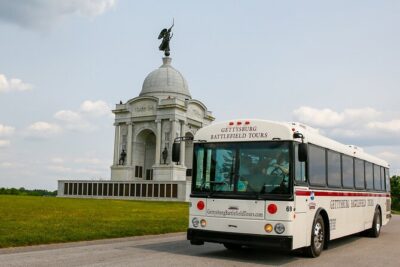 ★ 4.52-Hour Gettysburg Battlefield Guided History Bus Tour with a National Park GuideFrom $432,201 reviews
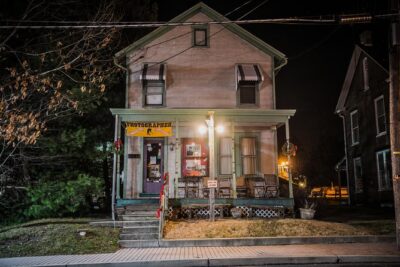 ★ 4.5Civil War Ghosts: Echoes of the Fallen Gettysburg Ghost TourFrom $32913 reviews
 ★ 4.5Gettysburg Battlefield Self-Guided Driving Audio TourFrom $16910 reviews
 ★ 4.8Gettysburg: Horse-Drawn Carriage Battlefield TourFrom $74896 reviews
 ★ 4.5Gettysburg: Ghost Hunt Tour with Ghost Hunting EquipmentFrom $28589 reviews
★ 4.3Civil War Ghosts: Echoes of the Fallen Gettysburg Ghost TourFrom $24480 reviews
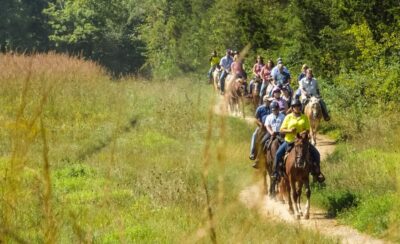 ★ 4.9Gettysburg: Licensed Guided Battlefield Horseback TourFrom $144419 reviews
 ★ 4.5Ghost Tour: History and Haunts – Family Friendly – Best in GettysburgFrom $23378 reviews
Browse the lists this tour appears in