
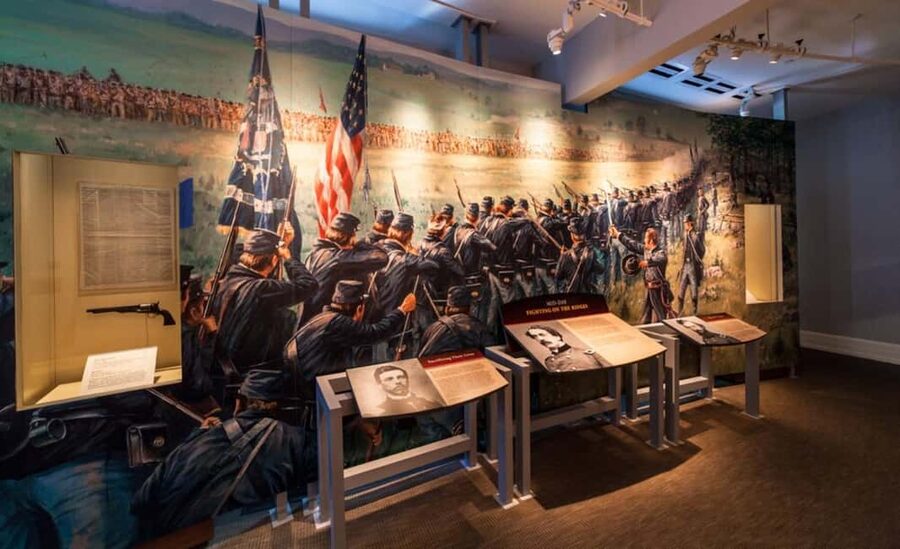
REVIEW · GETTYSBURG BATTLEFIELD TOURS
Gettysburg: Seminary Ridge Museum & Education Center Entry
A sobering museum stop that helps you read the Gettysburg story close up. You start with the Gettysburg Address message of unfinished work, then move into Civil War medicine exhibits staged in rooms that once served as a military hospital. It’s not a slideshow. It is built for reflection, with hands-on displays and life-size scenes that make the medical reality feel human.
Two things I especially like: the museum organizes your visit around what Lincoln asked people to carry forward, and the building itself adds weight, since parts of the exhibit space were tied to wartime care. One thing to consider: if you want pure outdoor time, this is mostly indoor. You may want to plan another Gettysburg stop right after you finish, since the visit ends at Seminary Ridge.
Key highlights and why they matter
- Gettysburg Address focus: Starts your thinking before you walk the rest of the site
- Interactive medicine exhibits: Lets you understand Civil War care in a more active way
- Life-size wounded soldier dioramas: Visuals that make you slow down
- Cupola ascent and views: A favorite add-on, especially if you like seeing the land and thinking strategically
- Historic halls of names and words: The final section turns the battle story into real people
Seminary Ridge Museum Entry: Built Into the Gettysburg Auto Tour Route
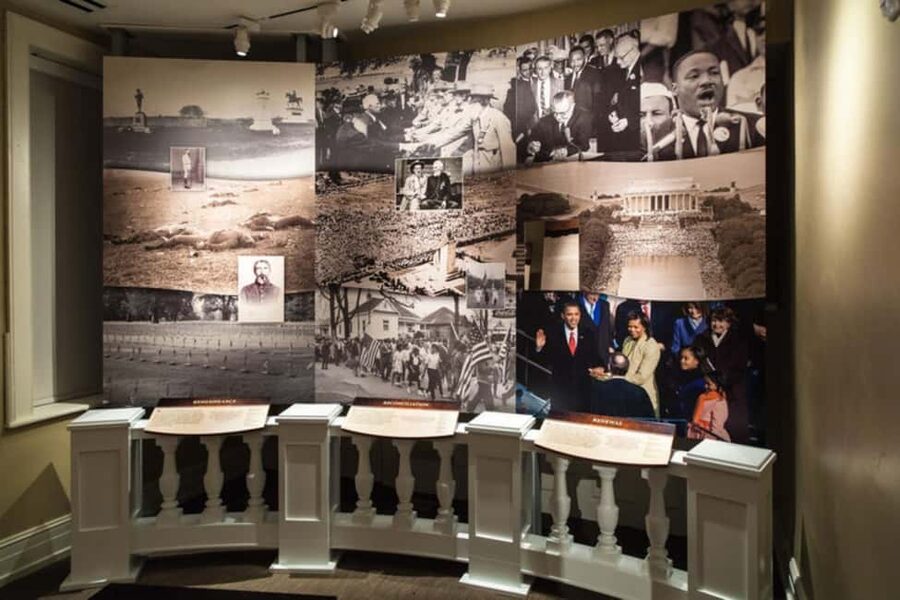
Seminary Ridge Museum and Education Center sits along the Gettysburg National Military Park auto tour route, so it is easy to slot into a self-guided day. That matters. Gettysburg can feel like a lot of driving and stopping, and you do not want a museum detour that breaks your rhythm.
This is a modern museum experience inside a historically preserved building. Translation: you get the comforts of today, but you are not wandering through a generic visitor center. The setting helps you take the exhibits seriously, because the walls and spaces have a past. It also means the museum does a good job of connecting the big Gettysburg story to one specific place on the battlefield.
You should expect an indoor flow with thoughtful pacing. The visit is designed so you do not just look at artifacts. You move through rooms and scenes that push you to ask, what did this war do to bodies, families, and moral responsibility?
Other ways onto the battlefield
Gettysburg Address First: How the Museum Guides Your Thinking

The visit begins in the exhibit galleries with the Gettysburg Address prominently featured. Instead of treating it like a historic poster, the museum uses it as a lens for the entire experience. You are encouraged to reflect on Abraham Lincoln’s unfinished work, which is a phrase that keeps echoing in the background even after you leave the room.
Why this is valuable for you: Gettysburg is often sold as a battlefield overview. This museum nudges you toward the aftermath and the human stakes. Lincoln’s words become a prompt, not a trivia item. It sets an emotional and ethical tone, so the medicine exhibits and the soldier dioramas do not feel random. They feel like consequences.
A practical note: plan to give yourself a few minutes at the start before you sprint to the next room. If you arrive already stressed, you will miss the point of why the address comes first.
Interactive Civil War Medicine: Exhibits in Rooms That Were a Hospital
One of the strongest parts of Seminary Ridge Museum is its focus on Civil War medicine. The museum uses interactive exhibits and artifact displays to explain what care looked like during the era. It is not just about “old times.” You get the sense of urgency, limitations, and the sheer weight of treating the wounded after fighting.
Even better, the museum includes rooms that once served as a military hospital. That detail changes the way you read what you are seeing. When you are learning how wartime care worked, being in spaces tied to wartime care makes it harder to treat it like a museum topic. It stays grounded in reality.
Then come the life-size dioramas of wounded soldiers. These scenes are staged in rooms that help you connect the visual with the medical information. The figures are large enough to stop you in your tracks, and the setup pushes you to contemplate what the wounded had to endure.
If you are the type who likes your history with context, this is your section. You do not need a degree in medical history to follow along, but you do need a willingness to slow down. That’s where the site does its best work.
Cupola Ascent and Views: The Stop That People Call the Best
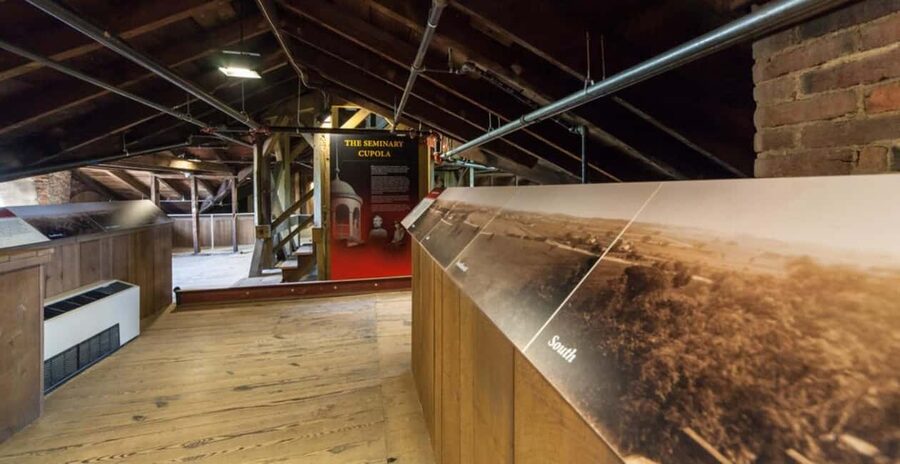
A standout feature is the chance to ascend to the Cupola, historically used as a lookout. In most Gettysburg visits, the land matters because the terrain shapes decisions. The Cupola is one way the museum brings that logic to life.
If you like views that help you understand how positions could matter, you’ll probably love this part. The Cupola gives you a different perspective than the floor level rooms. It also gives you a break from the heavier interior scenes, which is important because the medicine exhibits and wounded soldier dioramas can be emotionally intense.
Several visitors highlight the Cupola as a best moment, which makes sense. It is tangible. You can look out, connect the geography to what you just learned, and let your brain reorganize the story into something you can picture.
Practical tip: plan on taking a bit longer than you think. Even if you only have a short attention span, the Cupola rewards a slower look. You are not just getting a photo. You are doing mental map work.
Other collections worth a reserved slot
- Skip the Line: Gettysburg Heritage Center and Museum Admission Ticket★ 4.5 · 203 reviews
- Gettysburg: Civil War Tails Diorama Museum Entry Ticket★ 5.0 · 3 reviews
Ending in the Historic Halls: Names, Faces, and Words
The experience concludes at the central location of Seminary Ridge, which is a smart design choice. It means you finish with the emotional work of the museum and then you can step right into further Gettysburg exploration, or you can step away for a quiet reset.
Before you exit, the museum has historic halls featuring the names, faces, and words of the men and women who once walked these grounds. This is the section that turns the Gettysburg story into individuals rather than generalities.
Why that landing matters: if you have ever left a battlefield site feeling like you absorbed big ideas but forgot the human scale, this ending corrects that. The museum builds toward that kind of recognition. Even if you are only halfway paying attention at the start, this part tends to re-focus you.
If you are traveling with family or friends who like different kinds of history, this ending also helps because it is human-centered. You can talk about people, not just tactics.
Museum Shop Stop: A Small Touch That Helps You Remember
The museum shop is available if you want a souvenir tied directly to your visit. It is not the main attraction, but it can be a useful stop for two reasons.
First, it gives you a way to take learning home when you are tired of reading on your phone. Second, it can help you find additional Gettysburg materials that match what you actually saw, especially since the museum’s focus includes medicine and Seminary Ridge specifically.
Keep this in mind if you are trying to make your time efficient. You can browse quickly at the end, after you finish the exhibits, so it does not break your momentum.
Value for $15: What You Actually Get in One Day
At $15 per person, the Seminary Ridge Museum & Education Center entry is a solid value for a Gettysburg day. It is not priced like a “quick peek” stop, and it is also not asking you to commit to a multi-hour guided program. The duration is listed as one day, and that is realistic: you can see a lot without racing.
Here is what you get for your money in a way that matters to you:
- Thematic structure: You do not just wander. You move from Lincoln’s message into Civil War medicine and then into personal stories.
- Emotion with context: The dioramas and wounded scenes create impact, and the interactive exhibits give you the why behind what you feel.
- Land connection: The Cupola gives you a perspective shift, which helps you remember the battlefield logic later when you drive to other sites.
Compared to doing only outdoor stops, this museum gives you the “inside the story” layer: care, suffering, and the moral weight that Lincoln linked to the war’s meaning.
Compared to skipping it, you might miss the medical reality that changes how you understand Gettysburg overall.
Plan Your Day Around This Stop (So It Doesn’t Feel Like Too Much)
Gettysburg days can be packed. This museum can either feel like a calm anchor or like a weighty detour, depending on how you structure your day.
If you want the best rhythm:
- Consider visiting this museum while you have enough energy to process the emotional scenes.
- After you finish, use the fact that the experience ends at Seminary Ridge to keep the rest of your Gettysburg exploration close by.
- If you are the type who needs breaks, treat the Cupola as your recovery moment between heavier rooms and the closing halls of names and words.
Also, wear comfortable shoes. You will be moving through exhibit spaces and using stairs for the Cupola ascent. Nothing here is described as a long outdoor hike, but your legs still need to be ready.
Who This Admission Fits Best (And Who Might Want a Different Plan)
This experience is a great match if you want:
- Gettysburg history that feels personal, not just panoramic
- Civil War medicine explained in a direct, interactive way
- A museum stop that encourages reflection through structured themes
- A viewing point with strategic context from the Cupola
You might want to adjust expectations if you prefer:
- Mostly outdoor walking and minimal indoor time
- History that stays light and purely educational without heavy emotional content
If you like thought-provoking sites, this one is built for that. The medicine exhibits and wounded dioramas are designed to make you stop and feel the scale of what the war did.
Should You Book the Seminary Ridge Museum & Education Center Admission?
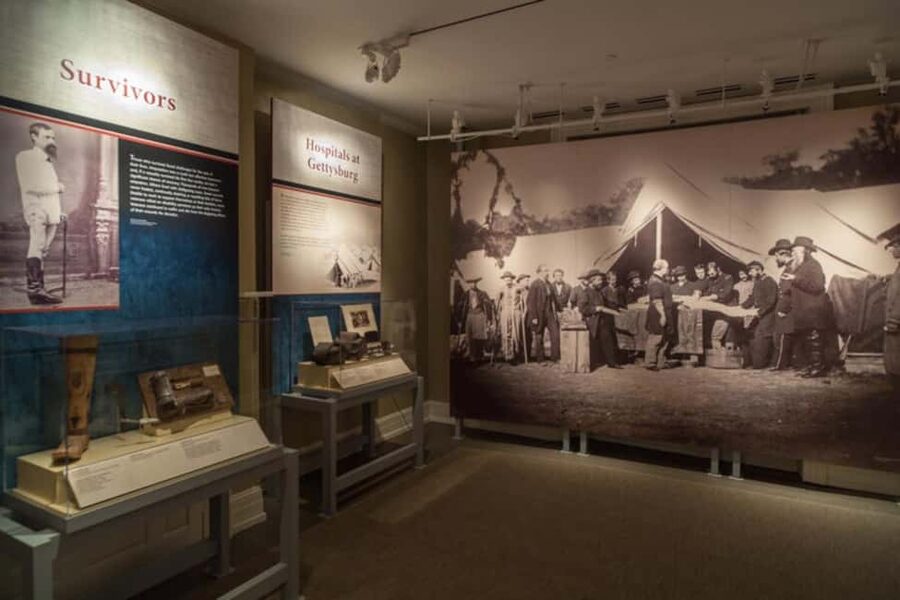
Yes, if you are doing Gettysburg and want a meaningful, one-day stop that deepens your understanding beyond the battlefield view. The $15 entry is reasonable for what you get: interactive Civil War medicine, life-size scenes, Lincoln’s unfinished work framing, and the Cupola ascent for perspective.
Book it if you value a museum experience that is structured, not random. It guides your thinking and ends with names and words that stick.
Skip it only if you are trying to keep things strictly outdoor or you know you want a lighter, less emotional history stop.
FAQ
FAQ
What is included with the Seminary Ridge Museum & Education Center entry?
Your admission to the Museum & Education Center is included.
How much does admission cost?
The price is $15 per person.
How long should I plan to spend there?
The experience is listed as lasting 1 day.
Where is the museum located?
It is located along the Gettysburg National Military Park auto tour route.
What will I see inside the museum?
You can expect interactive exhibits on Civil War medicine, life-size dioramas of wounded soldiers, and featured space for the Gettysburg Address.
Are there historic rooms used in the exhibits?
Yes. Rooms that once served as a military hospital are part of the exhibit.
Is there a Cupola at the museum?
Yes. You have the opportunity to ascend to the Cupola, which was historically used as a lookout.
Where does the experience end?
The museum experience ends at the central location of Seminary Ridge.
Is the museum wheelchair accessible?
Yes, the experience is wheelchair accessible.
Is transportation included?
No. Transportation to and from the museum is not included.
Can I cancel or change plans?
You have free cancellation up to 24 hours in advance for a full refund.
Do you offer pay later?
Yes, you can reserve now and pay later.
More Tour Reviews in Gettysburg
- 2-Hour Gettysburg Battlefield Guided History Bus Tour with a National Park Guide
★ 4.5 · 2,201 reviews





Gettysburg, Other Ways In
- 2-Hour Gettysburg Battlefield Guided History Bus Tour with a National Park Guide
★ 4.5 · 2,201 reviews

More to book around Gettysburg
- 1 Hour Gettysburg Haunted Farm Tour
★ 5.0 · 4 reviews - Wonder Women of Gettysburg Hidden Valor By Junket
★ 4.5 · 7 reviews - Mystery!: A Gettysburg Evening Walking Tour
★ 5.0 · 6 reviews - Secrets of Gettysburg Untold Stories: Beyond the Battlefield Tour
★ 5.0 · 4 reviews - Haunted Smart Phone App Location Aware Walking Tour in Gettysburg
★ 4.5 · 8 reviews - Civil War Battlefields Self-Guided Audio Driving Tour Bundle
★ 4.0 · 5 reviews
Gettysburg Battlefield Tours, compared.
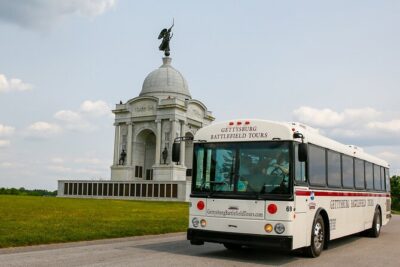 ★ 4.52-Hour Gettysburg Battlefield Guided History Bus Tour with a National Park GuideFrom $432,201 reviews
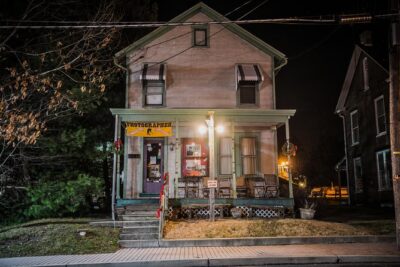 ★ 4.5Civil War Ghosts: Echoes of the Fallen Gettysburg Ghost TourFrom $32913 reviews
 ★ 4.5Gettysburg Battlefield Self-Guided Driving Audio TourFrom $16910 reviews
 ★ 4.8Gettysburg: Horse-Drawn Carriage Battlefield TourFrom $74896 reviews
 ★ 4.5Gettysburg: Ghost Hunt Tour with Ghost Hunting EquipmentFrom $28589 reviews
★ 4.3Civil War Ghosts: Echoes of the Fallen Gettysburg Ghost TourFrom $24480 reviews
 ★ 4.9Gettysburg: Licensed Guided Battlefield Horseback TourFrom $144419 reviews
 ★ 4.5Ghost Tour: History and Haunts – Family Friendly – Best in GettysburgFrom $23378 reviews
Browse the lists this tour appears in