
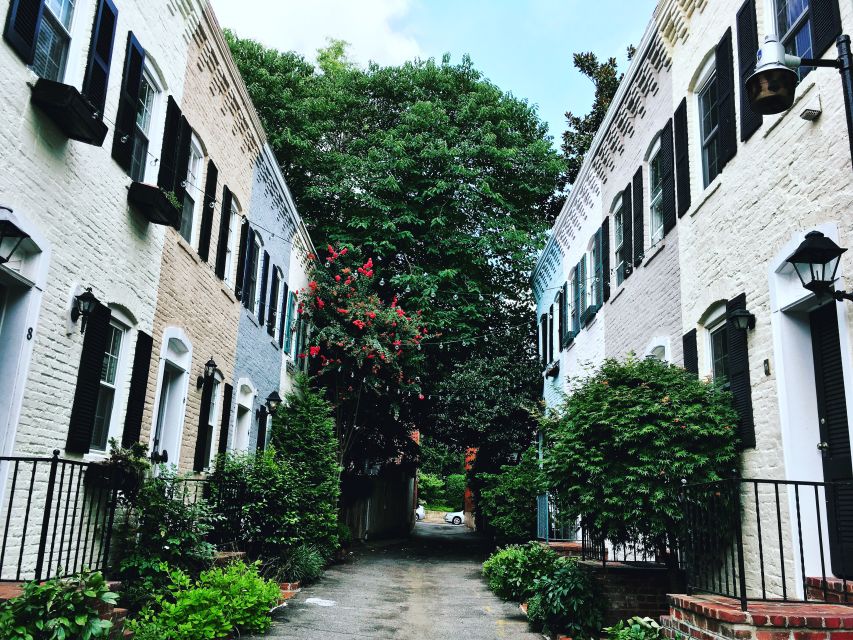
REVIEW · GEORGETOWN TOURS
Washington, DC: Georgetown Architecture Walking Tour
If your DC walk feels too flat, Georgetown won’t. This 150-minute architecture walking tour strings together the neighborhood’s best-known landmarks and the stories behind them. You’ll move at an easy pace and get a clear sense of how Georgetown grew from working trade to a spot for education and old-school status.
I especially like the mix of buildings you can actually see and the way the guide explains what you’re looking at. The stops cover houses, churches, schools, academic sites, and even campus nightlife, so the tour doesn’t feel like one long photo line. One consideration: you’re walking about 2 miles, so comfortable shoes and a water plan matter, even if the pace is relaxed.
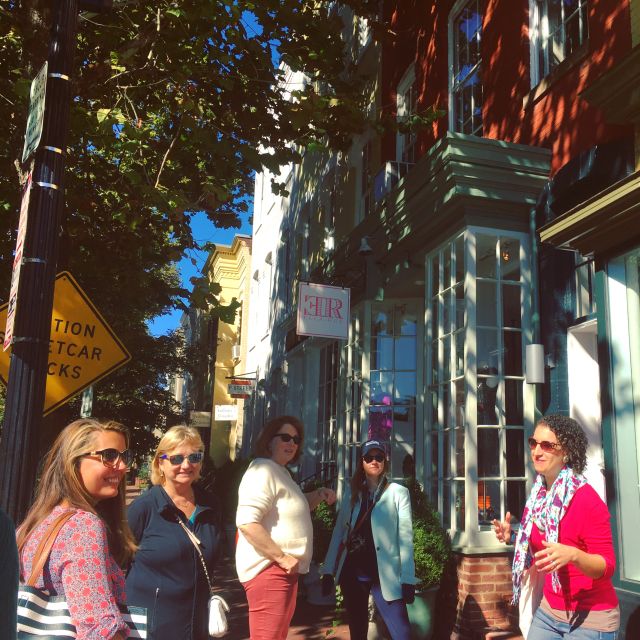
You’ll meet your guide outside Baked & Wired in Georgetown, and the walk keeps flowing. The guides named in past tours, like Sam and Ellyn, are praised for being engaging, sharing fun facts, and keeping it entertaining without turning it into a lecture. If you care about photos, plan on a little patience, since you may want a minute or two for pictures at select moments.
Key highlights
- Georgetown’s trade-to-status story, guided through architecture and key institutions
- C&O Canal to waterfront, so you see how the landscape shapes the neighborhood
- Architecture that comes with names, from Lydia English Seminary to Volta Laboratory
- Taverns and tiny row houses, including the White Horse Tavern name and Pomander Walk
- Campus landmarks on foot, from Georgetown Prep to Healy Hall, the University Library, and The Tombs
- A renovated streetcar depot stop, the Car Barn, plus a final stretch along Georgetown Waterfront
Where Your Georgetown Architecture Walk Begins at Baked & Wired
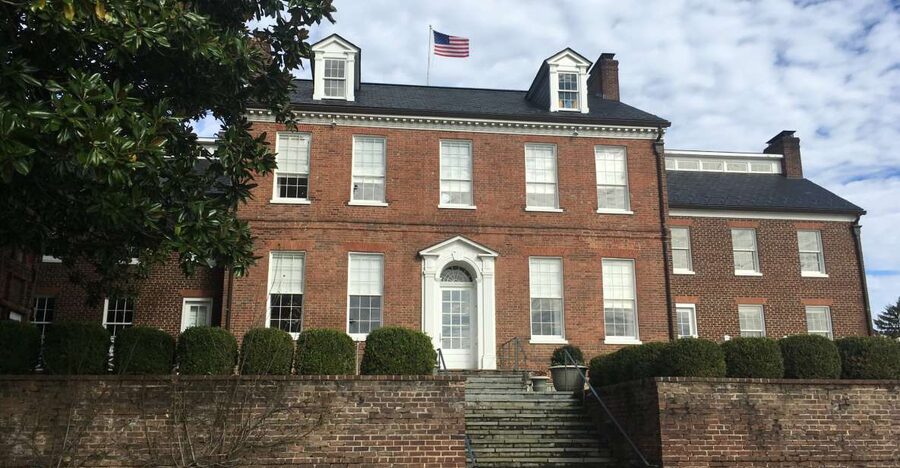
Your day starts with a simple target: meet outside Baked & Wired in Georgetown. Your guide will be wearing a DC Design Tours t-shirt, and they ask you to arrive about 5 minutes early because the tour departs on time. That small detail helps a lot. You don’t waste daylight waiting around, and you’re already in walking mode when you start.
This tour is designed for an easy rhythm, not a power walk. Expect a steady itinerary with built-in stops, so you can look closely at architectural details without feeling rushed. Past guides like Sam and Ellyn are specifically called out for making the explanations engaging, which matters on an architecture tour. If the guide gives you just facts, you tend to glaze over. If they help you notice, you start seeing Georgetown in layers.
The neighborhood can also be a bit deceptive: you might think you know the vibe until someone points out a building’s role in education, commerce, or social life. That’s where a guided walk earns its keep. You’ll get context fast, without needing to research ten different sources on your own.
Chesapeake and Ohio Canal: Trade Routes That Still Power Georgetown
The walk kicks off by heading to the Chesapeake and Ohio Canal, the waterway that connects Potomac River communities with markets and goods. Even if you only catch a glimpse of the canal’s edges, the explanation matters. Georgetown’s architecture isn’t random. It’s tied to the flow of people, materials, and money.
Here’s what I’d watch for as you approach: canal-era thinking tends to favor practical buildings and paths where goods moved efficiently. The canal was a connector, not just scenery. So when you see later buildings that feel more formal or status-driven, you can understand the leap: trade helped Georgetown grow, and growth attracted institutions that wanted a presence.
A canal stop also helps you orient mentally. It’s a natural storyline anchor. You start with how things moved, then you follow that thread into houses, churches, schools, and eventually the academic side of the neighborhood.
Laird-Dunlop to Lydia English: Houses and Schools That Explain Old Status
Next up, the tour leans into specific buildings tied to Georgetown’s rise. You’ll pass the Laird-Dunlop House and the Newton D. Baker House, and then you’ll see the Lydia English Seminary School for Girls. This boarding school is described as serving the upper class, and that detail is a big clue for how to read the architecture.
When you learn that a site educated elite students, you can often infer why certain spaces exist and why certain designs look the way they do. It’s not just pretty facades. It’s a physical message about who lived nearby, who visited, and who held local influence.
You also get the advantage of a guide interpreting connections you’d miss on your own. Self-guided browsing often turns into a checklist of names. A guided walk turns it into a story of social change. Georgetown becomes less of a museum-like district and more of a living example of how power, schooling, and wealth get built into streets.
As you move through this stretch, keep an eye out for how the neighborhood shifts from residential scale to institutional scale. That contrast is part of the “rags to riches” appeal people love about Georgetown. You’re watching the same place grow into different kinds of authority.
Grafton Tyler Double House, Christ Episcopal Church, and Hyde-Addison School
A strong architecture tour isn’t only about the biggest sights. It’s also about the in-between stops that make the neighborhood feel lived-in. You’ll hear about the Grafton Tyler Double House, then pass Christ Episcopal Church, and then see the Hyde-Addison School.
Double houses are a great clue for Georgetown’s practical side. They can hint at how families, land use, and social expectations were managed in tight urban space. Then the church stop adds another layer. Places of worship often reflect community priorities, and the architecture can carry weight in a way that’s easy to overlook without a guide.
The Hyde-Addison School adds the education thread, which keeps Georgetown from feeling like a one-topic walking tour. By now you’ve already seen schooling in the Lydia English Seminary. The repetition of that theme helps you connect the dots. Georgetown’s identity is tied to learning and institutions, not only to historic streets.
Yellow Tavern, White Horse Tavern, and Pomander Walk’s Tiny Pastel Row Houses
If you like your architecture with a side of character, this is the segment. You’ll visit the historic Yellow Tavern, also called the White Horse Tavern. Tavern stops do two things on a walking tour. They give you a human anchor, and they add contrast to all the formal buildings.
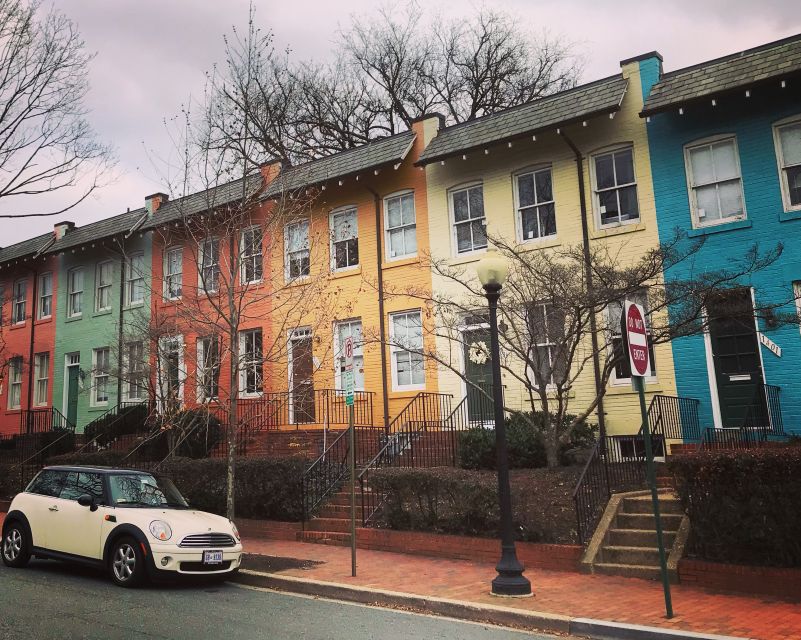
Then you’ll follow Pomander Walk, where you’ll see tiny, pastel row houses. This is the part of Georgetown that people love for its scale and charm. The buildings feel almost miniature compared to the rest of the neighborhood. Without context, it’s easy to just treat Pomander Walk as a photo stop.
With a guide, it becomes more. You’re learning how Georgetown’s street fabric could include small-scale residential pockets alongside larger institutions. It’s one of the easiest ways to understand how a neighborhood can serve different roles at the same time: academic life nearby, commerce and social life nearby, and smaller domestic spaces tucked in.
Practical tip: if photos matter, build in a little time. One review suggestion was to wait a few minutes for photos, which is exactly what you’ll want here. Take your shot, then let the group keep moving.
Volta Laboratory and the Georgetown Campus Core: Bell, Learning, and Nightlife
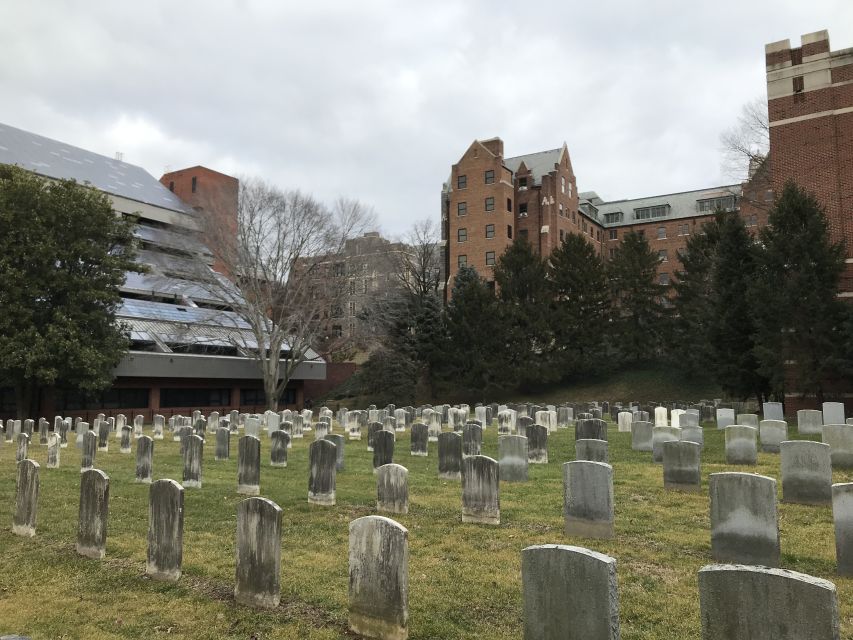
This tour doesn’t keep things strictly in the distant past. You’ll head to where Alexander Graham Bell founded Volta Laboratory, a point that brings Georgetown into a more modern story of innovation. After that, you get a series of academic destinations: Georgetown Preparatory School, Healy Hall, and the University Library.
This section works well because the stops feel connected. You see the physical presence of education, and you understand that Georgetown’s built environment supports learning in multiple forms: prep school, university spaces, and research history. It’s a rare combo for a walking tour, since many only cover architecture facades. Here, the buildings connect to a real theme.
Then comes The Tombs, where the tour takes a look at campus nightlife. That’s important. It stops Georgetown from feeling like a set of static landmarks. Even if nightlife details are kept light, the point is that students bring energy to the campus core, and the architecture sits inside that everyday rhythm.
If you’re the type who likes to map a city by theme, this is a highlight. You’re not bouncing randomly. You’re following an education and innovation thread, from early institutions to the campus identity today.
The Car Barn, Cady’s Alley, and the Final Georgetown Waterfront Walk
After campus landmarks, the tour shifts to a “how the city moved” moment. You’ll visit the Car Barn, described as a renovated streetcar depot. This stop helps you see Georgetown through transportation history, not just through grand buildings. Streetcar depots and related structures often explain why neighborhoods developed where they did, and why certain corridors became important.
From there, the walking route continues to the Francis Scott Key Memorial, then Cady’s Alley, and finally the Georgetown Waterfront, where the tour concludes. This ending feels right because it returns you to the water and the edge of the neighborhood. Earlier you learned about the canal connecting communities and goods. Now you finish at the waterfront, which makes the whole day feel like a loop with a sense of place.
Cady’s Alley is another small-scale moment. It gives you that “wait, this is Georgetown?” feeling as you pass through a tucked-in path. It also balances the heavier architecture stops earlier with something more intimate and street-level.
If you’re thinking about timing, this ending is useful. You’ll likely have enough energy after the tour to keep exploring nearby, especially around the waterfront.
Why This Tour’s Georgetown Story Makes Sense (and Sticks)
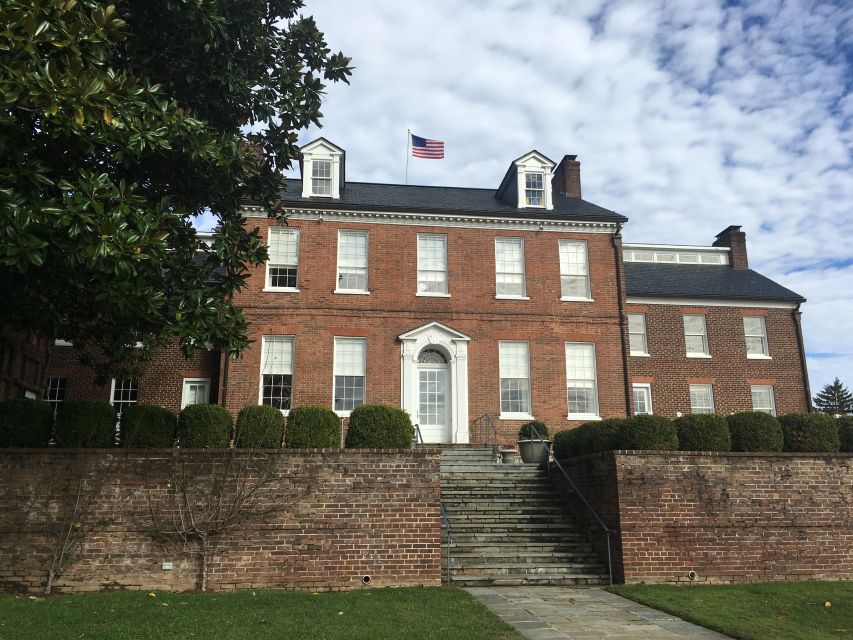
What I like about this tour format is that it’s not just a list of notable names. It’s a guided narrative through the neighborhood’s roles. The guide ties together Georgetown’s shift from trade connections, through institutions, to the campus and civic presence you still see today.
That’s where the rags to riches framing lands. Georgetown’s transformation is visible in architecture and in the types of buildings you encounter. Early practical trade routes set the stage. Then you start noticing homes and institutional buildings that signal wealth, education, and permanence. By the time you reach sites like Healy Hall and the University Library, the neighborhood identity feels clear.
Even the variety of stops supports the theme. A tavern stop gives you social texture. A church gives you community structure. Pomander Walk gives you domestic scale. And the Volta Laboratory point reminds you that Georgetown isn’t only about old foundations. It also connects to innovation.
If you want your DC time to feel less like scrolling photos and more like understanding why the streets look the way they do, this is the right structure.
Pace, Weather, and the 2 Mile Walking Reality
This is a leisurely-paced walking tour, and that’s a big plus. Still, plan like you are walking about 2 miles total. That distance is manageable for most people, but only if you respect the basics.
What to bring:
- Comfortable shoes
- Water
- Weather-appropriate clothing
The tour runs rain or shine unless conditions become dangerous. That means you need a plan for wet streets and limited visibility. If the forecast looks rough, pack accordingly so you can enjoy the buildings rather than just surviving puddles.
One more practical mindset: architecture walks reward slower looking. If you treat it like a sprint, you’ll miss the details the guide is pointing out. So let the pace guide your pacing. You’ll get more out of it, with less fatigue.
Price and Value: Is $43 Worth 150 Minutes?
At $43 per person, the value comes down to what you get for the time. You’re paying for a professional local guide and a focused route that hits key architectural and thematic stops without you having to map your own plan.
For 150 minutes and about 2 miles, you’re getting:
- A guided narrative across multiple kinds of buildings
- Stops that include houses, churches, schools, academic sites, and the waterfront
- Context that helps you interpret details you might otherwise overlook
Could you DIY this by walking around Georgetown and reading plaques? Sure. But you’d still be stuck doing the hardest part, which is connecting the dots between places and turning architecture into a story. That’s exactly what the guide does well, with plenty of fun facts.
If you’re short on time in DC and want a high-return activity, this is a strong fit. If you have all day and you love independent wandering, it might feel slightly structured. But for most people, $43 is a reasonable price for a guided walkthrough of Georgetown’s most iconic architectural flavor.
Who Should Book This Georgetown Architecture Tour
This tour is a great match if you:
- Want a guided overview of Georgetown architecture with real context
- Prefer a walking plan that feels organized, not random
- Enjoy learning how neighborhoods develop through trade, institutions, and community life
- Like historical storytelling that connects to visible buildings
It may be less ideal if you:
- Want a completely flexible route with no schedule at all
- Don’t handle walking distances very well, even at an easy pace
The best part is that the stops cover more than one interest. You get architecture, education, transportation history, and a waterfront finish in one coherent loop.
Should You Book the Georgetown Architecture Walking Tour?
Yes, if you want Georgetown to make sense fast. I’d book it if you’re in DC for a limited time and want your money to translate directly into a guided story across recognizable places, not just into a stroll. The $43 price is easier to justify when the tour includes a professional guide and a route that hits Georgetown’s signature mix of canal-adjacent trade, schools, churches, taverns, campus life, and the waterfront.
I’d skip it only if you’re determined to go fully independent and already have a clear research plan. Otherwise, this tour is one of the smartest ways to learn Georgetown architecture without turning your day into homework.
FAQ
How long is the Washington, DC Georgetown Architecture Walking Tour?
The tour lasts 150 minutes.
How much does the tour cost?
The price is $43 per person.
About how far will I walk?
You’ll walk about 2 miles during the tour.
Where do I meet the guide?
Meet your guide outside of Baked & Wired in Georgetown. The guide will be wearing a DC Design Tours t-shirt.
What should I bring?
Bring comfortable shoes and water, plus weather-appropriate clothing.
Does the tour run in bad weather?
It takes place rain or shine unless conditions are dangerous.
What language is the tour in?
The tour is in English.
Is the guide included in the price?
Yes, the tour includes a professional local guide.
Can I cancel if my plans change?
You can cancel up to 24 hours in advance for a full refund.
Georgetown Tours, compared.
 ★ 5.0Ghosts of Georgetown & The Exorcist Steps Walking TourFrom $39610 reviews
 ★ 5.0Georgetown Foodie Culinary Tour & Neighborhood WalkFrom $79437 reviews
 ★ 4.5Gastronomic Georgetown Walking Food TourFrom $84373 reviews
 ★ 5.0Historic Georgetown: History, Gossip, & Architecture Walking TourFrom $49321 reviews
 ★ 4.5Tastes of Georgetown Food & History Small Group Walking TourFrom $129203 reviews
 ★ 5.0The Escape Game DC: 60-Minute Adventure in GeorgetownFrom $38135 reviews
 ★ 5.0Acquired Taste Food Tour in GeorgetownFrom $95105 reviews
 ★ 4.7Taste of Georgetown Walking Food TourFrom $12989 reviews
Browse the lists this tour appears in