
REVIEW · SCOOTER RENTALS
Scooter Tour — Washington DC’s Monuments and Memorials
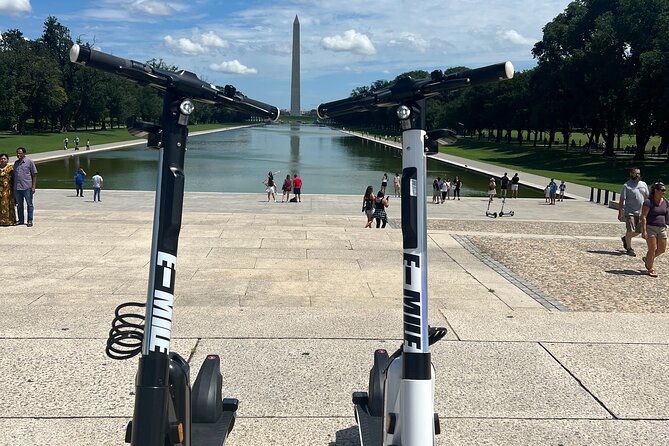
DC monuments feel fast on two wheels. This private scooter tour gives you guided narration and quick, efficient stops at many of the city’s biggest sights. I like that it cuts down on walking fatigue and helps you stay in motion instead of waiting around.
The big upside for me is how the guide manages the pace for real life, including families. Fahad in one recent group was patient with kids, helped set expectations, and even suggested where to eat after the tour. The tradeoff is simple: with about 3 hours total, you get brief look-and-learn moments, not long museum-style browsing at every stop.
Key highlights worth knowing before you go
- A private group of up to 6 so your guide can shape the pace and questions around you
- Narration on a scooter that keeps the day moving, instead of turning the trip into one long line
- Memorials that hit hard fast, from the Vietnam Veterans Memorial walls to the World War II stage-setting
- Top DC landmarks close together, including the White House area, Lincoln Memorial, and the Washington Monument zone
- Family rules that matter, including an age minimum (5+) and limits for a child riding with an adult
A few more Washington DC bookings pointing the same way
Price and what $540 really buys you
$540 is the price per group, not per person, and it covers up to 6 people. That changes the math fast. If you’re two or three adults, it’s still a premium way to see DC, but it becomes a good deal when your group includes multiple people who would otherwise buy separate guided tours.
You’re paying for time and logistics. In DC, distance adds up, and waiting can eat your day. A scooter route helps you cover more ground in less time, while your guide fills in the why behind the statues, walls, and inscriptions.
Where you start, how pickup helps, and why this route works
You meet at 1012 14th St NW, Washington, DC 20005, and the experience ends back at the same meeting point. Pickup is offered, which is a big help if you’re starting with kids, luggage, or you just do not want to play street-corner navigator for day one.
You’ll also get a mobile ticket. That’s one less step in a city where you already have to juggle reservations, museum tickets, and weather checks.
The route is built like a highlights reel. It links the classic memorial spine with major museum landmarks and government buildings. The pacing is fast, but it’s not random. You’re mostly in sightseeing mode, with short stops that are long enough to orient you, take photos, and learn one or two key facts per spot.
The big loop: from the White House to the memorial walls
Below is the shape of the day, in the order you’ll experience it, with what each stop is really for.
- DC Memorials Night Tour: Glass-Roof Convertible Upgrade Option★ 4.5 · 6,933 reviews
- National Mall Monuments Night Tour with 10+ Stops, Entry Tickets★ 4.5 · 4,863 reviews
- Washington DC Monuments by Moonlight Tour by Trolley★ 4.5 · 3,956 reviews
- Hop-on Hop-off Sightseeing Tour by Open-top Bus with 18 Stops★ 3.5 · 3,848 reviews
- Washington DC in One Day: Guided Sightseeing Tour★ 4.5 · 3,360 reviews
Lafayette Square views, Treasury monuments, and the Willard
You start with the White House from Lafayette Square on the north side. From here, you get that iconic front-and-center view people dream about, plus the surrounding park setting that makes the scene feel calmer than you expect. It’s one of the best “first wow” moments because it’s immediate and easy to appreciate.
Next you pause at the United States Department of the Treasury area for the Hamilton statue. It’s a bronze tribute to Alexander Hamilton, and the statue depicts him with a book and a scroll. This is a good stop because it’s more than a name on a plaque. You get a visual reminder of Hamilton’s role as the first Secretary of the Treasury.
You then roll to the William Tecumseh Sherman Monument, honoring the Union general. The fact that it was designed by Augustus Saint-Gaudens and dedicated in 1903 helps you understand why this statue feels like it belongs to a different era of American monument-making.
After that, you get a quick look at the Willard InterContinental Hotel, built in 1847. It’s a stop for context, not just architecture, since it’s been tied to presidents, major political meetings, and even the first telegraph message. If you like connecting buildings to stories, you’ll enjoy this.
World War I Memorial, Commerce building details, and Smithsonian classics
At the National World War I Memorial in Pershing Park, the design called A Soldier’s Journey traces a soldier’s path from leaving home, to combat and loss, then back to family after medical care. This is one of the few stops on the route where the emotional arc is spelled out clearly.
Then you pause near the U.S. Department of Commerce Building. The fun here is scale. Completed in 1932, it covers more than 8 acres and includes over 3,300 rooms and 5200 windows. Even if you do not read every fact, the sheer footprint helps you picture how Washington projects power through big concrete blocks and long-term planning.
You also stop by major Smithsonian landmarks, including the National Museum of African American History and Culture and the Smithsonian Castle. Even during a quick pass, these places do two jobs at once: they show you what’s important right now, and they point you toward what you might want to visit longer later.
From there, you reach the Washington Monument. It’s 555 feet 5 1/8 inches tall, designed by Robert Mills, and built between 1848 and 1884. Seeing it from the ground while your guide frames its history can make the monument feel less like a photo background and more like a designed statement.
Holocaust Memorial Museum and the paper-money stop
A highlight of this route is the United States Holocaust Memorial Museum stop. It is a memorial and museum dedicated to remembering victims and survivors, and to inspiring people to confront hatred and prevent genocide. Even a short visit works best if you let the seriousness land, rather than treating it like just another landmark stop.
Next comes the Bureau of Engraving and Printing. This is your “money in Washington” lesson. The site is responsible for printing U.S. paper money and other security documents like passports and visas. It’s a surprisingly fascinating angle because it connects everyday life, like your wallet, to the machinery of government.
Tidal Basin, Jefferson, Mason, and the views around the Mall
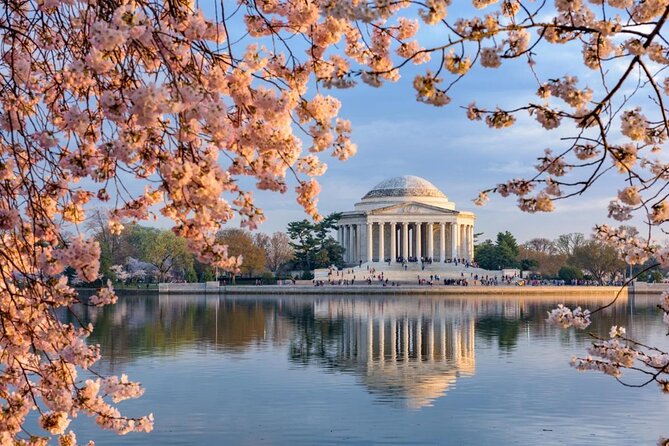
At the Tidal Basin, you get a sense of why this area matters beyond scenery. It’s about 107 acres and was built to use tides from the Potomac to flush silt and sediment. It’s also the place most associated with the Cherry Blossom Festival in spring. If you’re there outside blossom season, you’ll still appreciate the planned geometry and the open water feel.
Then you roll to the Thomas Jefferson Memorial, built between 1939 and 1943 in neoclassical style. The quotes from Jefferson are meant to capture his ideology and philosophy, so you get a different kind of “how America thinks” moment than you do at war memorials.
You also stop at the George Mason Memorial near the Tidal Basin and National Mall. Mason is tied to founding-era ideas, and it adds another layer to the story of the nation’s early values.
You’ll also catch the Pentagon from across the Potomac River. The big visual clue is the five concentric pentagonal rings, and the fact it’s one of the most recognizable buildings in the world. This is also a useful pause because it resets your brain, giving you a clear sense of geography: you’re looking at the defense side of the U.S. from the memorial side of the city.
FDR, MLK Jr Memorial Bookstore, and war memorials that hit quickly
The Franklin Delano Roosevelt Memorial is next, dedicated to the 32nd president and the era he represents. Then you stop by the Martin Luther King Jr. Memorial Bookstore, which is tied to his legacy and the struggle for freedom, equality, and justice.
There’s also a stop described as a memorial inscribed with names of men and women from the District of Columbia who gave their lives in the World War, including those who fell and those who survived. Even if you only take a few minutes here, it’s one of those moments that makes you think about service in a more local, human way.
Then you move into the Korean War Veterans Memorial, where the message honors sons and daughters who answered the call to defend a country they may never have known and a people they may never have met. It’s direct, and it’s designed to be read even when time is limited.
After that comes the Lincoln Memorial, where Abraham Lincoln sits in marble beneath a line of text intended to enshrine his memory. If you’ve seen the Lincoln Memorial in photos, this stop is where you feel the scale and the framing for the first time.
Vietnam Veterans Memorial, Three Servicemen, and a break into founding-era commemorations
You stop at the Vietnam Veterans Memorial, made of two black granite walls inscribed with names of more than 58,000 Americans who died or remain missing in the war. This is the kind of place where “quick stop” feels wrong in theory, yet it can work in practice if you keep your visit respectful and use your guide’s context.
Nearby is the Three Servicemen Statue, which depicts three soldiers representing different branches of the U.S. military. It offers a counterpoint to the walls: the figures feel like presence, while the granite reads like history.
Then you go to the Albert Einstein Memorial in the Academy grounds area. It’s a different mood from the war memorials, with Einstein seated on a bench, plus heavy-duty engineering details tied to granite caissons and bedrock depth. If your day feels too heavy, this is a welcome mental shift.
You also pass the 56 Signers of the Declaration of Independence Memorial, with stone markers that include facsimiles of signatures and notes on the signers’ homes and occupations. It’s a strong “values and beginnings” contrast to the conflict-focused stops.
Canals past and World War II onward
There’s a stop referencing where Constitution Avenue runs today, the old Chesapeake and Ohio and Washington City Canals ran between 1832 and the 1870s, with a lockkeeper role tied to tolls and opening and closing locks. It sounds small, but it matters because Washington did not start as a memorial map. This is a reminder that the city has changed use again and again.
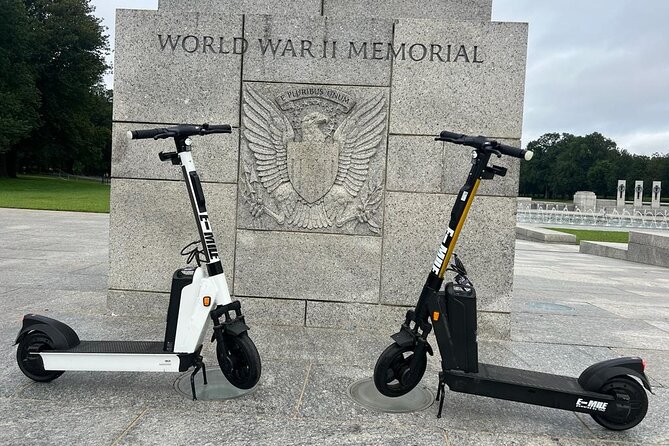
Next is the World War II Memorial, using stone architecture and bronze sculptures to recognize service, honor those who fell, and mark victory. It’s a broad “how a nation remembers” scene, and your guide’s narration helps you connect the symbolism to the people involved.
Then you reach the John Paul Jones Memorial, honoring the naval hero who captured HMS Serapis and is associated with the phrase about not having begun to fight yet. Even if you only catch it briefly, it adds a naval thread to a day that’s already rich in land and air conflict.
Beyond the Mall: Arlington, Air Force, OAS, and several major landmark pauses
You then have stops tied to Arlington House, also known as the Robert E. Lee Memorial, including its hilltop views and the chance to explore the interior and gardens if the timing allows. Following that is Arlington National Cemetery, where white headstones cover rolling hills and you can also see the Changing of the Guard ceremony at the Tomb of the Unknown Soldier, plus sweeping views of Washington.
The Air Force Memorial is next, with three sleek spires that evoke speed and power. The stop is also positioned for panoramic views that can include the Pentagon and Washington.
You also pause at the Organization of American States headquarters, designed by architect Paul Cret. This stop is less about statues and more about how international diplomacy and architecture share the same stage in Washington.
After that you head into a cluster of cultural and downtown landmarks, including Chinatown, the Old Post Office Pavilion, and the National Archives Museum. At the Archives, the Rotunda is the standout space, home to major founding documents including the Declaration of Independence, the Constitution, and the Bill of Rights.
From there, you move to the FBI Headquarters, known for its Brutalist architecture and modernist design. Then you stop at the Newseum, focused on the power and importance of the free press with interactive exhibits and even newsroom-style experiences.
You also pass the George Gordon Meade Memorial on horseback, then the National Gallery of Art for a quick look at its range of artists and masterpieces.
Peace Monument, Grant zone, and a museum-friendly finish
You continue to the Peace Monument, with a woman holding an olive branch and plowshare. It’s meant to symbolize hope and reconciliation from the Civil War.
Then you get a stop at the Ulysses S. Grant Memorial area near East Capitol Street Northeast and First Street Southeast. After that, there’s a stop at the James A. Garfield Monument, another statue-and-relief pause that adds another presidential chapter to the day.
You also include major nature and science stops tied to Smithsonian museums and grounds. That includes the U.S. Botanic Garden, the National Museum of the American Indian, and the Smithsonian National Air and Space Museum. You’ll also see quick references to the Hirshhorn Museum of Art, the Smithsonian National Museum of Natural History, and the Smithsonian Arts + Industries Building. The route also includes the U.S. Department of Agriculture stop, with an idea of exhibits and the USDA Farmers Market.
If you’re thinking, this is a lot for three hours, you are right. The whole point of the scooter format is that you get a guided “this exists” tour of major DC anchors, then you can decide what deserves a longer second trip.
How the guide makes or breaks the experience
This kind of tour lives and dies on the guide’s timing and tone. In recent feedback, Fahad stood out for being sharp with details and for adjusting when a daughter wanted to scooter. He stayed patient and helped with suggestions for a sit-down option, which is the kind of small fix that prevents a family outing from turning into stress.
Barry was praised as well for being easy to find and keeping things organized. That matters because in DC, you can spend more time finding your starting point than enjoying the sights. A good guide prevents that.
Look for these cues when you meet your guide: clear directions, quick safety expectations, and narration that matches what you can actually see from the scooter. If your guide is doing that, the route feels smooth, and the stops feel meaningful instead of rushed.
Family time and pet-friendly details that affect planning
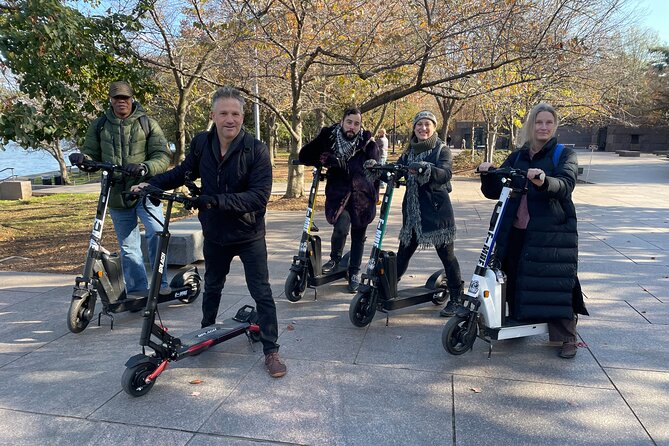
You only ride if you meet the age rule: 5 years old and above. One child can ride with an adult on a scooter if the child is within the stated weight limit (400 lbs or less). That’s a real constraint, so if you’re traveling with kids of different sizes, plan to ask the guide how the setup works for your group.
Small pets are allowed as long as you have a proper backpack. That’s a big plus if someone in your group does not do well with long stroller or walking days. Service animals are allowed too.
The tour also needs good weather. If conditions are poor, the experience can be canceled, and you’ll be offered a different date or a full refund. That’s worth keeping in mind for spring and fall shoulder seasons when a sudden storm can change everything.
Should you book this scooter tour?
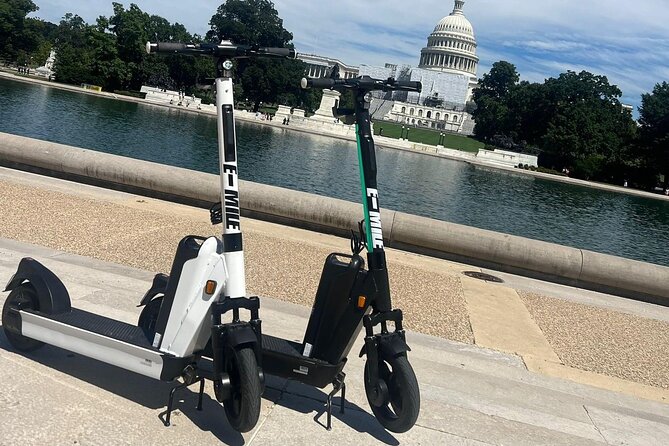
Yes, you should book it if your goal is maximum DC coverage with minimal walking, and if you want a guide to point out the stories behind the sights. It’s also a smart choice for families because your guide has experience managing mixed ages and keeping kids interested without turning it into a long grind.
I would skip it if you want slow, deep museum time at each stop, or if your group plans to “linger” at multiple sites. This is a fast, curated route where you get the emotional punch and the facts, then you decide what deserves a second visit.
If you’re trying to see Washington in one shot, and you like the idea of two wheels doing the heavy lifting, this is a strong way to get your bearings fast.
FAQ
How long is the scooter tour?
The tour is about 3 hours.
What does the $540 price include?
It costs $540 per group, up to 6 people. The tour includes a private guided experience and uses a mobile ticket.
Is pickup available, and where do we meet?
Pickup is offered. The meeting point is 1012 14th St NW, Washington, DC 20005, USA, and the tour ends back at that meeting point.
What is the minimum age to join?
Only travelers age 5 years and above can participate.
Can a child ride with an adult on a scooter?
Yes. One child can ride with an adult on a scooter if the weight is 400 lbs or less.
Are pets allowed, and what about cancellations?
Small pets are allowed if you bring a proper backpack. The experience requires good weather, and if it is canceled due to poor weather you will be offered a different date or a full refund. You can cancel for a full refund up to 24 hours in advance.
More Tours in Washington DC




More Tour Reviews in Washington DC
More to book around Washington DC
- The Public Group Scooter Tour of DC’s National Mall
★ 5.0 · 3 reviews - National Mall Highlights with Cherry Blossom & Arlington Cemetery
★ 3.5 · 3 reviews - Private Washington DC Monuments Day or Night Bike Tour
★ 5.0 · 3 reviews - Private Tour with US Capitol Or Archives Or Washington Monument
★ 3.5 · 3 reviews - Washington DC Private Guided Bus Day Tour with Step Off Guide
★ 5.0 · 3 reviews - 3-Hour Small Group Memorial Tour in Washington, D.C.
★ 4.0 · 3 reviews
Scooter Rentals, compared.
 ★ 5.0Epic Evening e-Scooter TourFrom $89122 reviews
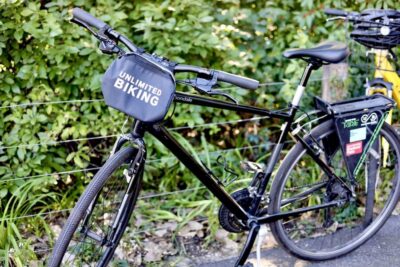 ★ 4.3Washington DC Bike RentalFrom $2173 reviews
 ★ 5.0Small Group 5-Hour DC Tour via Electric Scooter for Ages 16+From $8973 reviews
 ★ 4.3E-Bike RentalFrom $427 reviews
 ★ 5.0Electric Scooter Rental in Washington DCFrom $385 reviews
The Public Group Scooter Tour of DC’s National MallFrom $1373 reviews
 ★ 3.5E-bike Rental Along the Potomac RiverFrom $593 reviews
Browse the lists this tour appears in