

REVIEW · OLD TOWN ALEXANDRIA TOURS
Alexandria: American Revolution Guided Walking Tour
Old Town Alexandria hides a serious origin story, and this walk makes it make sense. This American Revolution guided tour takes you to the streets where prominent Patriots lived, worked, and worshipped, long before the first shots. You also connect the dots to the Declaration of Independence and the Bill of Rights, while seeing where Washington signaled his fight against British tyranny.
I especially like how the guide centers the experience on real locations, not just names and dates. The tour is led by local history pros such as Tim, and he tends to keep the group engaged, even on a hot day when he stops to find shade. I also like the structure, 90 minutes that feels paced and doable, with plenty of visual stops for famous Washington landmarks and the churches tied to that era.
One drawback to consider is the time limit. You’ll focus mostly on Revolutionary-era Alexandria, so if you want a fuller sweep into later periods or more topics in depth, you might want to pair it with another tour or plan extra reading on your own time.
Key things that make this walk worth your time
- One focused theme in Old Town, the American Revolution, with Alexandria-specific connections
- George Washington stops on foot, including links to where he declared intent to fight tyranny
- Patriots’ homes, workplaces, and worship spaces, so history feels lived-in
- Memorial moments, including the Tomb of the Unknown Soldier of the American Revolution
- A Lafayette connection from 1824, tied to Alexandria’s public life long after the war
Further down King Street



Why Alexandria’s Revolution story feels different from the usual tour
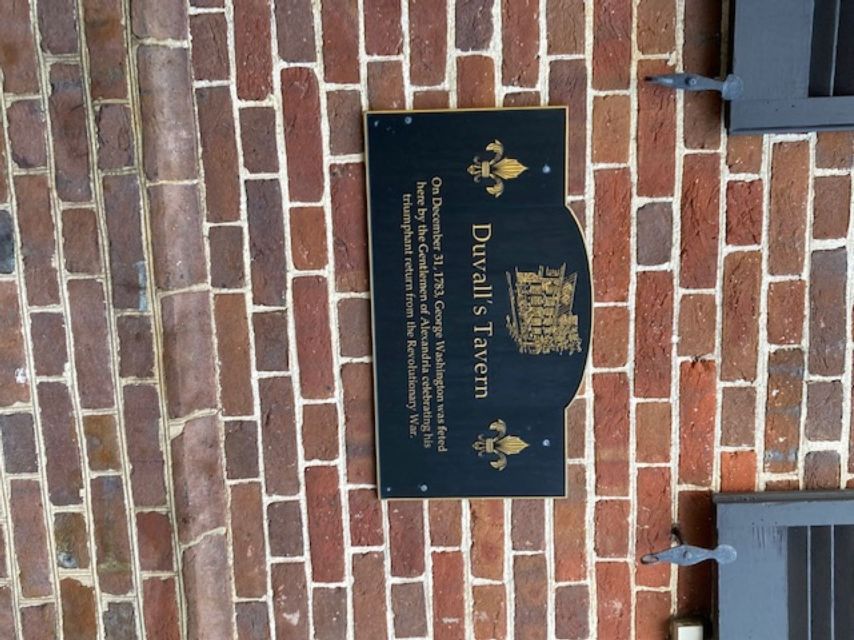
Alexandria gets taught in many ways, but this tour gives it a sharper angle. The big idea is that the Revolution did not start in one dramatic moment. Events in Alexandria began pushing the colonies in that direction about twenty years before war officially ignited, and you’ll hear how local leaders responded to British taxation policies with increasing resolve.
I like that the tour stays specific. You’re not just walking past pretty colonial facades. You’re walking through the places where Patriots of American Independence lived, worked, and worshipped. That worship piece matters because it shows how political ideas were carried through everyday community life.
You’ll also connect Alexandria to major founding documents. The tour highlights how Washington’s Alexandria fits into the broader independence story, including Alexandria’s relationship to the Declaration of Independence and the U.S. Bill of Rights. Even if you already know the big headlines, hearing how Alexandria fits into that story through local decisions gives the material a new shape.
Starting point and how to be comfortable for 90 minutes
You’ll meet at the Visitor Center, 221 King St, Alexandria, VA 22314. Bathrooms are on the bottom floor, and there’s water and tourist information inside. The group meets either inside or on the porch, depending on conditions.
This is the kind of tour where comfort affects your experience. The tour asks for hiking shoes, and I agree. Old Town streets can be uneven, and you’ll want steady footing so you can actually enjoy the architecture, street corners, and memorials instead of concentrating on your ankles.
Also, this is a walking tour, so plan for weather. In at least one recent experience, Tim took time on a hot day to find shade for the group. That’s a good sign for pacing and care, but you should still dress for the day, especially in summer.
The American Revolution focus, with Washington ties you can see in the street
This is the only Old Town tour built around Alexandria’s unique Revolutionary War history. That matters because it keeps the walk from turning into a generic city highlights loop. Instead, you move through a timeline of ideas and decisions, anchored by places tied to key people and events.
Here’s what you’ll feel as the tour moves: Alexandria is presented as a community that argued, organized, and acted. You’ll hear about prominent citizens taking hard stands against British policies. You’ll also see George Washington’s footprint in town, including stops that connect to where he declared his intention to fight against British tyranny.
One practical benefit of a guide like this is how they translate “history talk” into street-level reality. When the guide points out where Washington’s connections show up, you’re not just collecting trivia. You’re learning how leaders traveled, lived, and built networks in a real place, at real addresses.
You’ll also walk to iconic businesses and homes linked to members of Washington’s military family, where they worked and lived in Alexandria. That gives you a fuller sense of how the Revolution was supported on the ground, not just fought in battles.
More walking, less waiting
- Alexandria: American Revolution Guided Walking Tour★ 5.0 · 13 reviews
- Alexandria: Ultimate Dead of Night Walking Ghost Tour★ 4.4 · 11 reviews
Churches that pre-date the Revolution, and why that adds meaning
A lot of Revolutionary War stories focus on politics and war plans. This tour adds another layer by visiting multiple historic churches that pre-date the Revolution. That’s not a random detour. It helps explain how religious communities and civic life overlapped.
The tour includes a stop at Washington’s church, where he famously discussed taking up arms on behalf of American independence. Hearing that conversation in context of the actual church setting changes the tone. It becomes less abstract and more human: someone making a hard moral and political decision inside a real community space.
If you like history that’s tied to everyday life, this portion is one of the most satisfying. You get architecture, but more importantly, you get a sense of how people gathered, spoke, and formed opinions.
One note on expectations: churches can be cool inside and sometimes quiet, but the tour still keeps moving. If you’re hoping for a long museum-style visit inside every church, this may not be your format. It’s a guided walk with stops, not a full indoor deep study.
The Declaration, the Bill of Rights, and Alexandria’s own Revolutionary document
The tour’s storyline does something smart. It connects Alexandria’s local actions to national founding themes. You’ll hear about Alexandria’s connection to the Declaration of Independence and the U.S. Bill of Rights, and you’ll also learn where Alexandria passed its own Revolutionary document.
That kind of local-global connection is what makes the tour feel more than a list. You’re not only learning what famous leaders did. You’re learning how a specific town participated in the constitutional and moral momentum of independence.
If you enjoy figuring out how political change spreads, you’ll appreciate how the guide frames the lead-up to the Revolution. Twenty years before the first shots, the pattern of resistance was already forming. Alexandria becomes a case study for how independence thinking grew out of local pressure and community leadership.
Tombs, memorials, and Lafayette in 1824
A major stop on this walk is the Tomb of the Unknown Soldier of the American Revolution. Even if you don’t usually seek out memorials, it’s a powerful pause, because it shifts your attention from founding documents back to the human cost and the unknown stories connected to war.
Memorials can feel abstract if you just stand and read a plaque. What makes this stop work is that the guide ties it back to the Revolution’s broader meaning for Alexandria. You’re not just looking at a monument. You’re learning why this kind of remembrance exists and what it’s trying to preserve.
Another standout moment is the Lafayette connection. The tour takes you to where the Marquis de Lafayette addressed the citizens of Alexandria in 1824. That detail matters because Lafayette’s presence comes after the war years, and it shows how the Revolution stayed part of public life well beyond 1783.
So this stop provides two benefits at once. You see a physical location tied to a major personality, and you also feel the timeline expand, from wartime action to later civic memory.
Churches, Washington’s circle, and the feeling of a city built on decisions
If you’re the type of traveler who likes to understand how cities work, this tour delivers. Washington’s ties to Alexandria are woven through the walk, including where members of his circle lived and worked. That makes “Washington’s Alexandria” feel like an ecosystem instead of a set of isolated monuments.
The tour also keeps an eye on how Patriots of American Independence navigated community life. The guide discusses where people lived, worked, and worshipped, which helps you understand why Revolutionary ideas spread so effectively. If leaders and communities share the same spaces, word travels faster and action becomes possible.
From a pacing perspective, the tour is designed to keep you moving without rushing. Some guides talk at you. This one aims to keep the group engaged. In one experience, the guide was described as great at keeping everyone engaged, with a pace that felt right even in heat.
Price and value, at $30 for 90 minutes
The tour costs $30 per person for 90 minutes. For a focused Old Town walking tour with an on-the-ground historian, I think that price is reasonable. You’re paying for three things: a guide who can connect Revolutionary-era stories to specific street corners, a route that hits major landmarks tied to the founding period, and the convenience of not having to figure out what matters on your own.
If you only have a short window in Alexandria and you want to make the Revolution feel real, this is a solid value. If you already know everything about the Revolution and you want a deeper, longer program on multiple themes, you might feel limited by the 90-minute format.
But for most visitors, the math works. You get a curated walking route that aims straight at the question: where was the Revolution born, and how did Alexandria participate?
Who this tour suits best, and who might want another option
This tour is a great fit if you:
- Want Revolutionary War Alexandria specifically, not general colonial sightseeing
- Like learning through place-based storytelling, with churches and memorials included
- Enjoy a guide who can explain the why behind events, including the links to major documents
It’s less ideal if you:
- Want a wide sweep across many time periods in one go
- Prefer long indoor stops or museum-style depth at every location
- Want more coverage of topics not centered on the Revolution period
One additional point from the kinds of feedback this tour tends to earn: people often wish there were more tours or longer options for other chapters of Alexandria’s story. That’s not a flaw so much as a hint. Use this walk as a foundation, then build outward.
Practical tips so you get the best experience
Here are a few smart moves that match what the tour experience calls for:
- Wear hiking shoes and plan for uneven sidewalks.
- Bring a light layer or hat if it’s warm, and take advantage of shade breaks when the guide offers them.
- If you enjoy follow-up, ask the guide for recommendations for seeing more Revolutionary War era sites on your own after the tour. In at least one recent experience, the guide shared extra ideas for experiencing Old Town Alexandria and the Revolutionary War beyond the scheduled stops.
- Since food and drinks are not included, plan a snack or meal before or after. You’ll be moving for 90 minutes.
Should you book the Alexandria American Revolution Guided Walking Tour?
Yes, if your goal is to understand Alexandria’s role in the Revolution through the actual streets and buildings tied to it. This tour’s biggest strength is focus. It’s not trying to cover everything, it’s designed to answer a specific question: how did Alexandria help push the colonies toward independence, and how do Washington and key events show up right here in town?
If you’re short on time, you’ll like the 90-minute format. If you care about places where people lived, worked, and worshipped, you’ll like the church stops and the way the guide connects them to Washington’s decisions. And if you enjoy a guide who keeps things lively, Tim-style engagement is a big reason people recommend it.
If you want a broader Alexandria timeline or deeper coverage on topics beyond the Revolutionary era, consider booking this as a first stop, then pairing it with another tour later.
FAQ
How long is the Alexandria American Revolution guided walking tour?
The tour runs for 90 minutes.
How much does the tour cost?
The price is $30 per person.
Where do I meet the guide?
Meet at the Visitor Center at 221 King St, Alexandria, VA 22314.
Are food and drinks included?
No. Food and drinks are not included.
What language is the tour offered in?
The tour is offered in English.
Is the tour wheelchair accessible?
Yes, it is wheelchair accessible.
What should I bring?
The tour recommends bringing hiking shoes.
Is free cancellation available?
Yes. You can cancel up to 24 hours in advance for a full refund.
Can I reserve and pay later?
Yes. The booking option includes reserve now & pay later.
What stops or themes does the tour focus on?
It focuses on Alexandria’s Revolutionary War history, including where Washington had key connections, how Alexandria fits into the Declaration of Independence and the Bill of Rights, Revolutionary document history, historic churches, the Tomb of the Unknown Soldier of the American Revolution, and where Lafayette addressed citizens in 1824.
More Tour Reviews in Alexandria Virginia





Further Along King Street
More to book around Alexandria Virginia
- Alexandria: Walking Through George Washington’s Alexandria
★ 5.0 · 4 reviews - Old Town Alexandria: Southern Comfort Food & History Tour
★ 4.7 · 11 reviews - Alexandria & Mt Vernon Tour
★ 4.4 · 3 reviews - Alexandria: American Revolution Guided Walking Tour
★ 5.0 · 13 reviews - Alexandria: Phantoms of the Potomac Walking Tour
★ 3.6 · 18 reviews - Alexandria Ghosts: Spirits & Spirits Haunted Pub Crawl
★ 3.4 · 21 reviews
Old Town Alexandria Tours, compared.
 ★ 4.0Mount Vernon and Old Town Alexandria Day Trip from Washington DCFrom $99874 reviews
 ★ 4.6Old Town Alexandria & Mount Vernon TourFrom $109393 reviews
 ★ 4.5Mount Vernon Guided Estate Tour plus Old Town Alexandria from DCFrom $109307 reviews
 ★ 5.0Escape Room Live Alexandria: 60-Minute AdventuresFrom $40237 reviews
 ★ 5.0A Guided Walking Tour through Historic Old Town AlexandriaFrom $30229 reviews
 ★ 5.0Haunted Alexandria Booze and Boos Ghost Walking TourFrom $34157 reviews
 ★ 5.0Freedom’s Fight in Alexandria152 reviews
 ★ 4.5Old Town Alexandria Food TourFrom $8287 reviews
Browse the lists this tour appears in