
REVIEW · OLD TOWN ALEXANDRIA TOURS
Freedom’s Fight in Alexandria
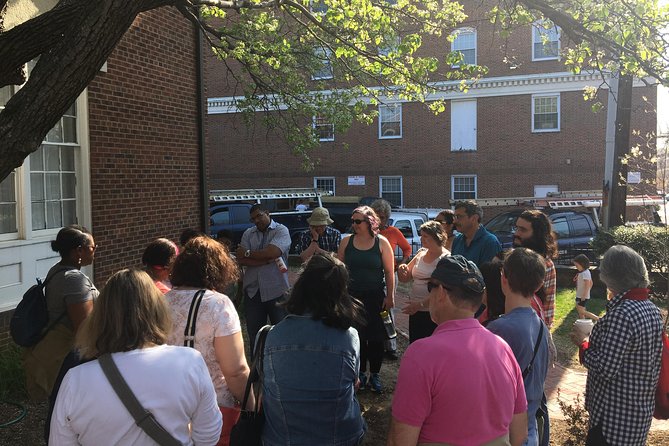
Old Town Alexandria hides hard stories. Freedom’s Fight in Alexandria connects famous sights to the people who were enslaved there and to the abolitionists who pushed back. You meet up near a major library and then walk a tight route through key stops like Gadsby’s Tavern, Stabler-Leadbeater, and Market Square.
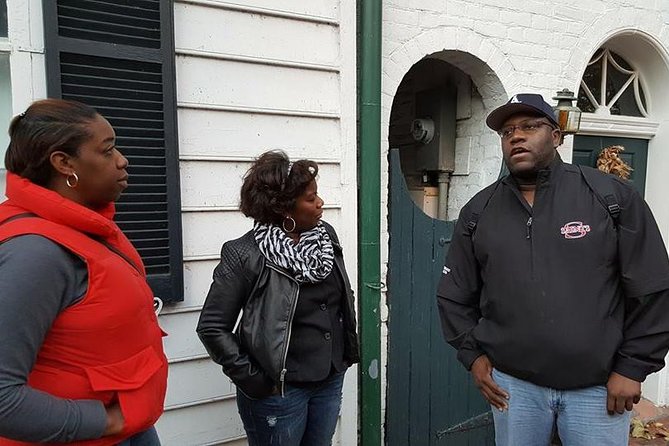
I especially like the way this tour anchors itself in African American history, not just the usual postcard version of Old Town. I also love the guide setup John and Pamela have used, like pacing your group well and using a small speaker so you can actually hear over street noise.
One thing to plan for: museum admission is not included for the first two stops, and the walking time per stop is brief, so bring your curiosity and be ready to listen closely.
Key things you’ll notice on Freedom’s Fight in Alexandria
- Meet at Barrett Library for immediate context before you step into the streets
- Gadsby’s Tavern Museum focuses on the lives and duties of enslaved workers
- Stabler-Leadbeater Apothecary Museum highlights the abolitionist work of Edward Stabler
- Market Square and City Hall area treats the site of slavery as public history you can see
- Small group size with a maximum of 30 travelers keeps the tour manageable
- Hear-the-guide setup helps you follow along even with traffic and normal street sound
Further down King Street

Barrett Library to Old Town streets, why the start matters

The tour begins at 717 Queen St, Alexandria, then you link up with the group in front of the historically notable Barrett Library area. That choice is smart. It gives you a “before we walk anywhere” moment, so you understand what kind of story you’re stepping into.
Instead of treating slavery and abolition as side notes, the tour frames them as part of how Alexandria functioned day to day. You’re not just looking at old buildings, you’re learning why certain places mattered and who had power there. That context changes how you see the streets. You start noticing locations as evidence, not scenery.
You should also expect this to be a listen-first experience. The total time is about 1.5 hours, and the stops are short. That’s not a flaw, it’s how you get a focused overview without turning it into a long haul. If you like history that connects the dots fast, this format will feel efficient.
And you end at 100 King St. So mentally, you’re doing a compact route through Old Town, not a scattered sightseeing day that eats your afternoon.
Gadsby’s Tavern Museum, what enslaved workers did there
Stop one is Gadsby’s Tavern Museum, and the focus is the lives and duties of enslaved people who worked at the tavern. This is where the tour’s tone really locks in. Taverns were more than cozy places for travelers. In Alexandria, they were workplaces and social hubs, and enslaved labor was part of that operation.
At this stop, plan on about 10 minutes. That’s not a long visit, so what you’ll get is interpretive guidance, not a full self-guided museum afternoon. The guide is aiming to make you understand roles and routines: who did what, how labor kept the place running, and how enslaved people navigated daily life inside a system that denied them freedom.
Also, admission is not included here. You’ll want to factor that into your total trip cost and time. Practically, it means you should expect to pay an entry fee at the museum while the tour itself provides the guide and the storytelling through the site.
If you’re the kind of traveler who sometimes feels regular tours “gloss over” labor and the enslaved experience, this is the part you’ll likely appreciate most. It’s targeted and direct, and it gives you a better reason to stand in the rooms and imagine what life looked like when people were forced to work there.
Stabler-Leadbeater Apothecary, Edward Stabler and abolitionist work

Stop two is the Stabler-Leadbeater Apothecary Museum, and the tour zooms in on the abolitionist work of Edward Stabler. This is a useful contrast to the previous stop. Instead of only looking at the enslaved experience through a workplace, you also see how certain residents pushed against slavery.
You’ll spend about 5 minutes at this stop. That brevity means you’ll get a focused explanation, probably centered on Stabler’s role and how a person in that era could use influence and action to challenge slavery. If you’re interested in the “who helped and how” side of the story, this stop gives you that angle.
Admission is also not included here. So again, you’ll want to budget for entry if you want to see the museum materials yourself as well as hear the guide’s context.
One more practical note: because the tour is short, don’t treat these stops like quick scenery breaks. If you glance at your phone or drift for a moment, you’ll miss some of what makes this tour different from a standard Old Town stroll.
- Shenandoah National Park Self-Guided Driving Audio Tour★ 4.5 · 101 reviews
- Old Town Alexandria Food Tour★ 4.5 · 87 reviews
- Visit Mount Vernon by Bike: Self-guided Ride with Optional Boat Cruise Return★ 4.5 · 65 reviews
- Vineyard and Winery Bus Tour from Metro DC★ 5.0 · 62 reviews
- Phantoms of the Potomac: Old Town Alexandria Ghost Tour★ 4.0 · 56 reviews
Market Square and Alexandria City Hall, why public sites matter
Stop three is Alexandria City Hall & Market Square, with about 5 minutes focused on the history of slavery on the Market Square site. This is the part I find most useful for real-world understanding, because you’re learning in a place that still functions in the present.
Market Square is not just a photo spot. It’s a reminder that the systems of slavery were woven into the public spaces where commerce, decision-making, and daily activity took place. The guide’s job here is to connect what you see now to what happened there before, so you can understand why the location has moral and historical weight.
The good news is that this stop is free in terms of admission. The tour provides the historical framing, and you’re not required to pay another museum fee to get the core lesson at this location.
Also, because the route ends soon after this, it helps you leave with a clearer mental map. You’ll start thinking in patterns: workplace sites, civic spaces, and reform-minded figures. That mental framework is what makes your walk stick.
Guide delivery, small groups, and hearing clearly in Old Town
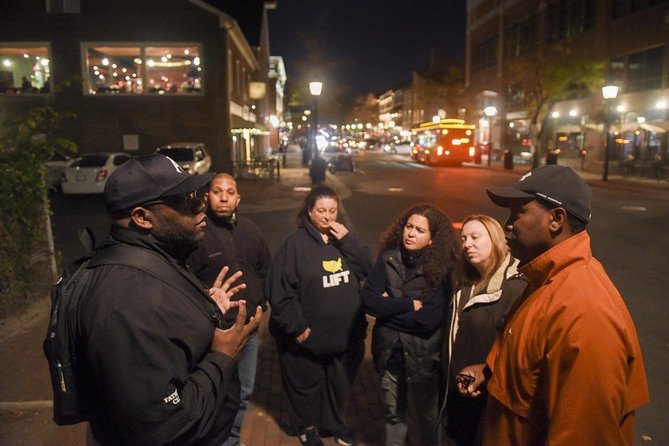
A tour lives or dies on the guide’s delivery, and Freedom’s Fight tends to shine there. In the experience you’re considering, you’ll have an English-speaking guide, and guides like John and Pamela are known for being friendly while staying on topic. That matters, because with a theme like this, you want someone who can keep the story moving without turning it into a lecture that loses people.
Pacing is another big deal. If you have older participants or you’re simply not trying to sprint between stops, a guide that slows down just enough helps everyone keep up. Pamela is specifically noted for pacing with older participants in mind, so if that’s you, it’s a good sign.
There’s also the practical matter of sound. Old Town traffic and street noise can swallow quiet voices. The guide setup used by John includes a small speaker, so you can hear the story clearly even over background noise. That’s not a “nice-to-have.” When you’re learning about enslaved life and abolition, you need the details, and you need them consistently.
Group size is capped at 30. For a 1.5 hour guided walk, that’s a sweet spot. Big enough to meet people and small enough to still feel like a group you can manage and that the guide can steer.
One consideration is that any tour can have hiccups. There are accounts of a guide not showing for a scheduled departure, with poor communication afterward. While you can’t control that, you can reduce the odds of your day going sideways by keeping an eye on your confirmation details and having a plan to contact the provider if something feels off close to departure.
Timing, ticket add-ons, and getting good value
This is a 1.5-hour tour, roughly, with three main stops. The time distribution is heavily guided rather than open-ended. That’s a big part of the value equation: you’re paying for interpretation and connection between landmarks, not for hours of roaming.
Here’s how costs typically shape up based on the tour structure:
- Gadsby’s Tavern Museum: admission ticket not included
- Stabler-Leadbeater Apothecary Museum: admission ticket not included
- Market Square site at City Hall area: admission free
So you should treat the tour price as the guiding and storytelling component, then expect to pay for any museum entry that you choose to fully access at the first two stops. If you already love museums and you plan to spend extra time inside, this tour becomes a strong primer. If you’re more of a street-history listener and prefer quick look-ins, you may still want to pay entry at least for the main interpretive materials, since the guide is building context that the exhibits reinforce.
Also, because the tour depends on good weather, it’s wise to check forecasts. If conditions are rough, the provider may switch to another date or offer a refund. That flexibility can save you stress if you’re planning a tight schedule.
Finally, the tour uses a mobile ticket, and confirmation comes at booking time. That makes it easier to travel light. You’ll want to keep your phone charged and your confirmation accessible so you can get in sync quickly at the start.
Who this tour fits best, and who might want something else

This is a good fit if you want Old Town Alexandria to feel more honest. If you’re tired of history that focuses only on the shiny architecture or only on big names while ignoring enslaved labor, this tour gives you a direct thread through the places where that labor happened and through the people who tried to end it.
It also works well if you like walking routes with a clear theme. You’re not guessing what each stop is for. The guide keeps the story aligned to themes like enslaved work, abolitionist action, and how slavery’s imprint shows up in public spaces.
It may be less ideal if you’re looking for long museum time. Each museum stop is only minutes on this itinerary. You’ll get guidance and context, then you’ll likely want to return on another day if you want deeper reading or more time in exhibits. Since admission isn’t included for the first two stops, it’s also worth making sure you’re comfortable paying entry add-ons during your 1.5 hour window.
If you travel with a service animal, you’re good to go, since service animals are allowed. The tour is also near public transportation, so you can reach it without relying entirely on a car.
Should you book Freedom’s Fight in Alexandria?
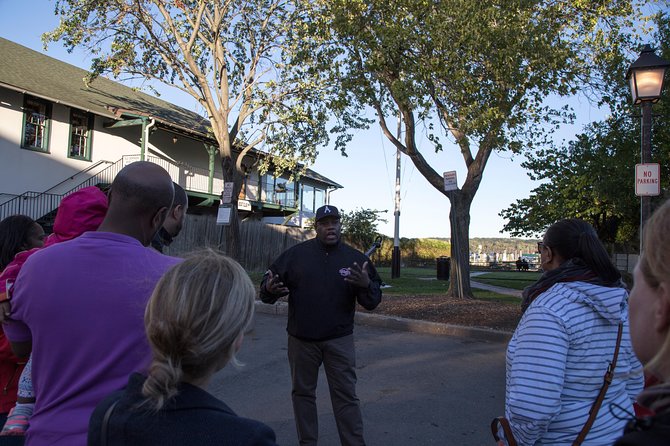
If you care about seeing Alexandria through the lens of African American history, this tour is a strong booking choice. The stops are focused, the route is short, and the guide approach is built to keep you hearing and understanding the story, not just watching scenery.
I’d book it especially if you want your Old Town experience to include enslaved life and abolition as more than a footnote. The route through Gadsby’s Tavern, Stabler-Leadbeater, and Market Square gives you a practical timeline of sorts, workplace to reform to public space.
The only real reason to hesitate is logistics risk. Any tour can face a day-of problem, and there are accounts of a guide not arriving. If you choose to book, do it with a calm plan: keep your confirmation handy, arrive a few minutes early, and be ready to contact the provider if something doesn’t feel right.
If that kind of preparedness sounds normal to you, you’ll likely come away with a clearer, more meaningful Alexandria. Not just the postcard version, but the story the streets were built on.
FAQ
How long is the Freedom’s Fight in Alexandria tour?
It runs about 1 hour 30 minutes, approximately.
Where is the tour meeting point, and where does it end?
The tour starts at 717 Queen St, Alexandria, VA 22314, USA, and it ends at 100 King St, Alexandria, VA 22314, USA.
Is museum admission included?
Admission to Gadsby’s Tavern Museum is not included, and admission to the Stabler-Leadbeater Apothecary Museum is also not included. The Market Square site at the Alexandria City Hall area is listed as free for this stop.
What language is the tour offered in?
The tour is offered in English.
Is the tour accessible and are service animals allowed?
Service animals are allowed, and the tour is near public transportation. It’s also noted that most travelers can participate.
What is the cancellation policy?
You can cancel for a full refund up to 24 hours in advance. If you cancel less than 24 hours before the experience starts, the amount paid is not refunded. The experience requires good weather, and if it’s canceled due to poor weather, you’ll be offered another date or a full refund.
More Tour Reviews in Virginia





Further Along King Street


More to book around Virginia
- Private United States Army Tour in Washington DC by Luxury Car
★ 5.0 · 9 reviews - Old Town Alexandria Tour: A Self-Guided Audio Tour
★ 4.0 · 5 reviews - Private Washington Monuments Tour
★ 5.0 · 8 reviews - Private Washington to Gettysburg Tour by Luxury Car
★ 5.0 · 9 reviews - Walking Tour of Still’s Underground Railroad in Alexandria
★ 5.0 · 9 reviews - Osprey Fishing Charters: Potomac River Fishing
★ 5.0 · 11 reviews
Old Town Alexandria Tours, compared.
 ★ 4.0Mount Vernon and Old Town Alexandria Day Trip from Washington DCFrom $99874 reviews
 ★ 4.6Old Town Alexandria & Mount Vernon TourFrom $109393 reviews
 ★ 4.5Mount Vernon Guided Estate Tour plus Old Town Alexandria from DCFrom $109307 reviews
 ★ 5.0Escape Room Live Alexandria: 60-Minute AdventuresFrom $40237 reviews
 ★ 5.0A Guided Walking Tour through Historic Old Town AlexandriaFrom $30229 reviews
 ★ 5.0Haunted Alexandria Booze and Boos Ghost Walking TourFrom $34157 reviews
 ★ 4.5Old Town Alexandria Food TourFrom $8287 reviews
 ★ 5.0Old Town, Alexandria and Mount Vernon Private TourFrom $1,04483 reviews
Browse the lists this tour appears in