
REVIEW · HISTORICAL TOURS
African-American Heritage Walking Tour of U Street in DC
DC’s U Street tells stories you can walk. This African-American Heritage Walking Tour in Washington, DC strings together music, memory, and neighborhood life, with a licensed guide leading you through places tied to Black community history. I love the way it centers the African-American Civil War story in the middle of an easy foot route, and I also love the focus on U Street’s jazz-era energy, the famed Black Broadway vibe, and the people who made it matter.
One thing to plan around: this is an evening, weather-dependent stroll, and a small slice of recent bookings had real issues like late cancellations or guide mix-ups. I’d treat it like a popular tour, show up prepared for a range of conditions, and double-check your confirmation close to start time.
Key Points That Make This Tour Worth It
- U Street’s Black Broadway story on foot, not just as trivia
- African American Civil War Memorial Museum context that explains why USCT matters
- Ben’s Chili Bowl mural changes as a live example of how public memory shifts
- Howard Theatre history from 1910 onward, including how major performers found a home
- Small-group format (up to 20) that makes questions feel normal
- 5:00 pm evening timing, so you can pair it with dinner plans nearby
More walking, less waiting




Why U Street Works So Well at Night

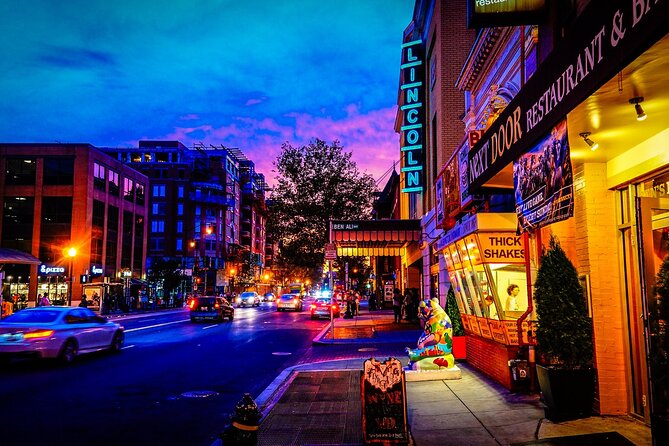
U Street is one of those DC neighborhoods where the street itself feels like a timeline. During the evening, the blocks around U Street start to feel less like an itinerary and more like a living neighborhood, with storefronts, foot traffic, and the overall hum of city life doing half the storytelling for you.
This tour leans into that. It moves at walking speed, so you can look up, read the mood, and connect the dots between music, civil rights, and community institutions. You get a guided path through the Black jazz scene tied to U Street, the kind of night scene that helped earn the Black Broadway nickname, and the way entertainment venues shaped opportunity for Black performers.
If you enjoy local DC history that comes with real names and specific places, this style fits. It’s not trying to turn your visit into a museum day. It’s more like someone shows you the neighborhood’s spine, then points out why those moments still matter.
Price and Value: Is $90 Fair for a 2-Hour Walk?
At $90 per person for about 2 hours, you’re paying for three things: a licensed local guide, guided interpretation at each stop, and the ability to see multiple landmark stories without doing the legwork yourself.
Here’s how I think about the value. Many walking tours in DC feel similar until you hit the more complex stops, like the African American Civil War Memorial Museum. When you’re paying attention at a place tied to USCT history, the guide’s framing matters. A good guide helps you understand why the wall of names and the memorial’s focus are not just symbolic, but historically specific.
Also, this tour includes free admission noted for the stops listed, so you’re not stacking extra ticket costs on top of the base price. The tour cost, then, is mostly about the guidance and the time efficiency of visiting several anchor sites in one evening.
One more practical note: this tour is booked about 22 days in advance on average. That’s a hint that dates can fill up. If you’re set on a particular day, I’d book earlier rather than assuming you’ll find an opening last minute.
Plan Your Walk Comfort: Timing, Pace, and Where to Start
You’ll start at 1250 U St NW, Washington, DC 20009, with the tour beginning at 5:00 pm and ending back at the meeting point. It’s a foot-forward experience, designed for a moderate physical fitness level, so expect a real walking workout, even if it’s not a marathon.
Group size is capped at 20 travelers, which usually helps the conversation. With a smaller group, it’s easier to hear the guide without constantly shifting positions, and questions feel more personal.
Bring practical stuff. Comfortable shoes matter because you’ll be on sidewalks for the full evening stretch. If it’s humid or cool, dress accordingly, since this experience requires good weather. If the tour shifts due to weather, you might get offered a different date or a full refund, but you do not want to show up in the least comfortable shoes you own.
Deeper into the record
- Guided African American History Tour with Reserved Museum Entry★ 4.5 · 1,180 reviews
- DC Monuments & History Guided E-Cart Tour-Blankets★ 4.5 · 450 reviews
- Smithsonian Museum of Natural History – Exclusive Guided Tour★ 5.0 · 446 reviews
- African American History Tour with Museum of African American History Ticket★ 4.5 · 390 reviews
- Historic Georgetown: History, Gossip, & Architecture Walking Tour★ 5.0 · 321 reviews
Stop One: U Street and the Black Broadway Night Scene
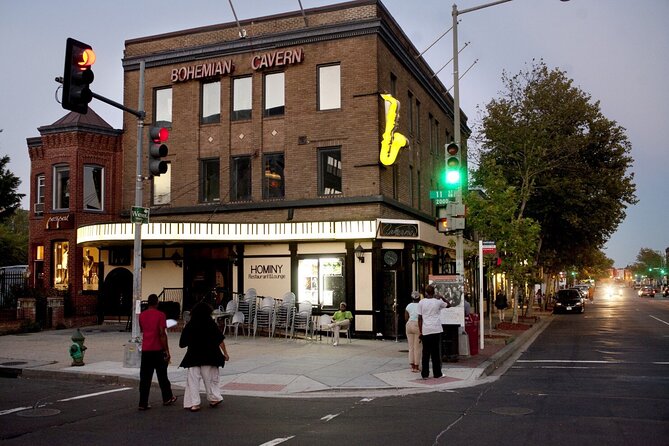
The first stop sets the tone: U Street as a music and nightlife hub people still reference today. This is where the tour’s vibe becomes clear. Instead of talking about history in the abstract, the guide connects the streets to the era when theaters and clubs shaped careers and culture.
A big part of the U Street story is the jazz scene and the way famous Black entertainers worked and gathered there. You’ll hear about the neighborhood’s role in bringing major performers into the local spotlight, with names like Duke Ellington, Cab Calloway, Pearl Bailey, Sarah Vaughan, and Jelly Roll Morton woven into the narrative.
Why this stop is so valuable is timing. In the evening, the neighborhood feels closer to the nightlife context. You’re not just learning about the scene, you’re standing in the corridor where that energy lived. And because it’s a guided walk, you’ll get “why this corner, why this block” explanations, not just a list of famous people.
Possible drawback to consider: since this is a walking tour at 5:00 pm, lighting and crowd levels can affect what you can see and how long you can linger at each place. If you’re picky about photos or prefer a slower pace, tell your guide early so they can manage the group.
Stop Two: The Ben’s Chili Bowl Mural and How Memory Changes
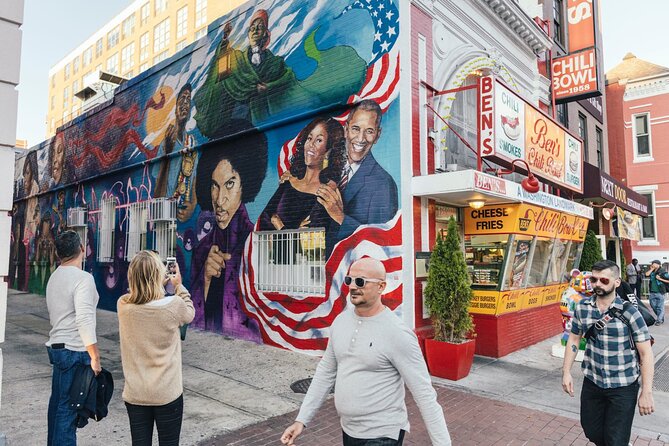
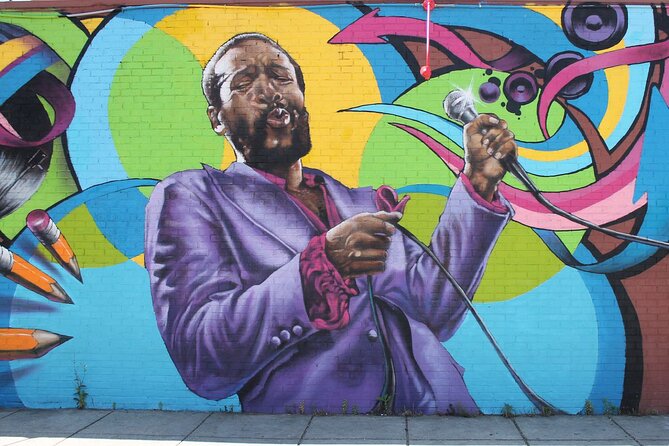
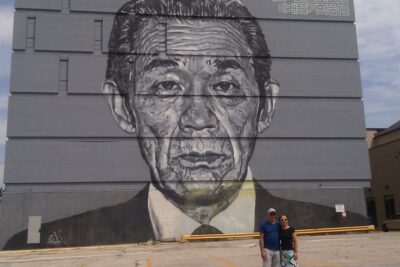
At Ben’s Chili Bowl, the food is famous, but the mural is part of what makes this stop interesting. The tour takes you to the mural that celebrates notable Black Americans, which turns a landmark you’ve heard about into a story you can actually read on site.
One of the most compelling details here is that the mural has been changed multiple times since it appeared in 2012. That means the art is not frozen in time. It responds to public debate, reputations, and local choices about who belongs in public recognition.
You might hear about how versions of the mural included figures like Bill Cosby and Barack Obama, then how the Cosby portion was removed after allegations came to light. Later, a different tribute appeared briefly connected to the Washington Wizards around the NBA playoffs, before local artist Aniekan Udofia painted the mural that stands there today.
For you, this matters because it gives you a practical way to think about monuments and murals in real life. Public art is part history, part community negotiation. Seeing the mural in its current form, with context for how it evolved, makes it easier to understand why people care so much about what gets depicted on street-level walls.
Drawback angle: this stop can be a touch emotionally loaded for some people because it touches real-world controversies. If you prefer history without today’s debates, you may find that aspect a bit intense, but it is also part of what makes the U Street story feel honest.
Stop Three: African American Civil War Memorial Museum and the USCT Story
This is the anchor stop, the one that gives the whole tour weight.
The African American Civil War Memorial & Museum honors Black troops who fought for the Union during the American Civil War. The guide’s framing is crucial because it explains the structure of the history: the USCT, United States Colored Troops, which included both formerly enslaved men and free Black men. The memorial highlights the discrimination Black soldiers faced from opposing forces and also within their own units, which is a hard point to hear but an important one.
Here are the specific historical details you’ll likely focus on during the stop:
- More than 200,000 Black Americans served in 175 regiments of the USCT
- They made up around one-tenth of the Union’s forces
- The effort helped influence Union policy on Black military service over time
- The Wall of Honor inscribes names of the soldiers, alongside those of their white counterparts
Why I think this stop is worth the ticket price on its own is that it turns a familiar “Civil War history” conversation into a Black-centered one with specific numbers, units, and named remembrance. You’re not just learning that Black soldiers fought. You’re learning the scale, the policy shift, and the memorial’s purpose as the first dedicated solely to Black troops.
Time-wise, plan to slow down here. A 30-minute stop is enough to absorb the main storyline with a guide, but not always enough to read every inscription if the group is moving quickly. If you want to linger, ask your guide for a good moment to take extra time without losing the group.
Stop Four: Howard Theatre, 1910 Roots, and Big-Stage Talent
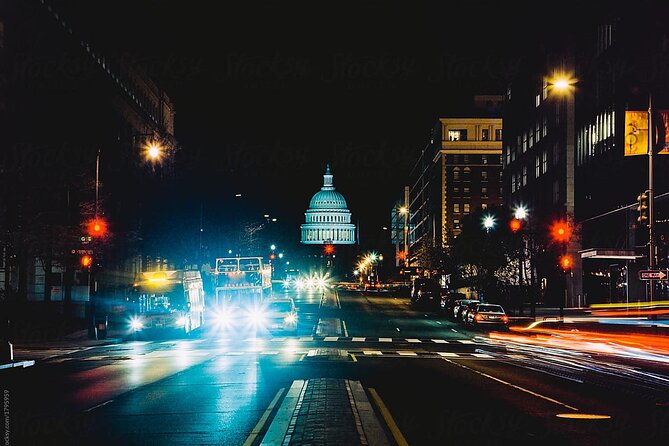
The final stop is the Howard Theatre, historically important as the first Black theater in America. The story begins in 1910 in the Shaw neighborhood area around Howard University, with the theater founded because Black men and women were not allowed into many of the other venues in the city at the time.
This stop works well because it connects opportunity to place. It’s not just that music legends performed here. It’s that a Black institution created a stage when access was restricted elsewhere.
In the conversation, you may hear how the Howard Theatre attracted major performers over time, with examples that range from early icons like Louis Armstrong to modern stars such as Kendrick Lamar. You may also learn that before it became nationally known, it was famous locally for open-mic style events and band contests, which helped build musical creativity before the Harlem Renaissance and major jazz eras hit their peak.
If you’re curious about how entertainment venues shape culture, this is your stop. It also pairs naturally with DC’s educational and community geography. Some guides may spend time talking about the Howard University area nearby, and you might find extra context if your guide chooses to connect the theater’s history to the broader campus community.
A practical note: this stop can feel less museum-like and more street-neighborhood focused, so if you prefer indoor exhibits only, keep expectations flexible. You’ll likely get more story and less gallery time.
The Guide Makes the Difference: Who You Might Hear From
The tour includes a licensed tour guide, and based on the experience reports I’ve seen, the strongest praise tends to go toward guides who bring both structure and personality to the walk.
Names that have shown up with strong feedback include people like Amanda, Nur Ali, Darren, Nor, Noor, and Nore. What they seem to share is a serious command of neighborhood details, plus the ability to make the walk feel like a conversation rather than a lecture.
How to get the most out of the guide, even if your guide is different:
- Ask one question early, like why U Street became Black Broadway in the first place
- Pay attention to what the guide tells you to look for on buildings, street corners, and murals
- If you want extra time at the Civil War memorial, signal it before you reach that stop
One caution that affects your experience quality is tour reliability. A small number of reports mention last-minute cancellations or guide issues. I can’t predict your date, but you can reduce the risk by keeping your confirmation accessible and staying aware the closer you get to 5:00 pm.
Who This Tour Fits Best, and Who Might Want Another Option
This tour is a strong match for you if:
- You want a night walking tour that mixes DC city life with Black-centered history
- You like tours where you learn specific names tied to specific places, not just general context
- You’re interested in how entertainment, memory, and civic history connect across one neighborhood
- You’re comfortable walking for about 2 hours with a moderate fitness level
It may be less ideal if:
- You dislike weather-dependent evening plans and can’t be flexible
- You need a strictly indoors experience
- You want long time for reading at each stop, since the structure keeps moving
If you’re traveling with kids or extended family, you’ll want to judge the Civil War memorial stop. It covers heavy topics and is history-focused, not entertainment-focused. Still, a good guide can often translate it into something that lands emotionally and intellectually for many ages.
Should You Book This U Street Heritage Tour?
I’d book it if you want DC history with a human scale and a clear sense of place. The combination of U Street’s Black Broadway storytelling, the Ben’s Chili Bowl mural context, and the African American Civil War Memorial Museum creates a strong arc: culture, recognition, and historical justice, all in one walk.
I’d also book it if you value a small group and a guide who can connect names to street-level details. The $90 price feels most justified when you treat the tour as guided interpretation, not just a way to “see spots.”
Before you commit, do two things. Pick your date with enough flexibility for weather. And if your schedule is tight, keep a little buffer around your evening start time, since some bookings have faced last-minute problems. If you can work with that, you’ll likely come away with a deeper understanding of U Street and a more personal connection to DC’s African-American heritage.
FAQ
Where does the tour start?
The tour starts at 1250 U St NW, Washington, DC 20009, USA.
What time does the tour begin?
The tour begins at 5:00 pm.
How long is the African-American Heritage Walking Tour of U Street?
It lasts about 2 hours.
What language is the tour offered in?
The tour is offered in English.
What is included in the $90 price?
The tour includes a licensed tour guide. Food and drink and transportation are not included.
What is the group size limit?
This tour has a maximum of 20 travelers.
What happens if the tour is canceled due to poor weather?
The experience requires good weather. If it’s canceled due to poor weather, you’ll be offered a different date or a full refund.
More Tours in Washington DC





More Tour Reviews in Washington DC
More to book around Washington DC
- The Public Group Scooter Tour of DC’s National Mall
★ 5.0 · 3 reviews - National Mall Highlights with Cherry Blossom & Arlington Cemetery
★ 3.5 · 3 reviews - Private Washington DC Monuments Day or Night Bike Tour
★ 5.0 · 3 reviews - Private Tour with US Capitol Or Archives Or Washington Monument
★ 3.5 · 3 reviews - Washington DC Private Guided Bus Day Tour with Step Off Guide
★ 5.0 · 3 reviews - 3-Hour Small Group Memorial Tour in Washington, D.C.
★ 4.0 · 3 reviews
Historical Tours, compared.
 ★ 4.52-Hour Gettysburg Battlefield Guided History Bus Tour with a National Park GuideFrom $432,201 reviews
 ★ 4.5Guided African American History Tour with Reserved Museum EntryFrom $891,180 reviews
 ★ 4.5DC Monuments & History Guided E-Cart Tour-BlanketsFrom $52450 reviews
 ★ 5.0Smithsonian Museum of Natural History – Exclusive Guided TourFrom $89446 reviews
 ★ 4.5Baltimore’s Historical Sightseeing TourFrom $44437 reviews
 ★ 4.5African American History Tour with Museum of African American History TicketFrom $90390 reviews
 ★ 4.5Ghost Tour: History and Haunts – Family Friendly – Best in GettysburgFrom $23378 reviews
 ★ 5.0Historic Georgetown: History, Gossip, & Architecture Walking TourFrom $49321 reviews
Browse the lists this tour appears in