

Do the capital justice.
Monuments after dark, the Capitol from the inside, Gettysburg and back before dinner. What each tour costs, how long it runs, and which one to book.
Book these and the trip works.
The night loop everybody photographs, a seat inside the Capitol, a morning at Arlington, the long run north to Gettysburg. Prices, running times, and what each ticket actually covers.
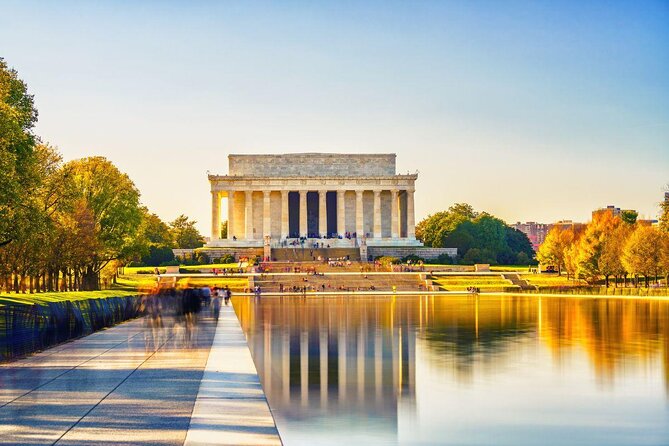
National Mall Monuments Night Tour with 10+ Stops, Entry Tickets
Ride a heated coach for 3 hours and catch 10+ National Mall monuments in night light, with expert commentary and optional museum upgrades.
From $65 per person
Read the review →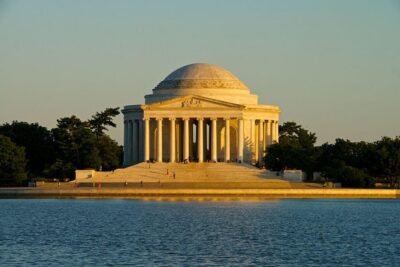 ★ 4.5Safe betWashington DC Monuments by Moonlight Tour by TrolleyFrom $483,956 reviews
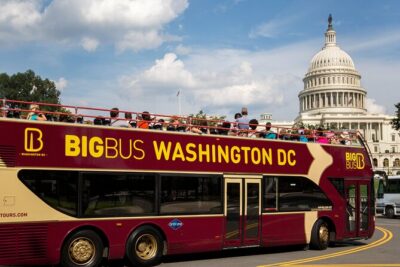 ★ 3.5Sells out earlyHop-on Hop-off Sightseeing Tour by Open-top Bus with 18 StopsFrom $493,848 reviews
 ★ 4.5Crowd favouriteWashington DC in One Day: Guided Sightseeing TourFrom $893,360 reviews
 ★ 5.0Worth the ticketWashington DC Moonlight Tour by Electric CartFrom $742,610 reviews
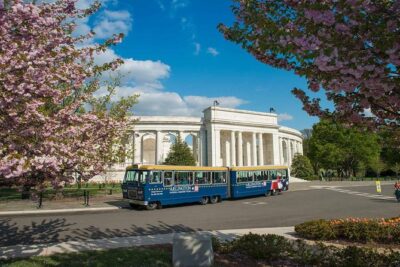 ★ 4.0Easy winWashington DC Hop-On Hop-off Trolley Tour with 15 StopsFrom $482,599 reviews
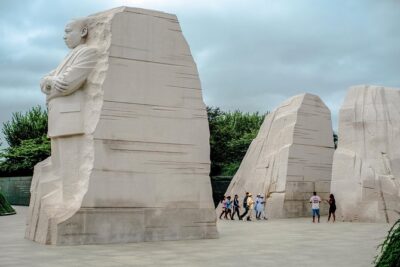 ★ 4.5Good with kidsVIP Best of DC with US Capitol + National Archives Reserved EntryFrom $1292,491 reviews
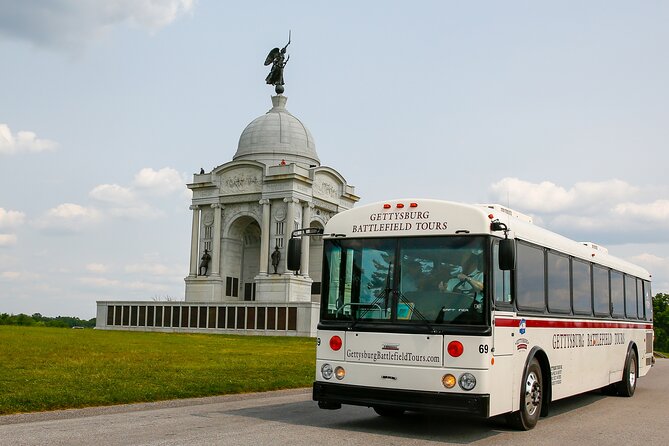
Gettysburg makes no sense alone.
Three days of July 1863 spread across twenty-five square miles of Pennsylvania farmland, and the ground gives up nothing on its own. A licensed guide rides with you between Little Round Top, the Angle and the copse of trees, and you are back down through Frederick by mid-afternoon.
How will you cover the Mall?
Two miles of grass end to end, and the memorials stand further apart than the map lets on. Three ways visitors actually do it. Pick the one that matches your legs and your evening.
 After sunset
From a seat, after dark
3 hours (approx.) · from $69 · 6,933 reviews
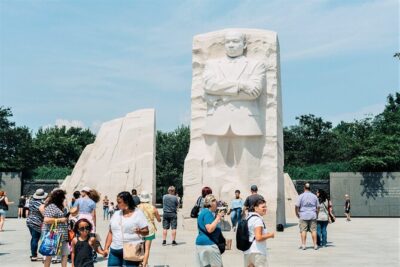
The lit version, and the one people come home with photographs of. Trolleys and open-top coaches run the loop from Lincoln through Korean War, Vietnam, FDR and Jefferson, ten stops or more, and you walk only the last hundred yards to each. Warm marble, thin crowds after nine.
See the night tours →
After sunset
From a seat, after dark
3 hours (approx.) · from $69 · 6,933 reviews
The lit version, and the one people come home with photographs of. Trolleys and open-top coaches run the loop from Lincoln through Korean War, Vietnam, FDR and Jefferson, ten stops or more, and you walk only the last hundred yards to each. Warm marble, thin crowds after nine.
See the night tours →
 Guide-led
On foot with a historian
2 hours to 2 hours 30 minutes (approx.) · from $55 · 2,566 reviews
Two to three hours, Lincoln through to the Washington Monument, with someone who can tell you why the Vietnam wall is black and cut below grade. Slower, hotter in August, and the only version where the detail actually lands.
See the walking routes →
Guide-led
On foot with a historian
2 hours to 2 hours 30 minutes (approx.) · from $55 · 2,566 reviews
Two to three hours, Lincoln through to the Washington Monument, with someone who can tell you why the Vietnam wall is black and cut below grade. Slower, hotter in August, and the only version where the detail actually lands.
See the walking routes →
 Two wheels
One loop, on a bike
3 hours · from $65 · 399 reviews
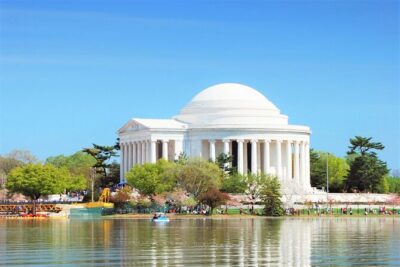
Flat, car-free path the whole way round the Tidal Basin and along the Potomac. Riders take in the full Mall plus Jefferson and a look across at Arlington in the time a walking group spends on three memorials. Bike and helmet come with the ticket.
See the bike tours →
Two wheels
One loop, on a bike
3 hours · from $65 · 399 reviews
Flat, car-free path the whole way round the Tidal Basin and along the Potomac. Riders take in the full Mall plus Jefferson and a look across at Arlington in the time a walking group spends on three memorials. Bike and helmet come with the ticket.
See the bike tours →
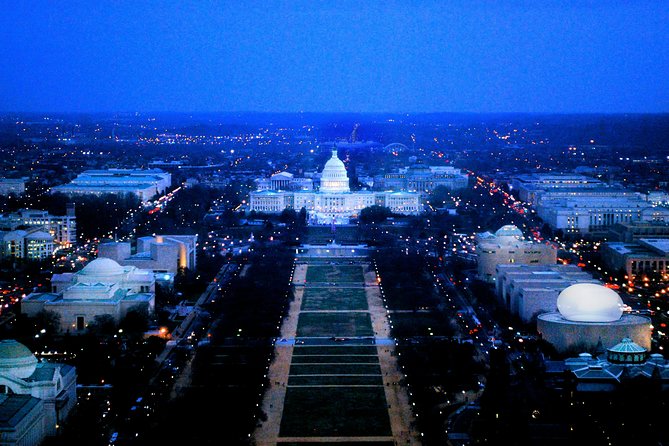
The city photographs better at night.
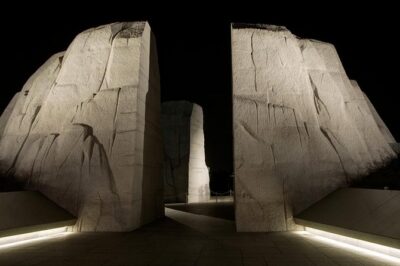
Coach traffic thins, the marble holds the day’s heat, and Lincoln looks the way he does on the five-dollar bill. Down the far end of the Mall the Capitol dome sits lit above the reflecting pool, and the Tidal Basin goes flat enough to double Jefferson.
The capital eats better than its reputation.
Half-smokes on U Street, injera on Ninth, crab dip and cupcakes along the Georgetown waterfront. These walks work a few blocks hard and put a good mile between courses.



Eleven Smithsonians, one afternoon.
Nothing costs anything to walk into, and that is precisely the problem: Air and Space queues out of the door and Natural History will eat a whole day if you let it. A guided run buys reserved entry and a route through the objects worth stopping for.

Arlington asks for a morning.
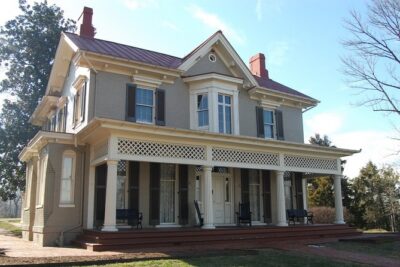
More than four hundred thousand graves on a Virginia hillside, the Kennedy flame near the top of the slope, and the Changing of the Guard at the Tomb of the Unknown Soldier running to its own clock. The tram covers the distance; a guide tells you whose headstones you are walking between.
Pick a corner of the capital.
The city breaks into a handful of walkable pieces. The Mall for the marble. Georgetown for brick and the towpath. Capitol Hill for the dome and the Library. Arlington for the quiet.

Know how you want to see it?
Twelve ways into the same city. Choose the format and everything behind it is already priced, timed and reviewed.

Cross the river, keep going.
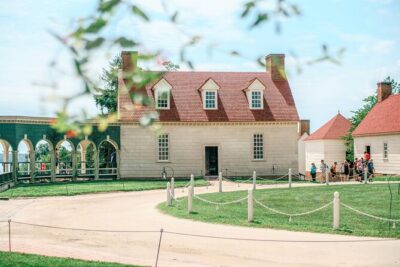
The good stuff starts fifteen minutes over the Memorial Bridge and runs on for ninety. Mount Vernon on its bluff, Annapolis at the dock, Gettysburg up through the Maryland farmland.

A long weekend, in order.
Nobody sees all of it, and trying is how people end up sunburnt on the Mall at two in the afternoon. This is the order that gets the most out of a long weekend.
 Day 1
Walk the Mall
Start at Lincoln and work east: Korean War, Vietnam, the Washington Monument, the Capitol at the far end. Jet lag helps here, because the marble is best before the coaches arrive.
Plan day one →
Day 1
Walk the Mall
Start at Lincoln and work east: Korean War, Vietnam, the Washington Monument, the Capitol at the far end. Jet lag helps here, because the marble is best before the coaches arrive.
Plan day one →
 Day 2
Inside the buildings
Reserved entry to Air and Space first thing, the Capitol and the Library of Congress reading room after lunch, Natural History if the legs hold out. Finish on a night loop of the memorials.
Plan day two →
Day 2
Inside the buildings
Reserved entry to Air and Space first thing, the Capitol and the Library of Congress reading room after lunch, Natural History if the legs hold out. Finish on a night loop of the memorials.
Plan day two →
 Day 3
North to the battlefield
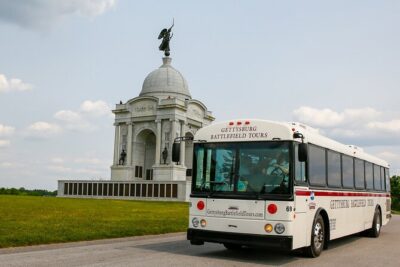
Early pickup, two or three hours on the field with a licensed guide, back down the highway by mid-afternoon. Give this one the clearest sky of your three days; the ridgelines are the whole point.
Plan day three →
Day 3
North to the battlefield
Early pickup, two or three hours on the field with a licensed guide, back down the highway by mid-afternoon. Give this one the clearest sky of your three days; the ridgelines are the whole point.
Plan day three →
The latest Washington DC tour reviews.
 ★ 3.5Private Tour with US Capitol Or Archives Or Washington MonumentFrom $9803 reviews
 ★ 5.0Private Washington DC Monuments Day or Night Bike TourFrom $5003 reviews
 ★ 3.5National Mall Highlights with Cherry Blossom & Arlington CemeteryFrom $553 reviews
 ★ 4.03-Hour Small Group Memorial Tour in Washington, D.C.3 reviews
 ★ 5.0Washington DC Private Guided Bus Day Tour with Step Off GuideFrom $1,1493 reviews
 ★ 4.0Private Transfer Washington Airport DCA to Washington DC HotelsFrom $413 reviews
 ★ 4.5Washington Nationals Baseball Game Ticket at Nationals ParkFrom $283 reviews