
REVIEW · SMITHSONIAN & WASHINGTON MUSEUM TOURS
250th: National Archives & American History Museum Guided Tour
History hits different in this tight route. You’ll follow a story-driven path that connects famous American artifacts to the people and ideas behind them, with Canden steering the pace. Two standout stops are the Star-Spangled Banner at the Museum of American History and the skip-the-line way into the National Archives, plus the payoff views from the Old Post Office Pavilion top.
I especially like how the tour avoids museum wandering. You get a real sequence, you hear the meaning of what you’re seeing, and you come away with names and context instead of just photos. The only drawback is the timing, it’s about 3 hours total, so you’ll need to keep moving and accept that each room gets a focused, not endless, look.
Key highlights you will notice fast
- Skip-the-line entry into the National Archives so you spend time looking instead of waiting
- Top access to the Old Post Office Pavilion with a highlight view down Penn Ave
- Icon objects in 90 minutes at the National Museum of American History from the Star-Spangled Banner to steam and rail
- A small group, max 6 travelers, which makes questions and conversation easier
- Canden’s storytelling style, popular with families, including kids who stay engaged
- Mobile ticket and English language tour, simple to use and straightforward
Still museum weather? More Smithsonian runs
Why this DC history tour works better than random museum time
Washington DC can feel like a museum buffet. You can absolutely get lost in the best way, but you can also burn hours without really landing on what you came for. This tour is built to solve that problem with a clear route and a guided narrative that explains why each object matters.
What I like for you is the order of operations. You start in the National Museum of American History with big, visual anchors, then you move into the National Archives area where the stories get more official and more personal. That combination helps you connect national myths to real documents, real machines, and real moments.
It is also a good fit if you want depth without the grind. You are not stuck in one gallery for hours, and you’re not jumping from museum to museum on your own while trying to figure out entrances, lines, and priorities. The whole thing is designed to keep you moving at a human pace for about half a day.
National Museum of American History: five artifacts that tell a single story
Your tour begins at the Smithsonian National Museum of American History, 1300 Constitution Ave. NW. The guided portion here runs about 1 hour 30 minutes, and your museum admission for this part is listed as free.
Instead of making you “browse,” the guide walks you straight to five iconic objects and explains what they represent. You’ll see, in sequence, the Star-Spangled Banner, Jefferson’s Writing Desk, Gunboat Philadelphia, Julia Child’s Kitchen, and the John Bull Locomotive. The fun part is that these are not random picks. They trace America’s change over time, from war and independence, to nation-building, to everyday culture and technology.
Star-Spangled Banner: the artifact behind the anthem
The original Star-Spangled Banner is the kind of object that snaps your attention into place. It is not just a famous flag, it is a physical reminder of the War of 1812 era, and how symbols become national identity.
When you look at it with a guide, you stop thinking only about the word “anthem” and start thinking about the stakes. A war-era document tied to courage and survival is still showing you that history in fabric form.
More reserved-entry visits nearby
- Skip-the-line National Archives Building Exclusive Guided Tour★ 5.0 · 381 reviews
- National Archives Skip the Line Guided Tour Semi-Private 6ppl Max★ 5.0 · 196 reviews
- VIP National Archives Skip-The-Line Guided Tour 6 ppl Max★ 5.0 · 126 reviews
- Washington DC: National Archives and US Capitol Guided Tour★ 4.6 · 115 reviews
- National Archives Skip-the-Line Guided Tour★ 5.0 · 85 reviews
Jefferson’s Writing Desk: the portability of big ideas
Next comes Jefferson’s Writing Desk, the small portable desk used by Thomas Jefferson to draft the Declaration of Independence. This is the moment where the tour shifts from “events” to “work.”
I love this stop because it makes the process feel less abstract. You get reminded that declarations were drafted by real people, with tools that fit on a desk, not in some distant legend. It is one of those objects that makes you look twice, partly because it is small and partly because of what happened next.
Gunboat Philadelphia: evidence you can almost touch
The Gunboat Philadelphia is a Revolutionary War vessel recovered from Lake Champlain. You get rare physical evidence of early American naval warfare and the fight for independence.
This is also a smart choice for a guided tour. Boats are hard to “read” when you are alone. A guide can point out what makes this one historically significant and why naval stories matter in the larger independence narrative.
Julia Child’s Kitchen: how culture changes postwar life
Then, you pivot to Julia Child’s Kitchen from The French Chef era. This stop represents postwar cultural change, the rise of food media, and how everyday Americans embraced new ideas and lifestyles.
This might be the most surprising inclusion if you expect a strictly political history tour. That is exactly why it works. You see how national identity is shaped not only by laws and wars, but also by media, household habits, and the way people learn what to cook, what to watch, and what to try.
John Bull Locomotive: steam power and America’s growth
Finally, you’ll see the John Bull Locomotive, one of the oldest surviving steam locomotives in the world. The guide ties it to railroads powering industrial growth and helping enable westward expansion and economic transformation.
This last stop is a strong closer because it gives you a different kind of “proof.” It is not a letter or a banner, it is a machine that changed how people traveled and how goods moved. When the guide connects that to America’s broader shifts, the museum visit feels like a timeline you can actually follow.
A practical tip for this first half
Wear comfortable shoes. Even with a structured route, you are moving through a museum with crowd flow, and your guide is likely keeping you on schedule. If you are the type who wants to pause for photos, just pick a couple of “must-capture” moments, then listen with your eyes for the rest.
Into the National Archives and up the Old Post Office Pavilion
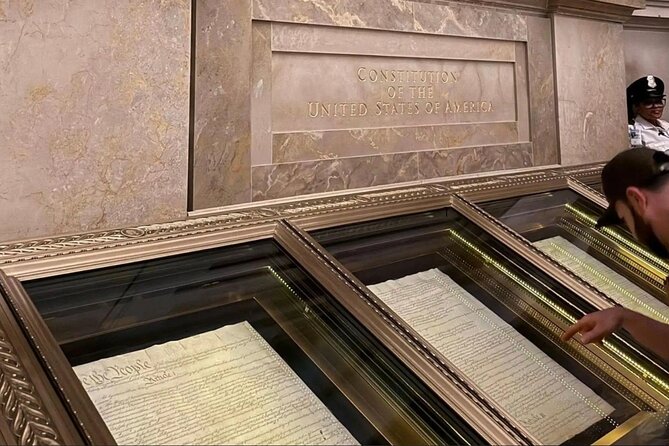
After the American History Museum, you head toward the National Archives Museum area. The National Archives guided portion is listed as about 40 minutes, and the admission is included for this stop. The bigger value, though, is the skip-the-line access.
Skip-the-line access: time you can spend learning
“Skip the line” sounds simple, but in DC it can be the difference between a great visit and a stressful one. Here, it means you get guided entrance into the National Archives rather than trying to figure out where to queue.
The tour also ends inside the Archives Museum, so you can keep exploring at your own pace afterward if you want. That is a nice bonus if you discover you want more time with documents or exhibit galleries once the guided section ends.
Old Post Office Pavilion top access: the view that sticks
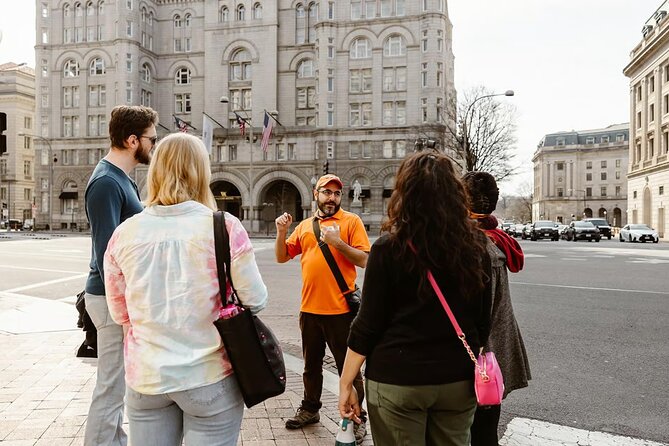
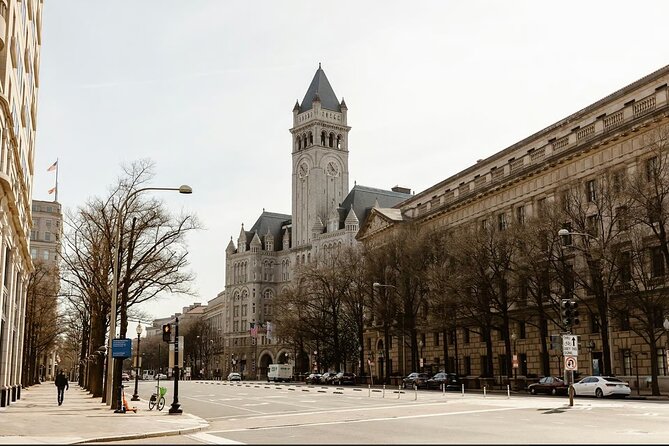
One of the tour inclusions that people really remember is the guided entrance to the top of the Old Post Office Pavilion. In the feedback you can tell this is a highlight, with the view down Penn Ave getting special attention.
If you are visiting DC for the first time, that rooftop moment helps you orient. Streets, museums, and the general layout start to make sense from above. Even if you already know the geography, the height adds context, and it turns a guided museum day into a full DC experience.
How to handle the pacing here
Forty minutes at the National Archives portion is enough to feel oriented and get key points, but it is not long enough to “soak in” everything. Plan to treat this as the guided spark, then use your extra time after the tour inside the museum if you want more.
The guide factor: why Canden’s storytelling keeps people with you
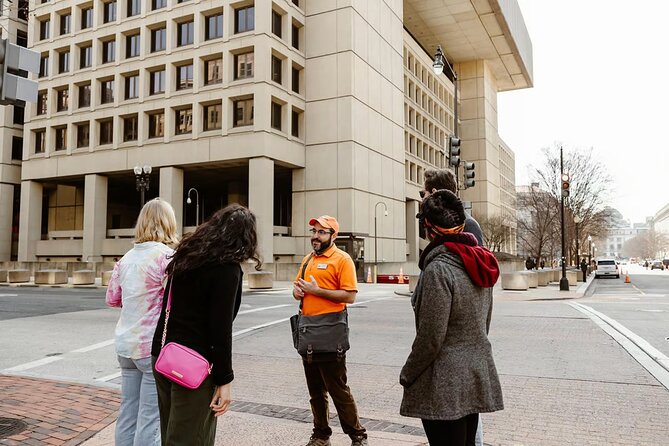
The tour is capped at a maximum of 6 travelers, and that small group size matters. In a group that small, you get more than a lecture. You get an actual walking conversation and a chance to stay engaged when the guide calls out something specific.
Canden is the name that shows up in the feedback, and the pattern is consistent. The storytelling style is engaging and entertaining, with enough energy that even kids stay focused. If you travel with a family, this is a big deal. It means you can avoid the usual problem where adults listen and kids drift away.
It also helps that the tour does not rely only on museum labels. You’re getting explanations tied to what you’re physically looking at, and that makes each object feel less like a random display.
Price and value: what $75 really buys you
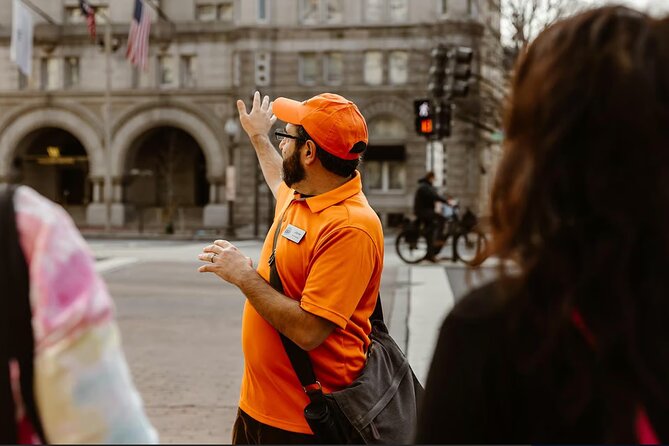
The price is $75.00 per person, and the tour runs about 3 hours total. You start at 2:00 pm, and it is offered in English. The tour also uses a mobile ticket, which keeps things simple.
Here is why I think the value is fair. You are paying for four things bundled together:
- Guided museum time that takes you to major American history objects
- Skip-the-line entry into the National Archives
- Guided entrance up to the Old Post Office Pavilion top
- A walking tour component with a local tour guide
If you were to plan these separately, you would be juggling lines, entrances, and timing. This route is set up so you do the “hard parts” once, with someone who knows how to get you to the right places at the right time.
Also, it tends to sell well. It is booked on average 47 days in advance, so if this is on your must-do list, do not wait for last-minute optimism.
Timing and logistics that make or break a museum day
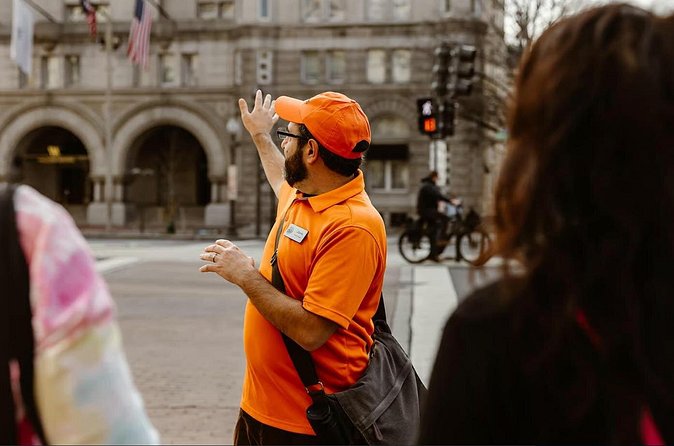
The start point is the Smithsonian National Museum of American History, 1300 Constitution Ave. NW, Washington, DC 20560. The tour ends inside the National Archives Museum at 701 Constitution Ave. NW, Washington, DC 20408.
That end location is helpful. When the guide finishes, you are not left wandering around searching for what to do next. You are already placed inside the Archives area, which makes it easier to extend your visit if you want to.
One more detail: this tour includes a walking tour and it stays in central areas. That is convenient if you are using public transportation, and it is listed as near public transit.
Who this fits best
This is ideal if you want:
- A guided way to hit major DC history anchors
- A tour that feels story-based rather than just a checklist
- A small group experience that keeps you connected to the guide
- A mix of politics, culture, and technology, not only one theme
If you prefer total freedom and long, independent time inside museums, you might find a guided route too structured. But if you like focus and want the “right order,” this is a strong choice.
What to watch for: the main trade-offs
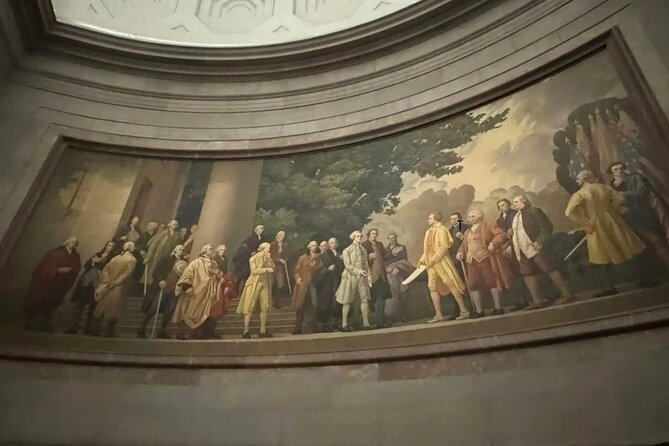
The biggest consideration is time. About 3 hours means you cannot expect to read everything or linger in every gallery. You will likely want to take photos quickly, then shift attention back to the guide’s explanations.
Second, the National Archives portion plus rooftop access can feel like a packed finish. Keep your energy up for the second half, especially if you are sensitive to stairs or crowds around museum entrances.
Finally, tips are not included. If you rely on a tipping structure, plan for that in your budget. (It’s a small line item, but it matters to many visitors.)
Should you book this 250th National Archives and American History guided tour?
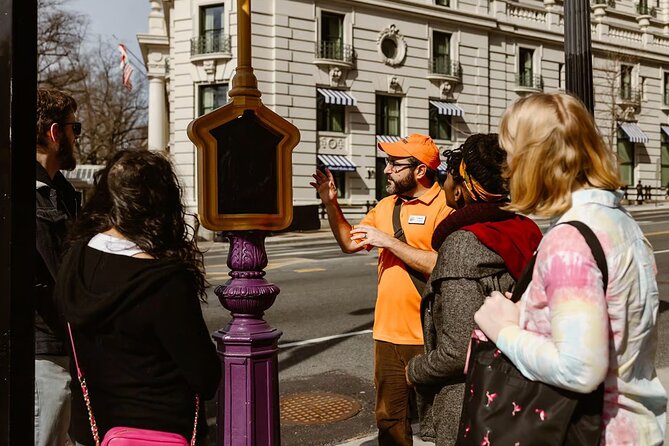
If your goal is to understand American history through famous objects, with skip-the-line convenience and a payoff view from the Old Post Office Pavilion top, I’d say yes. This is the kind of tour that works especially well for first-timers, for families, and for anyone who wants a guided route without turning the day into a logistics puzzle.
I would book it if you like stories tied to real artifacts like the Star-Spangled Banner, Jefferson’s Writing Desk, and the Gunboat Philadelphia, plus you do not mind that the tour also includes a cultural stop like Julia Child’s Kitchen and a technology stop like the John Bull Locomotive. That mix helps the day feel like more than memorizing names.
Skip it only if you want slow, independent museum time and you dislike moving from place to place every few stops. For most people, the balance here is exactly right.
FAQ
How long is the tour?
The tour is about 3 hours total, with around 1 hour 30 minutes at the National Museum of American History and about 40 minutes at the National Archives portion.
What does it cost?
It costs $75.00 per person.
What is included in the price?
You get skip-the-line access into the National Archives, guided entrance to the top of the Old Post Office Pavilion, and a walking tour with a local tour guide.
Is admission included for both museums?
Admission for the National Museum of American History portion is listed as free, and admission for the National Archives portion is listed as included.
Where do I meet and where does the tour end?
You start at Smithsonian National Museum of American History, 1300 Constitution Ave. NW. The tour ends inside the National Archives Museum at 701 Constitution Ave. NW.
How big is the group and what language is the tour in?
The tour has a maximum of 6 travelers and is offered in English. Service animals are allowed.
More Reserved-Entry Visits




More Smithsonian Mornings



More to book around Washington DC
- The Public Group Scooter Tour of DC’s National Mall
★ 5.0 · 3 reviews - National Mall Highlights with Cherry Blossom & Arlington Cemetery
★ 3.5 · 3 reviews - Private Washington DC Monuments Day or Night Bike Tour
★ 5.0 · 3 reviews - Private Tour with US Capitol Or Archives Or Washington Monument
★ 3.5 · 3 reviews - Washington DC Private Guided Bus Day Tour with Step Off Guide
★ 5.0 · 3 reviews - 3-Hour Small Group Memorial Tour in Washington, D.C.
★ 4.0 · 3 reviews
Smithsonian & Washington Museum Tours, compared.
 ★ 5.0Smithsonian Museum of Natural History – Exclusive Guided TourFrom $89446 reviews
 ★ 5.0Smithsonian Museums Walking Tour with Reserved Air & Space EntryFrom $79297 reviews
 ★ 5.0Smithsonian Museum of American History Exclusive Guided TourFrom $89245 reviews
 ★ 4.5Museum of the Bible Admission Ticket233 reviews
 ★ 5.0The Smithsonian National Air & Space Museum Exclusive Guided TourFrom $89214 reviews
 ★ 5.0Smithsonian Museum of Natural History Small Group Tour: 8ppl MaxFrom $89177 reviews
 ★ 5.0The National Gallery of Art DC – Exclusive Guided Museum TourFrom $89166 reviews
 ★ 4.1Smithsonian National Museum of Natural History Guided TourFrom $75159 reviews
Browse the lists this tour appears in