
REVIEW · NATIONAL MALL TOURS
Pedicab Sightseeing Tour on the National Mall
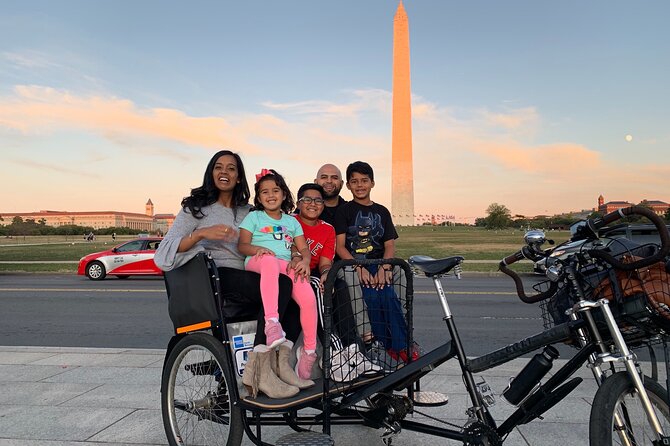
A pedicab makes the Mall feel manageable. I like how this private ride turns big, intimidating distances into an easy loop, with on-demand stops and an official guide who keeps things clear. You’ll see major monuments back-to-back, including the White House, Washington Monument, MLK, FDR, Lincoln, Vietnam Veterans, and Einstein, without the usual marathon pace.
Two things I especially like: the private format means you can set the speed, ask questions, and linger when something grabs you. I also love that the tour is built for comfort, including folding wheelchair support with advance arrangement, plus help boarding with steps and handrails. One consideration: this experience requires good weather, so plan for flexibility if conditions are rough.
Key Highlights You Can Expect
- Private, group-only tour with a licensed DC guide who can tailor the ride to your questions.
- On-demand stops so you choose what to linger on instead of being rushed.
- A monument-to-monument route that hits the big names on the National Mall.
- Comfort-first approach with folding wheelchair use available and rollators and walkers welcome.
- Design-focused storytelling at each stop, from materials and construction to symbolism and memorial layout.
Other ways to cover the Mall


Getting Around the National Mall by Pedicab, Without the Chaos

The National Mall is famous for its scale, and that can be a problem if your legs need breaks or you just don’t want to sprint from one landmark to the next. A pedicab ride solves that by trading walking distance for close, steady viewing, while still letting you get out for key looks along the way. You keep your bearings faster, and the whole experience feels more like guided sightseeing than a self-guided checklist.
This tour runs about 1 hour to 1 hour 5 minutes, with short stops built into a tight route. That structure is a plus when you want highlights in one go, especially if you’re pairing it with other plans later in the day. It’s also ideal if you have limited mobility, because you can choose what you want to see up close, and what you’d rather watch from the pedicab.
What makes it work well is that it’s private, meaning you’re not squeezed into the same flow as every other group all at once. In my view, that matters on the Mall, where crowds can pile up fast near the most photographed spots. One review note that hit home for me is the relief of avoiding the feeling of hundreds of buses competing for the same space, and that’s exactly what a pedicab route helps with.
Price and Value for a Guided, Close-Up National Mall Loop
At $121 per person, the value depends on what you’re comparing it to. If you’d otherwise spend time and energy navigating crowds, walking far, and trying to time multiple sights on your own, paying for a guide who can point out what matters can feel fair quickly.
You’re not just paying for a ride. You’re paying for a DC-licensed official guide with 15 years of experience, plus the convenience of a pre-arranged route that hits major monuments in a compact time window. You also get more than sightseeing access, because the guide’s commentary is built around design choices, construction details, symbolism, and the way the memorials fit into their sites.
There’s also a comfort and safety angle that I think is worth factoring in. The booking includes $2,000,000 of liability insurance coverage, and the business is licensed by Washington, DC’s Department of Licensing and Consumer Protection. It also has a National Park Service Commercial Use Authorization concession, which matters when you’re spending time in protected public spaces.
Comfort, Accessibility, and Who This Tour Fits Best
This is the kind of tour that makes sense when you want the National Mall experience but can’t handle long stretches on foot. Folding wheelchair use is included with advance arrangement, and the guide brings that support when arranged ahead of time. If you use a rollator or walker, you’re welcome too.
Boarding is designed with help in mind. The experience includes steps and handrail for easier boarding, which is exactly the kind of detail that often gets overlooked. You can also bring oxygen tanks, and companion dogs and service animals are welcome.
If you’re traveling with someone who walks well but gets tired quickly, this tour can be a smart reset. You keep the social parts of sightseeing, but you stop turning your day into a nonstop transit challenge. It’s also a nice option for multigenerational trips, like visiting with parents or a relative who wants the landmarks but not the full walking distance.
Other browsing routes
- National Mall Tour with 10 Stops & U.S. Capitol or Museum Entry★ 4.5 · 331 reviews
- Washington DC: National Mall Night Bus Tour★ 4.6 · 313 reviews
- DC: White House, National Mall and Lincoln Memorial Tour★ 4.1 · 279 reviews
- Celebrate 250th: Washington Monument Ticket & National Mall Tour★ 5.0 · 204 reviews
- Day or Night National Mall Bus Tour with Arlington Cemetery Walk★ 4.5 · 117 reviews
Stop by Stop on the National Mall: What You’ll See and Learn

The itinerary is built as a sequence of short visits, roughly five minutes each, which keeps the pace efficient. That said, it’s not a rigid, rushed route. You get on-demand stops and control your pace, so if a certain monument matters to you, you can slow down and get more out of it.
Here’s how the route plays out, and why each stop is worth your time.
White House Viewpoints, Seen From Two Distances
The tour starts with a look at the South Front of the White House. The big perk here is that you get two viewing options, either from the pedicab or on foot while you’re guided to points you might not notice on your own.
I like this approach because it balances comfort and perspective. From the pedicab, you can take in the scene without overexerting. If you feel good for a short walk, stepping off gives you a closer, more personal view and a better chance to notice architectural details the guide calls out.
Washington Monument: Design, Materials, and Controversy
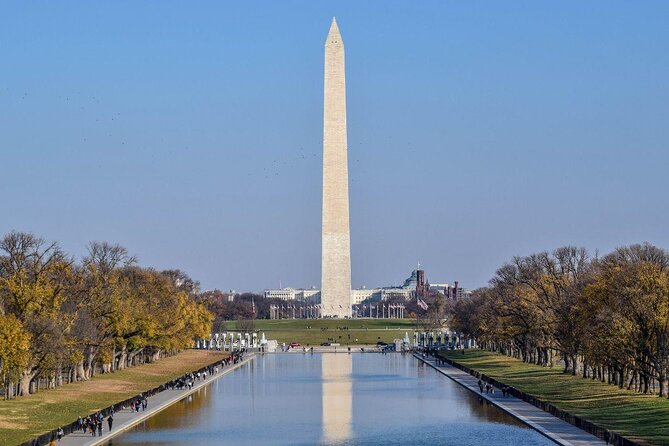
Next is the Washington Monument, where the guide explains not only what you’re seeing, but why it looks the way it does. Expect discussion of the monument’s design, a few controversial aspects of its history, and how construction materials and techniques shaped the final result.
This stop is a good reminder that monuments are not just photos. They are built objects with decisions behind them, including the choices people argued about during the process. If you enjoy how buildings and civic projects get made, you’ll likely find this one especially satisfying.
National World War II Memorial: Shared Effort Across Ages
At the National World War II Memorial, the focus is on how Americans of different ages contributed to a total war effort. You’ll also get magnificent scenic viewsheds in the moment, which helps explain why this memorial is so popular for viewing.
What I like about this stop is that the guide ties the meaning to what you can actually perceive from the memorial’s setting. It’s not just dates and names. The storytelling connects effort and sacrifice to what the memorial is designed to communicate.
Martin Luther King, Jr. Memorial: Relief Detail and Tidal Basin Context
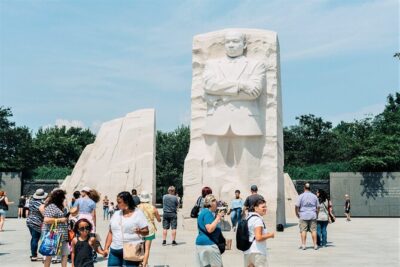
The Martin Luther King, Jr. Memorial adds a new perspective through the design. You’ll learn about the relief pediment of MLK, and you’ll also get guidance on how the memorial’s site design works in context with its location near the Tidal Basin.
This is one of those places where photos can flatten the experience. The guide’s breakdown helps you notice how the memorial’s design elements are meant to be read, not just seen.
FDR Memorial: Term Rooms and Water as Symbol
The Franklin Delano Roosevelt Memorial is structured to feel human scale, and the guide explains how the memorial is organized by his terms in office. You’ll also be encouraged to peruse a different room for each of his four terms, which makes the visit feel like moving through distinct time periods rather than a single monument stop.
Pay attention to how water is used as a symbolic design element here. Even if you don’t know every detail in advance, the guide’s framing helps you connect what you’re seeing to the message the site is designed to deliver.
Lincoln Memorial: River Edge Meaning and the Seated Lincoln
At the Lincoln Memorial, you’ll get the why behind its location at the river’s edge and what its design suggests about preserving the union. You’ll also hear about the symbolism built into the site design and how historic events connect to what you’re standing in front of.
And yes, there’s time to visit with the seated statue of Lincoln. This is the stop where slowing down can feel worth it, because the space encourages reflection, and the guide helps you connect the visual details to the broader story.
Vietnam Veterans Memorial: Minimal, Abstract, and Powerful
The Vietnam Veterans Memorial is a different kind of experience. It’s known for a close, personal feel, and the memorial’s abstract, minimalist design is the centerpiece.
The guide’s job here is to help you register scale, because “service and sacrifice” sounds like a phrase until you see how the memorial communicates it. This stop can hit harder than you expect, partly because the design doesn’t try to show everything with words.
Albert Einstein Memorial: A Small Stop With a Specific Location
The route ends at the Albert Einstein Memorial, where you can view and visit Einstein while the guide explains its placement near the National Academy of Sciences on Constitution Avenue.
The helpful part is that this memorial sits just off the well-worn path, so it’s easy to miss if you’re moving fast on your own. With the guide, you know exactly where to look and what to notice once you get there.
What You Actually Gain From the Guide’s Storytelling
This tour’s “special sauce” is how the guide connects design to meaning at each stop. You’re not just learning names and dates. You’re hearing how materials, construction techniques, layout, and site context shape what the monument communicates.
At Washington Monument, that means talking about construction materials and a few contentious historical issues tied to the project. At MLK, it means noticing the relief pediment and how the memorial’s setting by the Tidal Basin changes the way you experience it. At FDR, it’s the internal rhythm of the memorial’s rooms by term and the way water functions symbolically.
The tour also keeps things human. The route is short, the stops are brief, and that makes the pacing workable for a wide range of visitors. You come away with a better grasp of why each place was designed the way it was.
If you get Chris as your guide, that’s a strong fit for accessibility needs. One review highlights that Chris brings a wheelchair when you plan ahead, which is exactly the kind of practical readiness that reduces stress for families and caregivers.
Timing, Pace, and Photo-Friendly Planning

Because the tour is about 60 to 65 minutes, it’s designed for efficiency. Each stop is roughly five minutes, which is enough time for a meaningful look and a guided explanation, but it’s not so long that you feel trapped in one spot.
The on-demand stop feature is what lets you adjust. If you want extra time at Lincoln, you can generally ask for it. If you’d rather move quickly through a particular stop, you can do that too. That control matters because it keeps the tour from feeling like a rigid bus loop.
For photos, the best tip is simple: stop asking your feet to do what your guide can help with. Let the pedicab do the positioning work, then use your short on-foot time to frame the shot you want. You’ll also avoid the awkward scramble that happens when everyone tries to get into the same tiny best-angle pocket.
Included Extras That Make the Tour Feel Complete

A pedicab sightseeing tour can be just a ride, but this one includes details that improve the day. You get one pedicab conveyance as part of the booking, along with the guide.
Accessibility support is not an afterthought. Folding wheelchair use is included with advance arrangement, rollators and walkers are welcome, and boarding includes steps and handrail support. Oxygen tanks are allowed too, which is rare to see called out explicitly.
The tour also states that admission tickets are free at the stops where that applies. It’s a small line item that can still save you hassle when you’re trying to plan ahead.
Should You Book This Pedicab National Mall Tour?

If you want a comfortable, guided, highlights-first way to see the National Mall, this is a strong choice. It’s especially worth booking if mobility is limited, if you’re traveling with someone who needs breaks, or if you’d rather avoid crowd stress at the biggest memorials.
Choose it if you care about design and meaning, because the guide’s commentary focuses on construction, symbolism, and how the memorials are shaped by their locations. Choose it if you want the landmarks without turning your day into long walking segments.
Skip it if you’re craving a long, leisurely self-paced wander with lots of free time at each monument. This tour is built for a tight loop and efficient stops, not for hours of independent exploration.
FAQ
How long is the pedicab sightseeing tour on the National Mall?
The tour lasts about 1 hour to 1 hour 5 minutes.
Is this tour private?
Yes. It is a private tour or activity, and only your group participates.
What’s included in the price?
Included items are one pedicab conveyance, a Washington, DC licensed official tour guide with 15 years experience, complimentary no charge folding wheelchair use with advance arrangement, welcome for companion dogs and service animals, and $2,000,000 USD of liability insurance coverage. The business is also licensed by Washington, DC Department of Licensing and Consumer Protection and has a National Park Service Commercial Use Authorization concession.
Are admissions tickets required for the stops?
The experience notes that admission tickets are free for the listed stops.
Is the tour accessible for walkers or wheelchairs?
Folding wheelchairs are available with advance arrangement, folding rollators and walkers are welcome, and there are steps and handrail for easier boarding. Oxygen tanks are also welcome.
What happens if weather is bad or I need to cancel?
The experience requires good weather. If it is canceled due to poor weather, you’ll be offered a different date or a full refund. You can cancel up to 24 hours in advance for a full refund, and cancellations within 24 hours are not refunded.
More Tour Reviews in Washington DC





The Mall, Three More Ways




More to book around Washington DC
- The Public Group Scooter Tour of DC’s National Mall
★ 5.0 · 3 reviews - National Mall Highlights with Cherry Blossom & Arlington Cemetery
★ 3.5 · 3 reviews - Private Washington DC Monuments Day or Night Bike Tour
★ 5.0 · 3 reviews - Private Tour with US Capitol Or Archives Or Washington Monument
★ 3.5 · 3 reviews - Washington DC Private Guided Bus Day Tour with Step Off Guide
★ 5.0 · 3 reviews - 3-Hour Small Group Memorial Tour in Washington, D.C.
★ 4.0 · 3 reviews
National Mall Tours, compared.
 ★ 4.5National Mall Monuments Night Tour with 10+ Stops, Entry TicketsFrom $654,863 reviews
 ★ 5.0Small Group National Mall Night Tour with 10 Top AttractionsFrom $991,658 reviews
 ★ 4.8National Mall Tour by Electric VehicleFrom $591,206 reviews
 ★ 4.5National Mall Tour with 10 Stops & U.S. Capitol or Museum EntryFrom $59331 reviews
 ★ 4.6National Mall Night Bus TourFrom $55313 reviews
 ★ 4.1White House, National Mall and Lincoln Memorial TourFrom $52279 reviews
 ★ 5.0Celebrate 250th: Washington Monument Ticket & National Mall TourFrom $75204 reviews
 ★ 4.5Day or Night National Mall Bus Tour with Arlington Cemetery WalkFrom $55117 reviews
Browse the lists this tour appears in