
REVIEW · EVENING EXPERIENCES
Night of Lincoln Assassination: from White House to Ford Theatre
Lincoln’s last night starts outside a church.
This evening walking tour strings together the streets, rumors, and real places tied to the assassination of Abraham Lincoln, from the White House area down to Ford’s Theatre. You move about a mile while your guide uses period photos and storytelling to make wartime Washington feel close.
I like the format because it gives you context, not just dates. Two standouts for me are the way the tour uses visuals (one guide style even includes iPad images and sound-effect moments) and the fact that you end at a working, restored Ford’s Theatre you can explore right after you finish.
One thing to consider: this tour is outside the whole time, and you do not enter buildings. Ford’s Theatre itself is not included, so you’ll need separate NPS tickets if you want to go inside.
Key things to know before you go
- A 7:00 pm start that helps you see Washington like a wartime capital after dark
- About one mile on foot total, paced as a true walking tour rather than a long hike
- No building entry on the route, so you rely on stops, photos, and street-level details
- Ford’s Theatre is the finale, but you view it from outside first
- Historic-photo moments help you picture mid-1800s DC instead of just hearing theory
- Guides matter, and past guides like Trevor, Becca, Katherine, Jim, Emma, Cecilia, and Wesley are repeatedly praised for story delivery
The rest of the after-dark list
Walking Lincoln’s last day, block by block
There is something extra effective about hearing this story at night. The assassination was a shock in a city that already lived with war, rumors, and constant movement, and an evening walk matches that feeling better than a daytime lecture.
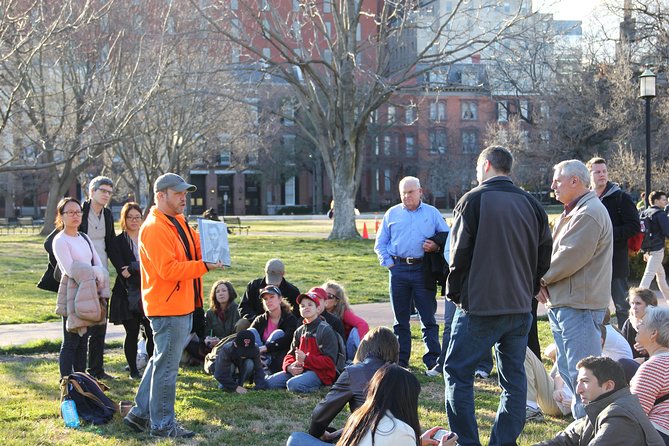
You start outside St. John’s Episcopal Church, which is nicknamed the Church of the Presidents. The guide frames what Washington looked like in the 1860s and how Lincoln’s final months built toward April 1865. Even though you do not go inside, the church is a strong visual anchor for the story.
Then you head toward Lafayette Square, where the guide points out Civil War era buildings and the home streets around the park. This is where the tour shifts from “what happened” to “what it looked like,” and you start thinking like someone living there then, moving through familiar blocks and trying to read what is going on.
St. John’s Episcopal Church and Lafayette Square: setting the stage fast
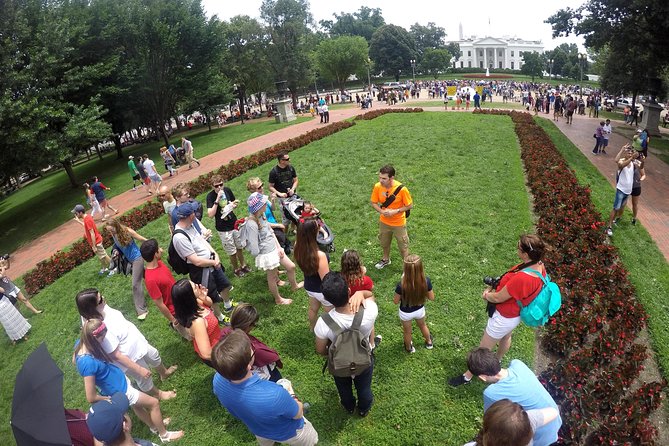
The best early tours do one job well: they help you get your bearings quickly. This one starts with the church overview and then uses Lafayette Square to introduce characters connected to Lincoln’s last days.
A big plus here is how the guide uses the surrounding row houses and the park layout to explain why certain routes mattered. You are not just seeing a pretty open space, you’re learning the geography of power, visitors, and late-night plans.
Also, the tone is designed to keep you moving. Stop times are short, and the story keeps tightening. If you like history that feels like a mystery unfolding, this opening portion is the kind that keeps you locked in without getting heavy.
The White House area from the sidewalk, including the temporary White House site
You spend time near the White House area without entering. The guide talks about Lincoln’s presidency during the Civil War and references his final speech, delivered at the White House in the presence of John Wilkes Booth. That detail adds an unsettling twist: even before the assassination, you learn that Booth was not some random figure in the shadows, he was moving in the same public orbit.
Right along the way, the tour also points out the US Treasury Building, which acted as the temporary White House after Lincoln’s assassination. That stop is useful because it reminds you that DC had to keep functioning immediately, even as national attention shifted to grief and investigation.
If you are the kind of traveler who likes to connect landmarks to actual people, this segment is the payoff. You start seeing the night not as a single moment, but as a chain reaction happening across a few streets.
- DC Memorials Night Tour: Glass-Roof Convertible Upgrade Option★ 4.5 · 6,933 reviews
- National Mall Monuments Night Tour with 10+ Stops, Entry Tickets★ 4.5 · 4,863 reviews
- Washington DC Monuments by Moonlight Tour by Trolley★ 4.5 · 3,956 reviews
- Hop-on Hop-off Sightseeing Tour by Open-top Bus with 18 Stops★ 3.5 · 3,848 reviews
- Washington DC in One Day: Guided Sightseeing Tour★ 4.5 · 3,360 reviews
Pennsylvania Avenue era: National Theatre and the Old Post Office Pavilion clues
Downtown Washington has layers, and this tour treats Pennsylvania Avenue like the main storyline. You stop at the National Theatre area and hear about what happened there around the day of the assassination, including Booth stopping by and Lincoln’s son Tad later attending a play described as Aladdin or his Wonderful Lamp.
That contrast lands hard. One family watching a show, another part of the city filled with conspiracy and movement. It is the kind of detail that turns history from facts into scenes you can picture.
Next you move toward the Old Post Office Pavilion area. Across from it was the Kirkwood House Hotel, where Vice President Andrew Johnson stayed. You also learn how George Azerodt rented a room there and was tasked with attacking Johnson that same night.
This section is a reminder that the assassination plot was not just about Lincoln. The tour frames it as a larger coordinated attempt, which is important if you want the whole picture rather than only Booth’s shot.
Ford’s Theatre finale: where the escape story starts
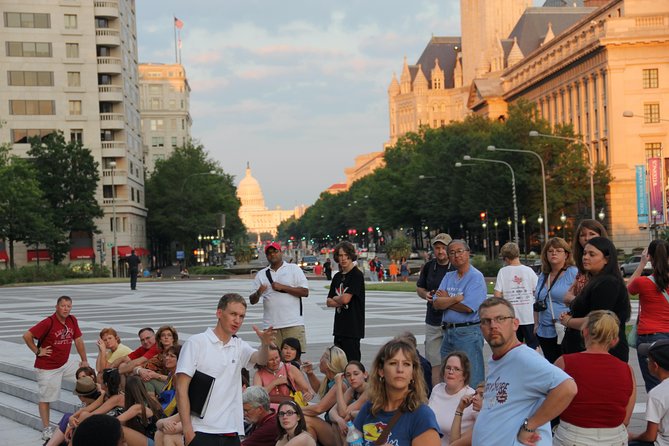
This is where the tour earns its reputation. You reach Ford’s Theatre at the end, and you get to see it from the street and learn what happened there, including the moment Booth escaped after shooting Lincoln.
The tour does not include entry into the theater. But the exterior stop still matters because you get guided orientation first, which makes any later visit inside feel more meaningful. And since Ford’s Theatre is a working theater today with restored Civil War era grandeur, the setting has real weight.
One practical tip: because the theater is still active, plan on crowds and keep your eyes on your guide for the final timing. Ending outside also gives you a natural “choose your next step” moment, either lining up for a visit inside or exploring on your own.
Petersen Boarding House: the last chapter in a quiet room
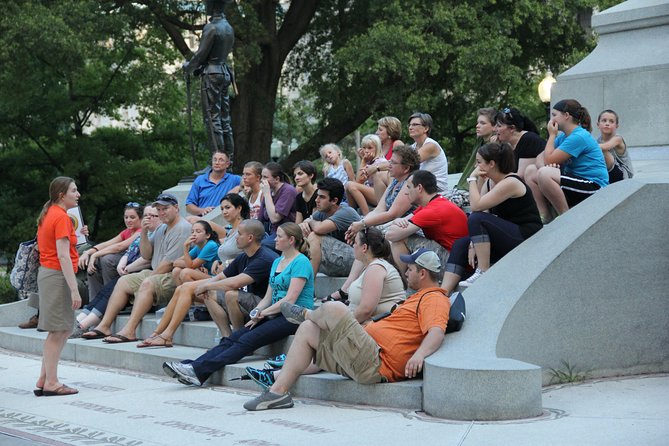
Immediately after Ford’s Theatre, the route continues to the Petersen Boarding House stop. This is a small, simple row house, and the story is the opposite of grand.
Here you learn that after Lincoln was shot, he was taken to a first-floor room while doctors attended to his health. You also hear about Secretary of War Edwin Stanton interviewing witnesses there that night, and about Robert Todd Lincoln arriving from the White House and staying at his father’s side.
If you want a balanced tour, this stop is the emotional counterweight. It pulls you away from the theatrical drama of the stage and into the human reality of waiting, testimony, and grief.
You do not enter the building on this tour, but the guide’s descriptions help you understand why this unassuming place became a key scene of the night.
The alley behind Ford’s Theatre: a great self-guided follow-up
The tour also sets you up for one of the best add-ons you can do with limited time. Behind Ford’s Theatre is the original alley route that Booth used to escape.
Your guide explains what to look for, and you are encouraged to walk there after the tour. The alley is open to the public, and you can see original buildings as you connect the story to the physical space. It is the rare “after the tour” moment that feels earned, not like a random side quest.
If you do this follow-up, keep it simple. Walk slowly, look around, then step back and reframe what you learned. The geography helps the story stick.
Price and value: what $49 gets you, and what costs extra
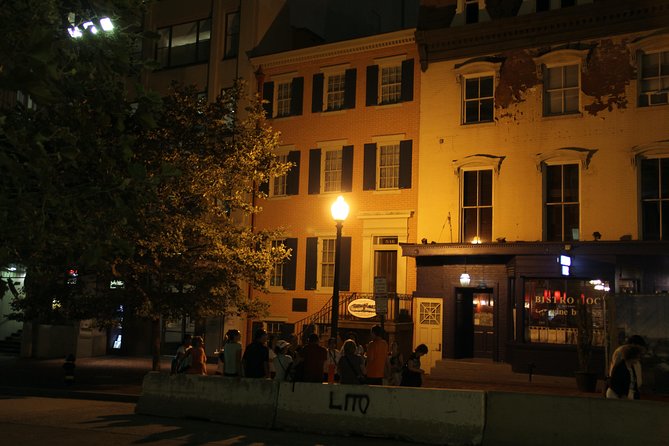
At $49 per person for about 2 hours, this is priced like an experience that relies on guide expertise, not museum entry fees. The tour includes a professional licensed guide and the use of historic photos during your walk, which is where much of the value comes from.
The main extra cost to plan for is Ford’s Theatre entry. The tour ends outside, and admission into the theater is not included, with tickets requiring NPS. If you know you want to go inside, budget for that separately so there are no surprises.
One more value factor: the group size is limited to a maximum of 15 travelers. That makes it easier for the guide to keep pace and for you to hear the story clearly while walking near busy downtown landmarks.
And from the guide performance side, the reviews show a consistent theme: guides such as Becca are praised for bringing the night to life with strong pacing and lots of facts, while Trevor and others are praised for holding attention with story structure. That matters because this type of tour rises or falls on delivery.
What the guides do best, and how it affects your experience
This tour’s success is tightly linked to how the guide tells the story. In the best runs, the guide uses more than narration, including visuals like period photos and in some cases iPad-style imagery. Some guides also use sound-effect style moments, which can help certain scenes feel more immediate.
It also helps when the guide handles distractions. One guide was specifically praised for patience during city activity, including motorcades and a hot evening, without letting the story lose momentum. Another review notes a snow night where the guide made comfort adjustments, which is exactly what you want for an outdoor experience.
And yes, guides sometimes run over the planned time when road closures affect walking routes. One review mentions the tour went past the two-hour window, but the guide kept it engaging. For you, that means to think of the “two hours” as an estimate, not a strict clock.
Who should book this Lincoln assassination walk
This works especially well if you match one of these profiles:
- You want context for what happened, not just a list of famous names
- You like walking tours that stay close to the story’s real geography
- You enjoy evening history when museums are closed and the city becomes the exhibit
- You are traveling with someone who might not think they love history, because the storytelling keeps it moving
It also fits couples and families, with reviews showing lots of positive experiences even in cold weather. One family highlighted how the tour helped their daughter get more curious about each stop, which is a strong sign the guide knows how to explain without oversimplifying.
Quick planning tips for a 7:00 pm walk
Because the tour runs in the evening, you should plan for weather. There are reports of bitter cold and even snow, so dress like you’ll be standing and walking for two hours in real temperatures, not just moving between indoor stops.
Also, expect lots of downtown attention around landmarks. This is Washington, DC, and streets near major sites can be active. Give yourself a little buffer getting to the meeting point on H Street NW at 1525 H St NW, and aim to arrive early enough to settle in before the guide starts.
Finally, since you do not enter buildings, bring a mindset for street-level looking. You will get the story through stops, photos, and explanations, not through museum exhibits.
Should you book this tour?
If you want a guided way to connect Lincoln’s last day to real DC streets, I think this is a strong book-it choice. For $49, you get a tight two-hour walk, historic-photo storytelling, and a finish at Ford’s Theatre that sets up a smarter visit inside later, if you choose to buy tickets.
Skip it if you strongly prefer indoor sights, because this experience is designed around outdoor viewing and street narration. Also, if you already know the story well and hate basic orientation stops, you might want to pair it with a different Lincoln-focused activity that goes deeper into documents or exhibits.
If you’re on the fence, my advice is simple: plan a Ford’s Theatre ticket separately, wear warm clothes, and treat the walk as your front-row seat to how Washington looked during the last hours of Lincoln’s life.
FAQ
How long is the Night of Lincoln Assassination tour?
It lasts about 2 hours.
Where does the tour start and end?
It starts at 1525 H St NW, Washington, DC 20005, and ends outside Ford’s Theatre at 511 10th St NW, Washington, DC 20004.
Is Ford’s Theatre included, and do you go inside?
No. The tour does not include entry into Ford’s Theatre, and you view it from outside. Tickets from NPS are required if you want to go inside.
What is included in the $49 price?
The price includes a professional licensed tour guide and historic photos shown during the tour.
What kind of walking is involved?
The walking distance is roughly one mile (1.6 km).
Is the tour only offered in English?
Yes, it is offered in English.
What is the cancellation policy for a full refund?
You can cancel up to 24 hours in advance for a full refund. If you cancel less than 24 hours before the start time, the amount you paid is not refunded.
Washington DC After Dark



More Tour Reviews in Washington DC


More to book around Washington DC
- The Public Group Scooter Tour of DC’s National Mall
★ 5.0 · 3 reviews - National Mall Highlights with Cherry Blossom & Arlington Cemetery
★ 3.5 · 3 reviews - Private Washington DC Monuments Day or Night Bike Tour
★ 5.0 · 3 reviews - Private Tour with US Capitol Or Archives Or Washington Monument
★ 3.5 · 3 reviews - Washington DC Private Guided Bus Day Tour with Step Off Guide
★ 5.0 · 3 reviews - 3-Hour Small Group Memorial Tour in Washington, D.C.
★ 4.0 · 3 reviews
Evening Experiences, compared.
 ★ 4.5DC Memorials Night Tour: Glass-Roof Convertible Upgrade OptionFrom $696,933 reviews
 ★ 4.5National Mall Monuments Night Tour with 10+ Stops, Entry TicketsFrom $654,863 reviews
 ★ 5.0Small Group National Mall Night Tour with 10 Top AttractionsFrom $991,658 reviews
 ★ 4.5Big Bus DC: Monuments & Memorials Night Tour by Open-top BusFrom $491,174 reviews
 ★ 4.5Washington DC Sites at Night Guided Bicycle TourFrom $65536 reviews
 ★ 4.5Washington DC Night-Time City TourFrom $69435 reviews
 ★ 4.1Monuments & Memorials Sunset Tour by Open-top BusFrom $49415 reviews
 ★ 5.0Private Night-Time Monuments Tour of DC for up to 10 GuestsFrom $525326 reviews
Browse the lists this tour appears in