

REVIEW · NATIONAL MALL TOURS
Castle to Capitol: Museums of the National Mall Architecture Tour
Museums become architecture when a guide explains. This Castle to Capitol National Mall walking tour turns the east side of the Mall between the US Capitol and the Washington Monument into one clear story, with Smithsonian Castle admission built in. You are looking at building shapes, materials, and intentions, not just standing in front of things.
I especially like the architecture-first narration and how it stays fun for people of different ages. I also like the small group size, capped at 20, so questions do not get lost in the crowd. The pacing is designed for a brisk walk with real stops, not a slow drift.
One drawback to consider: many locations are quick exterior photo stops. If you want lots of time inside galleries or deep artifact time, this format may feel a bit rushed.
Key things I’d circle on your map
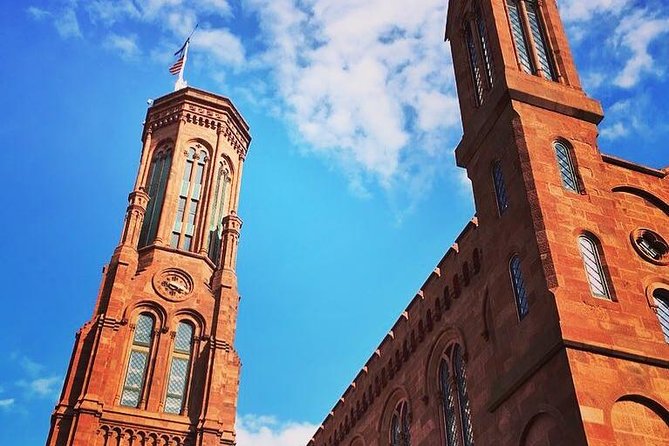
- Smithsonian Castle admission included, so you are not just peeking from the sidewalk.
- Architecture-focused explanations tied to how the Smithsonian shaped the National Mall since 1847.
- Short, well-timed stops from the Smithsonian area toward the US Capitol, so you cover a lot in about two hours.
- A mix of styles you can actually see, including neoclassical and modern contrasts.
- Capitol Hill views at the end, giving you a strong visual payoff.
- Guides with lots of energy, including name-checked favorites like Carolyn, Sam, and Cathryn, praised for humor and being very prepared.
Other ways to cover the Mall


Why this National Mall architecture tour is built for a smart first DC day
If you only have a day or two in Washington DC, the National Mall can feel like a greatest hits album. This tour helps you hear the lyrics. You spend your time noticing design choices and how institutions wanted to look, feel, and last.
I like that the focus is practical. You are not memorizing dates without context. You are learning why each building sits where it sits and what it tries to communicate. That makes the next part of your trip easier, because the Mall stops being a blur of names and becomes a connected plan.
It is also a good match for families and mixed groups. You still get the famous museum names, but the guide makes them make sense through visual cues. And because it runs about two hours with a small group, you can fit it without turning the whole day into an endurance event.
Meeting at Smithsonian Castle, then walking east toward the Capitol
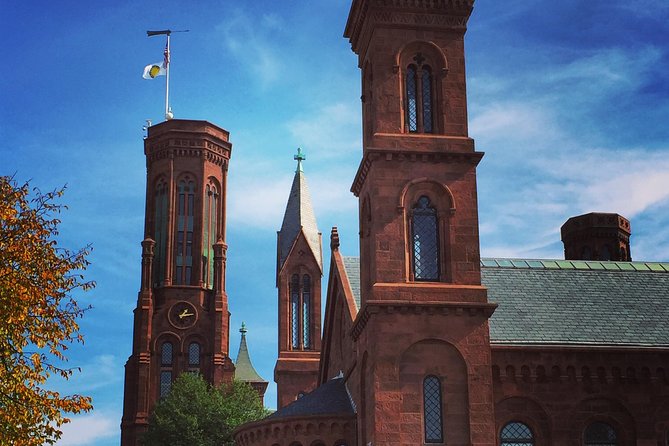
The tour starts at the Smithsonian Castle and Garden at 1000 Jefferson Dr SW, Washington, DC 20560. It ends at Capitol Hill for a payoff view on the west lawn of the US Capitol.
That east side route is the sweet spot for first-time architecture sightseeing. You are walking the Mall corridor between the US Capitol and the Washington Monument, where you can spot a lot of landmark museum buildings close together. In other words, you are not burning time riding around town to find each stop.
The experience uses a mobile ticket, which is convenient if you are bouncing between museums and tours on a phone schedule. And with a maximum of 20 travelers, it stays tight enough for the guide to keep track of your questions and attention.
One more good sign: the tour is described as easy to join for most people. It is not marketed as an intense hike, even though it is still a walking experience.
Stop by stop: what you will learn from these iconic museum buildings
This is an exterior-heavy walking tour. You are seeing buildings at close range, plus a few viewpoints from the sidewalk. The benefit is speed. The tradeoff is that you might not get to linger for every small detail.
Still, the guide’s job is to point your eyes in the right direction, and the short time at each stop is part of the design.
Other collections worth a reserved slot
- Guided African American History Tour with Reserved Museum Entry★ 4.5 · 1,180 reviews
- Smithsonian Museum of Natural History – Exclusive Guided Tour★ 5.0 · 446 reviews
- African American History Tour with Museum of African American History Ticket★ 4.5 · 390 reviews
- National Mall Tour with 10 Stops & U.S. Capitol or Museum Entry★ 4.5 · 331 reviews
- Washington, DC: African American History Tour & Museum Entry★ 4.9 · 312 reviews
Smithsonian Institution Building, the tour starter
You begin outside the Smithsonian Institution building, starting right at the Smithsonian Castle area. This is where the tour frames the big idea: the Smithsonian is not just a museum operator, it is a major shaper of the National Mall’s overall look. The guide connects that influence back to the Smithsonian’s start in 1847 and brings it forward to today.
Tip for your eyes: stand back for a moment and look for the overall silhouette first, then zoom in on the details the guide flags. The tour works best when you treat each stop like a quick architecture lesson, not just a photo break.
Smithsonian Arts and Industries Building, second home energy
Next comes the Smithsonian Arts and Industries Building. This stop is brief, about 5 minutes, but it is specifically about its beautiful and unique design.
Why it matters: the Smithsonian building set is not random. Even when styles differ, there is a consistent ambition to make these institutions feel permanent and public, not hidden. That is the kind of theme you will hear throughout the tour.
Hirshhorn Museum and Sculpture Garden, the spaceship moment
The Hirshhorn Museum and Sculpture Garden gets its own quick stop, and the description is memorable. The building is often compared to a spaceship on the National Mall.
This is where the tour helps you connect form with function. Even without going inside, you can see how the building was meant to hold modern art and sculpture energy in a high-visibility setting. If you like contemporary design, this is one of the stops that will feel instantly different from the more classic façades nearby.
National Gallery of Art, neoclassical West versus modern East
From the route, you will look at the National Gallery of Art from a distance and focus on a clear contrast. The West building is described as Neoclassical, while the East building is Modern.
This stop is short, but it is the kind of architectural comparison that actually sticks. Once you have seen both styles in the same corridor, your brain starts sorting other DC buildings by era and intent.
Practical note: since you see this from the outside, you will be relying on the guide to point out what to notice, like the proportions and the overall visual language of each side.
National Museum of the American Indian, wind and water shaping
Next is the National Museum of the American Indian. The architecture here is described as looking sculpted by wind and water, and the building is also explained as having a tumultuous past.
I like this stop because it is not purely formal. The guide ties design language to meaning, so the building feels like more than a shape. Even if you do not catch every detail, you will understand why these choices were controversial or hard-won and what the design tries to communicate.
Again, your time is short, about 5 minutes, so pay attention to the big visual cues the guide highlights first.
United States Botanic Garden, a quieter pause
The US Botanic Garden stop is longer than most, about 10 minutes. It is positioned as a place that can feel like a break from the main museum lineup, along with the note that it is a stop many people do not plan around.
This part works well for families, because it gives a slightly calmer moment without losing the architecture theme entirely. It also gives you a breather before the final walk toward Capitol Hill.
Bartholdi Park, a small detour worth it
Bartholdi Park is described as a secret spot off the National Mall, with a historic and beautiful fountain. The fountain is also said to be sculpted by someone unexpected, which is a nice reminder that DC’s best stories are often not the loudest ones.
This is one of those stops where you benefit from a guide, because the park is not the kind of place you automatically target unless you already know what to look for. The short 5-minute stop still adds variety and helps break up the bigger museum sequence.
Capitol Hill wrap-up, the view payoff
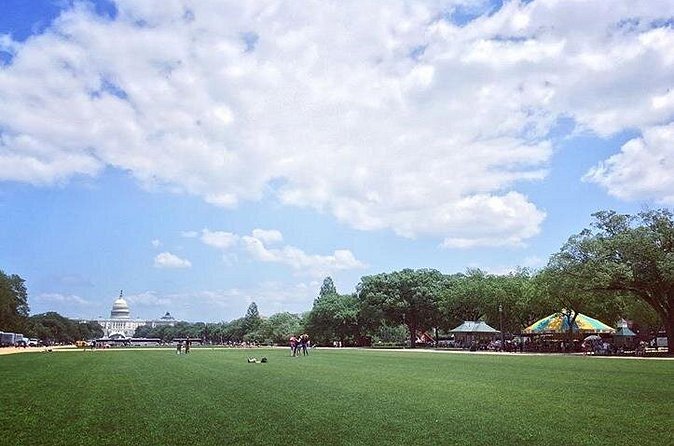
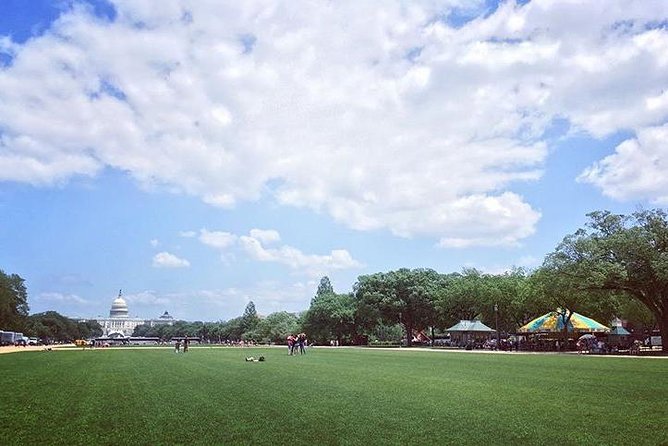
The tour finishes at the foot of Capitol Hill, with breathtaking views of the US Capitol and the National Mall. You wrap up on the west lawn of the US Capitol for a final look.
This final viewpoint is more than a nice photo. It helps you connect the dots you have been learning. Once you see the Capitol end of the Mall corridor from the west lawn, the whole walk feels like one coherent arc instead of a list of separate buildings.
Timing and pacing: what two hours feels like on your feet
This is listed as 2 hours (approx.), and the stop times reinforce why. You are looking at several 5-minute segments plus a couple longer pauses.
What that means for you:
- You will move at a steady walking pace.
- You will get architecture guidance fast, then you move on.
- You are unlikely to have long unscripted time at each place.
That is a dealbreaker for some people and a plus for others. If you love structure, learning, and seeing a lot, you will probably enjoy the efficiency. If you want slow museum time, you might prefer a ticketed museum day instead.
The good news is that the walk ends with a strong visual payoff. You do not just get dropped off in a random place. You end on the Capitol side where it is easy to orient yourself for the rest of your DC route.
Price and value: $48 for a design story plus Smithsonian Castle admission

At $48 per person for about two hours, the value comes from two things: guided interpretation and included Smithsonian Castle admission.
The guided part matters. The National Mall buildings are famous, but they are also easy to skim. The tour is built around helping you see what you would normally miss, like contrasting architectural styles and design intentions across multiple institutions in one continuous walk.
The admission inclusion is the other value anchor. You start at the Smithsonian headquarters area and you are not limited to only street-level looking. For a one-day DC plan, getting that built-in access helps justify the cost.
Finally, the small-group cap of 20 travelers supports value. In a big crowd, architecture talks can turn into a wall of sound. Here, you are more likely to hear the key points and ask questions without shouting.
Who should book this, and who should skip it
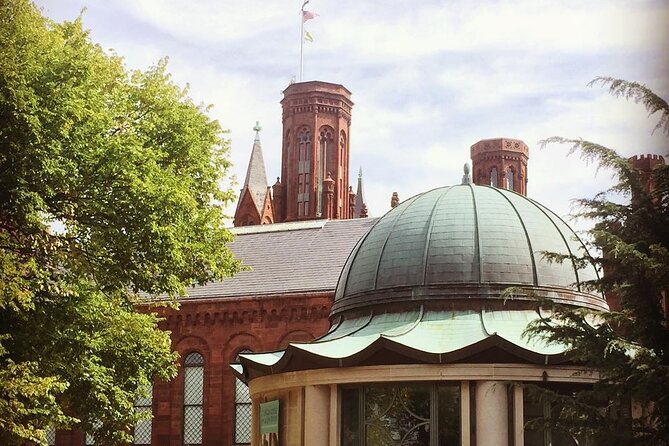
You will likely love this tour if:
- You want a National Mall architecture tour that is easy to fit into a tight itinerary.
- You care about how buildings communicate, not just what they house.
- Your group includes kids, teens, or adults who might have different museum interests.
You might want to skip it if:
- You want long time inside multiple museums.
- You expect a full-on exhibit experience rather than a design-focused exterior walk.
- You are hoping for a slow, meandering photography session with no schedule.
It is also a great option for repeat visitors. Even if you have seen some of these buildings before, a design-first guide changes what you notice.
Practical tips that make the walk smoother
Since you are doing a walking loop from the Smithsonian Castle area to Capitol Hill, build this into your day like an active event, not a relaxed museum afternoon. Wear comfortable shoes and plan to stand and walk for the full 2-hour window.
A smart move is to double-check the exact start time shown on your confirmation and arrive a little early at the Smithsonian Castle meeting point. One reported issue involved confusion over the scheduled time, so it is worth verifying what you have in front of you before you set off.
If you like learning from people who can answer questions, you are in good company. Guides have been praised for being engaging, very prepared, and able to explain design ideas with clarity. Some named guides, including Carolyn, Sam, and Cathryn, were highlighted for humor, architecture-minded explanations, and bringing extra visual context while walking.
Also, bring curiosity. This tour works when you let the guide’s prompts shape how you look at each building.
Should you book the Castle to Capitol tour? My take
If you want a strong, efficient way to understand Washington DC’s museum buildings and why they look the way they do, I think this is a solid booking. The architecture emphasis is the point, and the route from Smithsonian Castle to Capitol Hill gives you a clean storyline with a real view payoff at the end.
I would book it over a generic sightseeing walk because the guide is trained to make the design readable. I would not book it if your main goal is spending lots of time inside museum galleries.
FAQ
FAQ
How long is the Castle to Capitol National Mall Architecture Tour?
It runs for about 2 hours.
How much does the tour cost?
The price is $48.00 per person.
How many people are in the group?
The tour has a maximum of 20 travelers.
Where does the tour start and end?
It starts at the Smithsonian Castle, 1000 Jefferson Dr SW, Washington, DC 20560, and ends on the west lawn of the US Capitol at Capitol Hill, Washington, DC 20004.
What is included in the tour?
The tour includes a local guide and admission to the Smithsonian Castle.
Do I need to print tickets?
No. The tour uses a mobile ticket.
Which areas of the National Mall will we walk?
You walk the east side of the National Mall between the US Capitol Building and the Washington Monument, finishing near Capitol Hill.
Can I bring a service animal, and can I cancel for free?
Service animals are allowed. The experience offers free cancellation up to 24 hours in advance for a full refund.
More Tour Reviews in Washington DC





The Mall, Three More Ways




More to book around Washington DC
- The Public Group Scooter Tour of DC’s National Mall
★ 5.0 · 3 reviews - National Mall Highlights with Cherry Blossom & Arlington Cemetery
★ 3.5 · 3 reviews - Private Washington DC Monuments Day or Night Bike Tour
★ 5.0 · 3 reviews - Private Tour with US Capitol Or Archives Or Washington Monument
★ 3.5 · 3 reviews - Washington DC Private Guided Bus Day Tour with Step Off Guide
★ 5.0 · 3 reviews - 3-Hour Small Group Memorial Tour in Washington, D.C.
★ 4.0 · 3 reviews
National Mall Tours, compared.
 ★ 4.5National Mall Monuments Night Tour with 10+ Stops, Entry TicketsFrom $654,863 reviews
 ★ 5.0Small Group National Mall Night Tour with 10 Top AttractionsFrom $991,658 reviews
 ★ 4.8National Mall Tour by Electric VehicleFrom $591,206 reviews
 ★ 4.5National Mall Tour with 10 Stops & U.S. Capitol or Museum EntryFrom $59331 reviews
 ★ 4.6National Mall Night Bus TourFrom $55313 reviews
 ★ 4.1White House, National Mall and Lincoln Memorial TourFrom $52279 reviews
 ★ 5.0Celebrate 250th: Washington Monument Ticket & National Mall TourFrom $75204 reviews
 ★ 4.5Day or Night National Mall Bus Tour with Arlington Cemetery WalkFrom $55117 reviews
Browse the lists this tour appears in